Safety gear
Winter Fog Driving: The Car Gear and Checks That Matter
By Samveg Jain · Updated 21 October 2026 · 6 min read
Some links on this site may be affiliate links. If you buy through them we may earn a commission, at no extra cost to you. It never changes what we recommend. How this works.
Quick answer
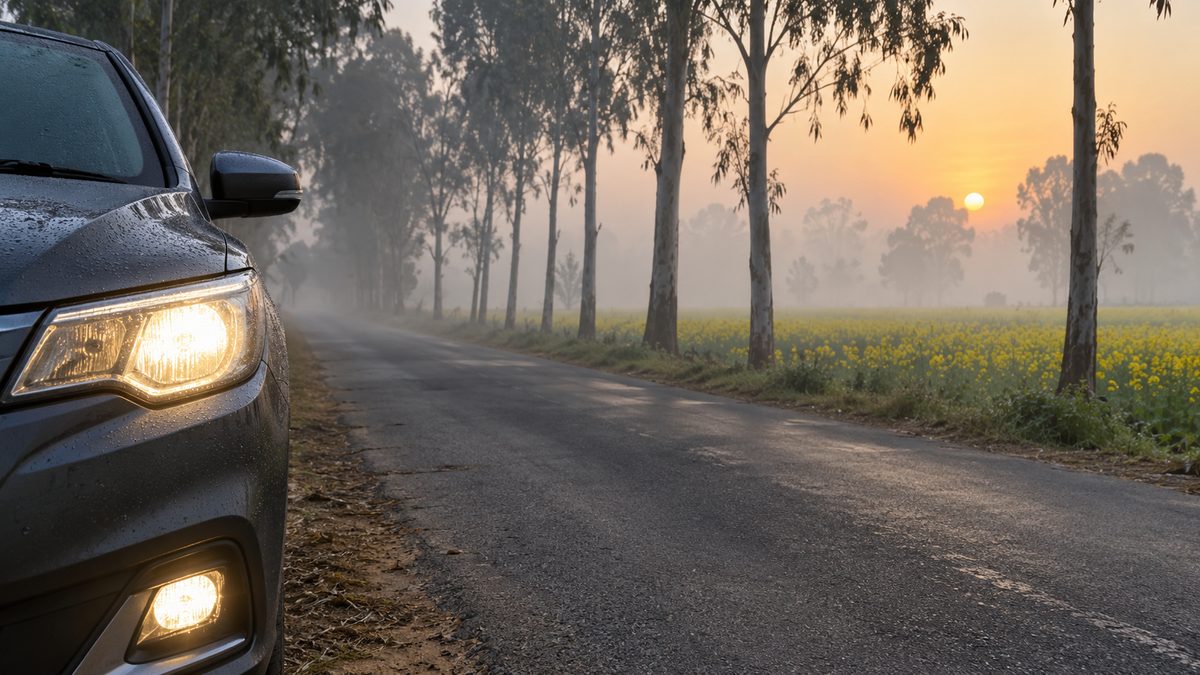
For fog, the gear that matters is the gear already on the car: working headlamps on low beam, fog lamps if the vehicle has them, clean glass inside and out, good wipers and a working demister. Add a reflective warning triangle and a torch for breakdowns. Then drive slower, keep a longer gap and stop somewhere safe if you cannot see.
Every winter, dense fog settles over highways and city roads across north India, often in the early morning and late at night. Visibility can drop to a few metres with little warning. No accessory makes fog safe, but a car with working lights, clean glass and a clear demister gives you far more time to react. Start with what is already fitted, then add a small breakdown kit.
Check the lights before the season
Walk round the car with the lights on while parked. Check both low beams, the tail lamps, brake lamps, indicators and number plate lamp. If your car has front or rear fog lamps, check those too. A single failed tail lamp makes you much harder to see from behind in fog, and a dim headlamp shortens how far you can see.
Replace failed bulbs with the exact type listed in the vehicle handbook. Brighter or higher-wattage bulbs can overheat housings and wiring, and may dazzle others. If the lamps look cloudy or the beam seems to point too high or low, ask a workshop to check the lens condition and alignment. Correct aim matters more in fog than raw brightness.
Use the right lights in fog
- Low beam: the main light to use in fog. It lights the road surface without bouncing back off the fog.
- Fog lamps, if fitted: mounted low with a wide, flat beam. Use them when visibility is poor and switch them off when it improves, so you do not dazzle others.
- High beam: avoid it. The light reflects off fog droplets and makes it harder to see.
- Hazard lights: follow local advice. In many places they are for a stopped or broken-down vehicle, not for moving traffic.
Be careful with aftermarket lamps and light bars. Many are not approved for road use, and a poorly aimed lamp can blind oncoming drivers. If you want extra lamps, choose road-approved units and have them aimed and wired by a competent installer. Avoid tinted films over headlamps, which cut light output.
Keep the glass clear inside and out
A dirty windscreen scatters headlamp glare and makes fog feel thicker. Clean the outside glass and mirrors before winter, and pay attention to the inside of the windscreen, where a greasy film builds up. Our guide to stopping the windscreen fogging up inside explains how to keep the inside clear and use the demister well.
Check the wipers and washer fluid too. Fog leaves a fine mist on the glass, and worn blades smear it across your view. The wiper blade buying guide covers fit and replacement. Keep separate clean cloths only for glass; the microfibre guide explains why.
Pack a small fog and breakdown kit
| Item | Why it helps in fog |
|---|---|
| Reflective warning triangle | Warns traffic behind if you have to stop |
| Torch with charge | Lets you check the car or signal for help after dark |
| Reflective vest | Makes you visible if you step out of the car |
| Phone charger and cable | Keeps navigation and calls working on a slow journey |
| Water and a warm layer | Fog delays can turn a short trip into a long wait |
Our car safety kit guide explains how to choose a triangle and where to place it, and the car charger guide covers safe in-car charging.
A dash cam is a record, not a safety aid
Some drivers fit a dash cam before the fog season. It can record what happened if there is a collision, but it does not help you see, and a badly placed camera can block part of the windscreen. If you buy one, mount it behind the mirror, out of your line of sight. The dash cam buying guide covers placement and night recording.
Driving habits matter most
- Slow down so you can stop within the distance you can see.
- Keep a much longer gap to the vehicle ahead, and do not follow its tail lamps closely.
- Use the road edge markings as a guide, and avoid overtaking.
- Open the window slightly at junctions to hear traffic you cannot see.
- Delay the trip if the forecast shows dense fog and the journey can wait.
- Stop safely, not in a lane. If you cannot see, leave the road at a fuel station or a safe lay-by, not the hard edge of a highway.
Before a long winter drive, check the weather and traffic updates and leave extra time. Our road trip packing list includes the checks worth doing before you set off.
Fog driving checklist
- All lamps working, with correct bulbs and correct aim.
- Windscreen clean inside and out, mirrors clear.
- Wipers in good condition and washer fluid topped up.
- Demister and rear screen heater working.
- Warning triangle, torch, vest and charger in the car.
- A plan to slow down, keep your distance and stop somewhere safe if needed.
Gear helps, but the driver makes the difference. Clear glass and working lights give you time; slower speed and a longer gap give you room to use it.
What to look for when you buy
Replacement headlamp or fog lamp bulb
The exact type and wattage listed in the vehicle handbook, and a legal, road-approved rating.
Reflective warning triangle
A stable folding base and a clearly reflective face that is easy to set up at night.
Interior glass cleaner and cloths
A cleaner safe for tinted or coated glass, and separate lint-free cloths kept only for glass.
Rechargeable torch
A steady beam, a charge indicator and a way to charge it in the car.
Frequently asked questions
Should I use high beam in fog?
No. High beam reflects off fog droplets and creates a bright wall in front of you. Use low beam, and fog lamps if your car has them.
Are aftermarket fog lamps a good idea?
Only if they are road-legal, correctly aimed and fitted by a competent installer. Badly aimed or very bright aftermarket lamps can dazzle other drivers and may break local rules.
Should I switch on hazard lights while driving in fog?
Follow local traffic police advice. In many places, hazard lights are meant for a stopped vehicle, because while moving they hide your indicators and can confuse drivers behind you.
What should I do if the fog becomes too thick?
Slow down, and if you cannot see the road safely, pull well off the road at a safe place such as a fuel station or lay-by. Do not stop in a running lane.
Do yellow headlamp films help in fog?
They reduce light output and may not be legal. Clean, correctly aimed, working lamps help more than tints or films.
More guides
Safety gear
Car Safety Around Firecrackers: Parking for Diwali
A practical parking and inspection plan for Indian car owners before and after Diwali celebrations.
Safety gear
Night Driving Checklist: Lights, Glare, Fatigue and Kit
Prepare for an evening drive with checks for lights, glass, mirror glare, fatigue and breakdown equipment, plus clear reasons to delay.
Safety gear
Tyre Tread Depth: Check Wear Before Buying Replacements
Inspect tread grooves, wear indicators and uneven wear before choosing replacement tyres. Know when a professional inspection cannot wait.