Car care gear
Rain Repellent and Wiper Blades: Buying for Monsoon
By Samveg Jain · Updated 21 October 2026 · 5 min read
Some links on this site may be affiliate links. If you buy through them we may earn a commission, at no extra cost to you. It never changes what we recommend. How this works.
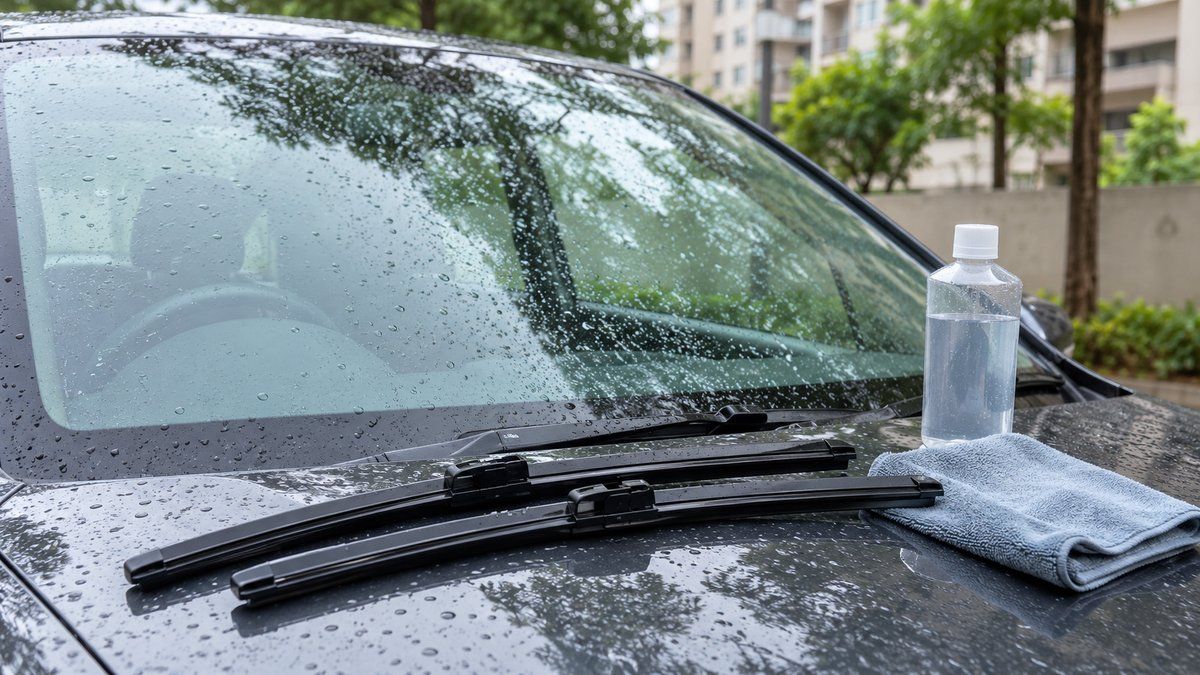
Buy wiper blades that fit the vehicle correctly before considering a rain-repellent treatment. Correct length, connector and clean wiping matter more than an attractive blade profile. Glass treatment is an optional extra with its own preparation and compatibility requirements. Neither an expensive coating nor a new blade compensates for a dirty windscreen or faulty washer system.
Diagnose the current wiping problem
Inspect the glass and blades while parked. Note whether the problem is a persistent streak, unwiped section, noise or a loose blade. Clean according to the vehicle instructions before deciding the rubber is responsible. If an arm appears bent or the washer system is faulty, arrange repair. A replacement accessory cannot correct every mechanical problem in the wiping system.
Check the inside of the windscreen too. Interior film can contribute to glare even when the outside is clean. Do not apply an exterior repellent to interior glass unless explicitly permitted. Keep separate cloths so dashboard dressing and greasy residue do not transfer to the windscreen. A clear view begins with ordinary cleaning on both sides.
Match all the fit details
Use the vehicle handbook, a reliable application catalogue or the blade maker's fit tool. Driver and passenger blades may differ in length, and the rear blade is a separate application. Do not order by one measured dimension alone. The connector and intended screen shape must match, and the blade must clear trim through its full travel.
Check the manufacturer's instructions for the wiper service position. Some arms cannot be lifted safely from their usual parked location. Protect the glass during removal and never allow an unsupported metal arm to snap down onto it. If the connector is unfamiliar, use a competent installer rather than forcing an adaptor and hoping it has engaged.
Compare blade and treatment choices
- A conventional framed blade can be a sensible replacement where specified. Inspect joints, rubber condition and the exact attachment rather than dismissing it because another format looks newer.
- A beam blade uses a different support design, but still needs confirmed vehicle compatibility. A sleek shape does not establish correct pressure distribution on your windscreen.
- A hybrid blade combines design elements and may suit some applications. Compare fitting information and replacement availability instead of treating the category name as a performance guarantee.
- A glass water repellent is a separate surface treatment. Choose by approved surfaces and instructions, not a promise that rain will disappear without normal wiping.
Read treatment instructions before buying
Look for surface approval, preparation, application temperature, curing and removal directions. A glass treatment may not suit plastic lenses, coated mirrors or special surfaces. Different formulations have different steps. The manufacturer's application guidance for a glass repellent illustrates why clean preparation and complete residue removal matter; follow the instructions supplied for your chosen product.
Do not combine several coatings because each promises longer performance. Confirm compatibility with any existing treatment and with the vehicle's instructions. Keep chemicals away from camera housings and sensors unless approved. A seller's statement that a liquid works on all windows is less useful than a technical sheet identifying the surfaces, exclusions and correct method.
Budget for preparation and inspection
A small bottle can require more time and consumables than expected. You need clean glass, suitable cloths and a dry place to complete the stated process. Plan application when you can inspect the result before a night journey. Rushing between showers can leave an uneven coating and no time to correct it before visibility becomes difficult.
Use the microfibre buying guide to reserve clean glass cloths. Avoid towels previously used for wax, tyres or interior dressing. Do not judge success only by water beads in a photograph. Check that the surface is clear and that the wipers operate normally using water or washer fluid as the vehicle instructions allow.
Check the installation before travel
With the vehicle stationary, confirm each blade is locked to its arm and that adaptors are fully engaged. Remove any shipping protection identified in the instructions. Test the system on wet glass as directed, watching for contact with trim or the other blade. Stop if a blade catches, detaches or leaves a large area unwiped.
Keep the old packaging until you have verified the application. A fit problem is easier to resolve with the connector details available. Our trip packing checklist includes time for equipment checks before departure. Do not make a long monsoon drive the first real assessment of unfamiliar blades and a newly applied treatment.
Use a monsoon shopping checklist
- Confirm front and rear fit separately, including length, connector and vehicle generation. Similar vehicle names do not guarantee that the same blade is specified.
- Inspect rubber edges and packaging condition. Check the replacement procedure before opening a connector that may be difficult to return after damage.
- Read the treatment's approved surfaces and exclusions. Identify any existing coating before applying another chemical across a whole windscreen.
- Set aside preparation time and clean cloths. Make sure the weather and working location allow the stated process rather than improvising a shorter drying period.
- Verify washer operation and use fluid permitted by the vehicle maker. Household detergents are not a substitute for a properly specified washer product.
Maintain the view beyond one accessory
Replace blades when their condition and wiping performance require it under the manufacturer's guidance. Clean contamination before assuming another coating is needed. If smearing or glare develops after treatment, follow the maker's correction or removal instructions and resolve the issue before driving in poor visibility. Persistent problems deserve inspection by a qualified workshop.
Parking gear has a different role. A monsoon cover can address some outdoor exposure, but it does not service the wipers. Keep the dashboard clear using the unsafe-accessory checks, and drive for the conditions. Clear glass and functioning equipment support visibility; no treatment removes the need to slow down or stop safely when visibility is inadequate.
What to look for when you buy
Vehicle-fit wiper blade pair
Correct lengths, connectors and stated vehicle compatibility.
Glass water-repellent treatment
Approved surfaces, preparation steps and residue-removal directions.
Windscreen cleaning kit
Compatible cleaner and separate clean glass cloths.
Frequently asked questions
Can repellent replace working wipers?
No. Maintain the wipers and washer system; treatment is supplementary.
Can I use any same-length blade?
No. Connector, curvature and application compatibility also matter.
Can glass repellent go on plastic?
Only when explicitly approved for that surface.
What if treatment leaves glare or smearing?
Resolve the residue or compatibility problem before driving in poor visibility.
More guides
Car care gear
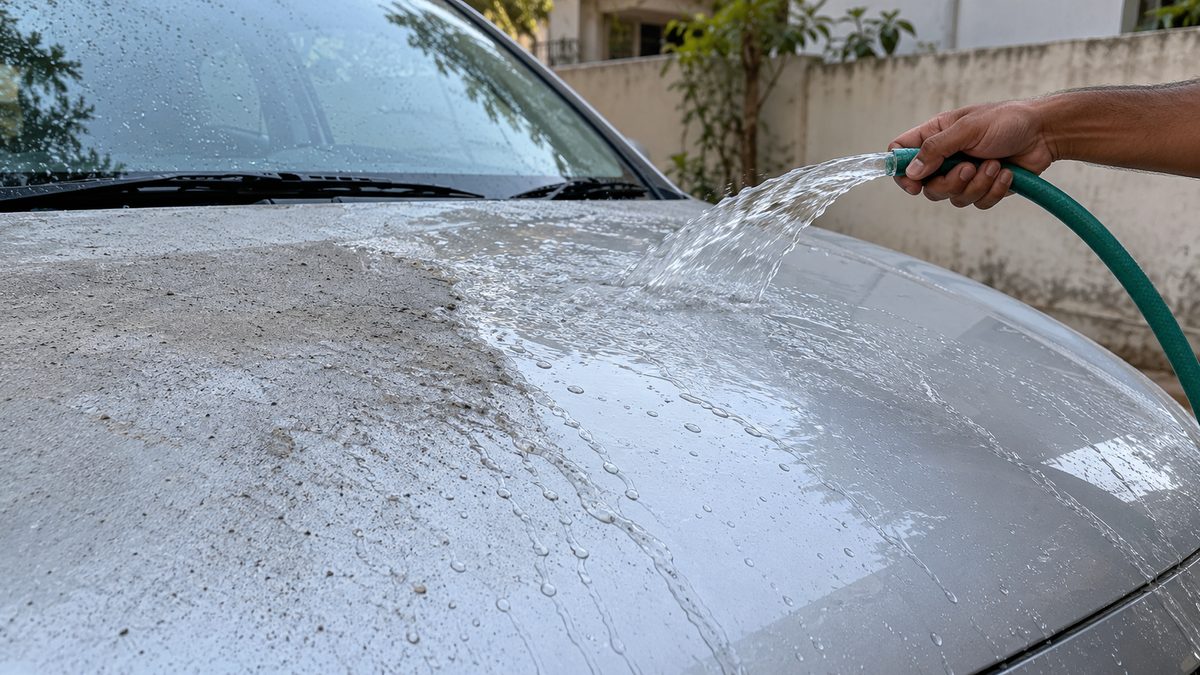
Car Cleaning After Diwali: Remove Ash Without Scratching
A rinse-first cleaning routine for the morning after Diwali, with separate steps for paint, glass and the cabin.
Car care gear
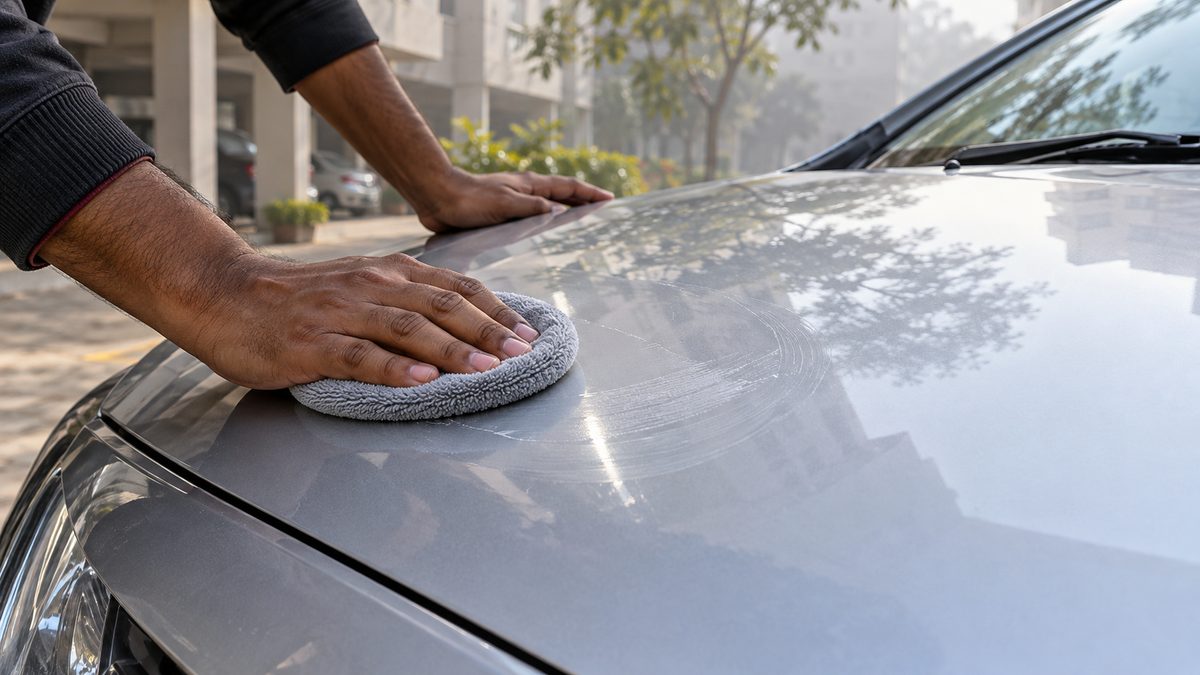
Car Wax for Winter: Dust, Fog and Paint Care
Choose wax or sealant for clean paint, then manage winter dust and damp with gentle washing, careful drying and sensible parking.
Car care gear
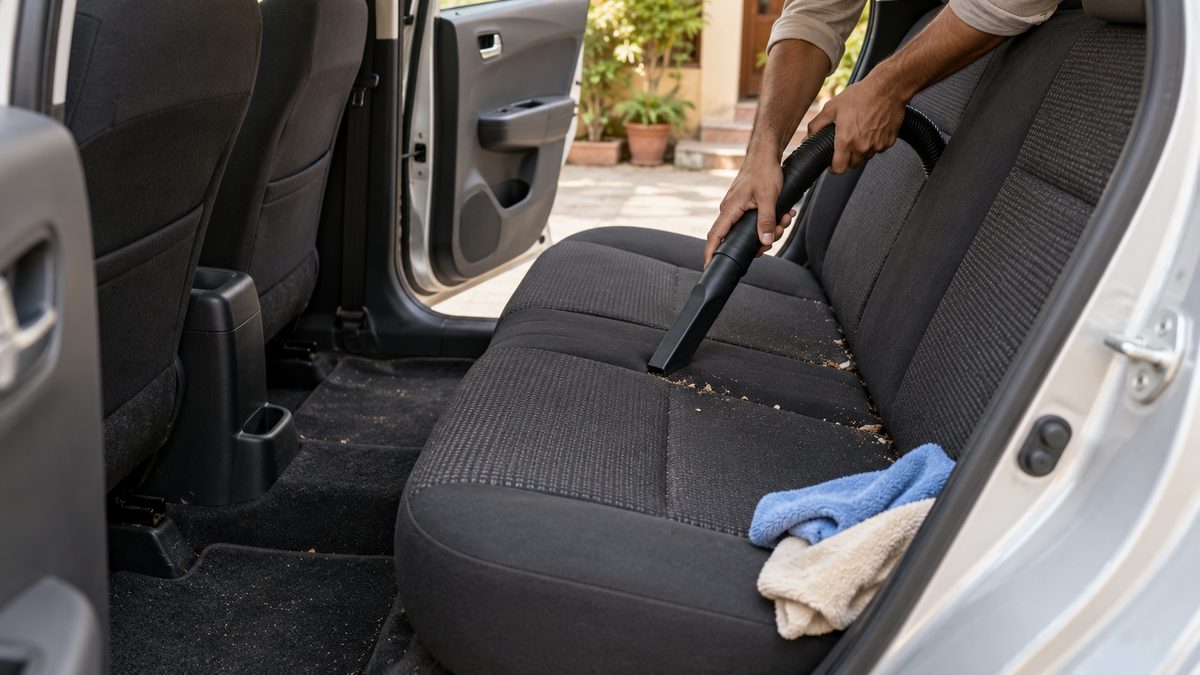
Clean the Car Interior Before Festive Travel, Zone by Zone
A practical order for cleaning the boot, seats, floor, dashboard, vents and glass, with drying and child-seat checks before travel.