Safety gear
Night Driving Checklist: Lights, Glare, Fatigue and Kit
By Samveg Jain · Updated 24 October 2026 · 6 min read
Some links on this site may be affiliate links. If you buy through them we may earn a commission, at no extra cost to you. It never changes what we recommend. How this works.
Quick answer
For night driving, check lights and clear glass before departure, reduce speed to suit the visible road and plan around fatigue. Delay the journey if the driver or car is not ready.
Before driving at night, check that the car's lights work, the glass is clear and you are rested enough to drive. On the road, choose a speed that lets you stop within the distance you can see clearly. If fatigue or poor visibility makes that uncertain, delay the trip or stop somewhere safe.
Earlier darkness can turn the last part of an ordinary journey into a different task. A familiar Indian road may have unlit vehicles, pedestrians, animals or roadworks that become harder to detect. Extra equipment helps with preparation and breakdowns, but it cannot replace time to see and react.
Make the departure decision before loading the car
Consider how much of the route is unfamiliar or unlit and where you could stop safely. If a daylight departure is possible, it may reduce the hardest section after dark. Leave room in the plan for delays rather than making arrival time depend on maintaining daytime speed.
Check current weather and road information through official sources before leaving. Fog, rain and closures can change the route decision. Set navigation and share the journey plan while parked, then put the phone in its holder with the cable clear of the pedals and gear controls.
Do not begin a long drive after an exhausting day merely because traffic might be lighter. Agree who can drive and where to rest. A passenger can help with directions, but keeping a tired driver talking does not make the driver fit to continue.
Walk round the lamps while there is still light
Park securely and check low beams, high beams, tail lamps, indicators and brake lights, using a helper for the brake pedal. Check the number plate lamps too. Daytime running lights may leave the rear lamps off, so learn the car's lighting controls instead of relying on the illuminated dashboard.
Clean dusty lamp lenses and replace failed bulbs with the specified type. If one beam points into the trees or other drivers repeatedly signal at you, arrange an aim check. Adjust any load-related headlamp levelling control as the handbook directs when carrying passengers and luggage.
A brighter bulb is not a repair for a damaged reflector, cloudy lens or poor electrical connection. Our headlight bulb guide covers fit considerations. For replacement lamps and how you use lighting, check the current rules where you drive.
Remove the film that turns headlights into glare
Clean the windscreen on both sides, along with mirrors and other windows needed for observation. Interior film can be easy to miss until another vehicle's lights shine through it. Keep a clean glass cloth separate from cloths used for polish or dashboard dressing.
Check wiper blades and washer operation before departure. Smearing, skipping or a dry washer reservoir can leave you struggling after a passing vehicle throws dirty spray across the glass. If mist forms inside, use the demister and ventilation settings described in the handbook.
The inside windscreen fogging guide explains the checks to make before reaching for a cloth while driving. If the screen will not clear, stop safely to restore visibility. Do not continue while peering through a small cleared patch.
Set the mirror's anti-dazzle function if fitted and dim cabin displays to a comfortable readable level. Retain enough brightness to see warning information. Avoid strong cabin lights during the journey, and ask passengers to keep bright screens out of your direct view.
Drive to the visible road rather than the empty road
A quiet road can still conceal a hazard beyond the reach of the headlamps. Reduce speed before dark bends, junctions and areas with roadside activity. Keep enough space behind the vehicle ahead to observe the surface instead of concentrating only on its tail lamps.
Use high beam only when appropriate and dip promptly for oncoming traffic or when following another vehicle. Take particular care around bends and crests where someone can appear suddenly. Avoid looking directly into oncoming lights; keep observing your path and the visible road edge without fixing your gaze on one point.
Do not overtake unless you can clearly assess the road and complete the manoeuvre safely. Darkness makes distance and speed harder to judge. If glare temporarily limits your view, slow progressively and increase space rather than maintaining speed from memory.
Fog calls for a separate response because high beam can worsen the view. Read the fog driving checks before a route where it is likely, and be prepared to delay rather than rely on another vehicle as a moving guide.
Use fatigue signs as a reason to stop
Repeated yawning, heavy eyelids, missed signs and difficulty remembering the last section of road are warnings. Drifting within the lane or needing repeated corrections means the situation has already become dangerous. Find a suitable stopping place as soon as it is safe.
Opening a window, loud music and a caffeinated drink cannot replace sleep. Change to a rested, qualified driver or obtain proper rest in a safe place. Avoid driving after alcohol, and check medicine instructions for drowsiness warnings with a pharmacist or doctor if uncertain.
Keep the night-stop kit within reach
| Before setting off | What to confirm |
|---|---|
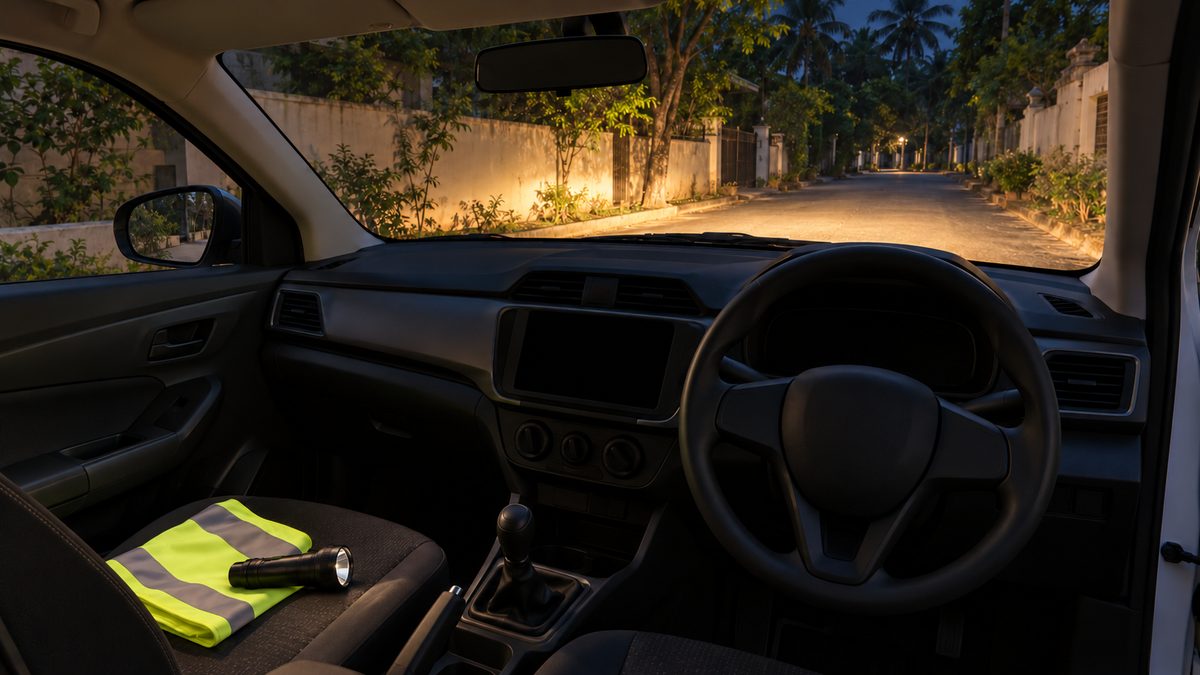
| Torch and phone | Charged, working and accessible, with assistance contact details saved. |
| Reflective vest | Reachable before stepping out, without standing beside moving traffic to unpack. |
| Warning triangle | Present and usable, with placement governed by the situation and local guidance. |
| Water and suitable clothing | Available if a delay leaves passengers waiting away from facilities. |
If the car develops trouble, seek a safe stopping place away from the running lanes. Use warning equipment only when you can do so without entering danger; retrieving a triangle is not worth walking into traffic. Follow local emergency or road operator instructions, and contact assistance when needed.
Our car safety kit guide helps organise the equipment. Before moving off, complete one last check: clear view, working lights, secured luggage and an alert driver. An unresolved problem in any of those areas is a reason to change the departure plan.
What to look for when you buy
Glass cleaning kit
Lint-free cloths and a cleaner suitable for the car glass and any coatings.
Charged torch
A dependable beam, simple controls and storage reachable without unloading the boot.
Reflective vest and warning triangle
Accessible storage, a vest that fits over clothing and a triangle with a stable base.
Phone charging cable
A secure connection and a cable route clear of driving controls.
Frequently asked questions
Do yellow glasses make night driving safer?
Tinted lenses reduce the light reaching your eyes and are not a substitute for clear glass or an eye examination. Ask an eye-care professional about persistent glare or night vision difficulty.
Can I rely on automatic high beam?
Remain ready to override it. Sensors may not recognise every road user or situation promptly, and the driver remains responsible for avoiding dazzle.
Should a novice driver begin with a long night journey?
Build experience on familiar routes in manageable conditions before attempting a demanding trip. Practise using demisters, mirrors and lighting controls while parked first.
What if rain starts after dark?
Reduce speed and increase space, use suitable dipped lights and clear the glass. If visibility becomes inadequate, seek a safe place off the carriageway and wait.
Can I wear my usual prescription glasses at night?
Use the prescription advised for driving and keep lenses clean. If vision has changed or glare has become troublesome, arrange an eye examination before a demanding night journey.
More guides
Safety gear
Car Safety Around Firecrackers: Parking for Diwali
A practical parking and inspection plan for Indian car owners before and after Diwali celebrations.
Safety gear
Tyre Tread Depth: Check Wear Before Buying Replacements
Inspect tread grooves, wear indicators and uneven wear before choosing replacement tyres. Know when a professional inspection cannot wait.
Safety gear
Reverse Parking Cameras vs Sensors: A Fitment Guide
Compare reversing cameras and parking sensors by coverage, installation and limits. Choose a system that supports direct observation.