Safety gear
Warning Triangle and Car Safety Kit Buying Guide
By Samveg Jain · Updated 21 October 2026 · 6 min read
Some links on this site may be affiliate links. If you buy through them we may earn a commission, at no extra cost to you. It never changes what we recommend. How this works.
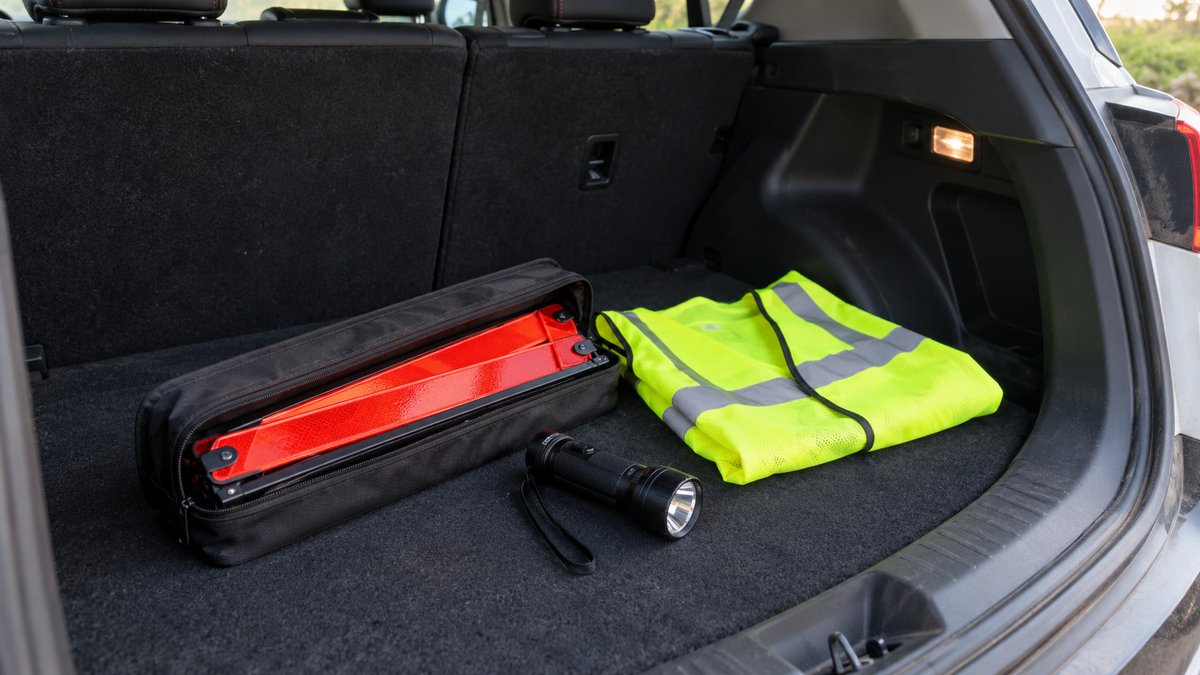
A useful car safety kit combines a stable reflective triangle, a correctly fitting reflective vest and a dependable torch in accessible storage. Buy those basics before adding novelty rescue gadgets. Deployment depends on traffic, road type and local rules. Never walk into a live lane or another unsafe area merely because the equipment is in your boot.
Build the kit around a safe stop
Think through a puncture after dark, heavy monsoon rain or an engine fault on a busy road. The first decisions concern the vehicle's position, occupants and contact with assistance. Warning equipment can support that response, but cannot make an unsafe stopping place safe. Read the vehicle handbook and your road-assistance provider's instructions before an incident occurs.
Rules differ between roads and countries. For example, the UK Highway Code's breakdown guidance prohibits triangles on motorways. That is not an Indian placement rule; it illustrates why one universal distance or procedure is unreliable. Check local rules and follow police or road-operator directions on the route you are using.
Examine the triangle as a structure
A warning triangle needs reflective surfaces, sound joints and supports that open predictably. Inspect the feet and hinge locks rather than judging only the red face. Lightweight folding products can vary in stability. Ask for the applicable approval or standard and check the actual markings. A case protects reflective faces from scratches and keeps sharp folded sections contained.
Check the manufacturer's instructions for assembly and inspection. Practise assembly in a safe stationary setting, away from traffic. You should be able to recognise the correct orientation and open the supports without forcing plastic clips. Inspect it again after practice and pack it properly. Do not test road placement on a busy shoulder. A demonstration in a car park can reveal awkward latches without exposing anyone to passing vehicles.
Compare the core items
- A folding triangle provides a reflective warning when safely deployed under applicable rules. It needs stable supports, intact reflective sections and a case that opens without special tools.
- A reflective vest helps make the wearer more conspicuous. Check the stated standard, fit over ordinary clothing and a fastening that stays closed without complicated adjustment.
- A torch provides task lighting and helps find equipment in a dark boot. Simple controls and predictable battery condition are more useful than numerous flashing modes.
- Gloves and a weather layer can support basic roadside tasks. Choose usable sizes and keep them dry, while avoiding a kit so bulky it becomes inaccessible.
Fit the vest before storing it
Open the package and try the vest over the clothing likely to be worn during travel. A vest too small to close or too long to move in comfortably is a poor fit. Check reflective strips for damage and read washing instructions. A high-visibility colour and reflective material serve different lighting conditions, so do not assume colour alone establishes nighttime performance.
Keep it in an accessible secured compartment where you can put it on before exiting if conditions permit. A vest beneath luggage in the boot may be unreachable at the moment it is needed. If carrying several passengers, consider who may need reflective clothing, but avoid encouraging people to leave a safer location just because extra vests are available.
Choose a torch for infrequent use
The torch may sit unused for weeks. Check how its charge or battery condition can be verified and whether replacement power is easy to obtain. A simple on-off control is convenient with wet hands. Water-resistance claims should identify their limits. A damaged seal or open charging port may undermine protection even when the casing feels sturdy.
Keep spare batteries protected against short circuits and follow the torch maker's storage guidance. Rechargeable designs need a reminder to check charge, especially before long journeys. Avoid leaving loose cells beside metal tools. Our charger buying guide can help plan a compatible charging cable without assuming every torch uses the same input.
Pack for access from the right place
Separate items needed before exiting from equipment that can remain in the boot. Keep reflective clothing accessible to occupants and secure heavier gear in suitable storage. No pouch belongs loose near pedals or across an airbag cover. Check that the kit stays in place during normal seat adjustment and does not compromise belts or child restraints.
Use the organiser guide to create a consistent location. Keep emergency equipment visible when opening the boot rather than under cleaning supplies. Test access with actual holiday luggage loaded. The road-trip packing list helps reserve that space before adding bags and shopping.
Inspect a bundled kit item by item
- Obtain a full contents list and judge every component separately. A strong bag does not compensate for a triangle with unstable feet or a torch without reliable power.
- Check triangle markings, hinges and reflective faces. Inspect the case for rough edges that could damage other equipment or make unpacking awkward with cold hands.
- Try the vest for size and confirm care instructions. Store it dry and check it after prolonged compression or contamination with oil, mud or cleaning chemicals.
- Test the torch using its normal controls. Charge it as instructed and check for damaged cables, corrosion or loose battery covers before putting it back.
- Keep assistance contacts in a format that remains available without mobile data. Confirm your coverage, the vehicle details needed and any relevant road-operator contact information.
Keep the rest of the kit realistic
Add the first aid kit according to passengers and storage conditions. Do not buy unfamiliar specialist tools just to fill an empty compartment. If something needs training or vehicle-specific compatibility, resolve that before carrying it. A kit you understand is more useful than a larger collection that cannot be identified in low light.
Before each major trip, spend a few minutes checking access and condition. After a roadside stop, clean and dry equipment before repacking it. Replace damaged reflective surfaces and unreliable lights. The aim is reliable equipment and sensible decisions in context, rather than a rigid routine that sends someone into traffic to complete a checklist.
What to look for when you buy
Folding reflective triangle
Stable supports, durable joints and a protective case.
Reflective high-visibility vest
Suitable certification, correct fit and easy fastening.
Compact roadside torch
Reliable power, secure storage and simple controls.
Frequently asked questions
Should I always place a triangle after stopping?
Only when safe and permitted. Road type, traffic and local rules matter; do not enter danger to deploy equipment.
Is there one correct triangle distance everywhere?
No. Follow local rules and road-operator instructions for the road and conditions.
Where should reflective clothing be stored?
Keep it secured where occupants can reach it before exiting, without blocking controls or airbags.
Does a torch replace warning lights?
No. It assists visibility and tasks; it does not replace the vehicle lighting or required warning equipment.
More guides

Safety gear
Car Safety Around Firecrackers: Parking for Diwali
A practical parking and inspection plan for Indian car owners before and after Diwali celebrations.
Safety gear
Night Driving Checklist: Lights, Glare, Fatigue and Kit
Prepare for an evening drive with checks for lights, glass, mirror glare, fatigue and breakdown equipment, plus clear reasons to delay.
Safety gear
Tyre Tread Depth: Check Wear Before Buying Replacements
Inspect tread grooves, wear indicators and uneven wear before choosing replacement tyres. Know when a professional inspection cannot wait.