Safety gear
Car First Aid Kit Checklist: Supplies and Storage
By Samveg Jain · Updated 21 October 2026 · 5 min read
Some links on this site may be affiliate links. If you buy through them we may earn a commission, at no extra cost to you. It never changes what we recommend. How this works.
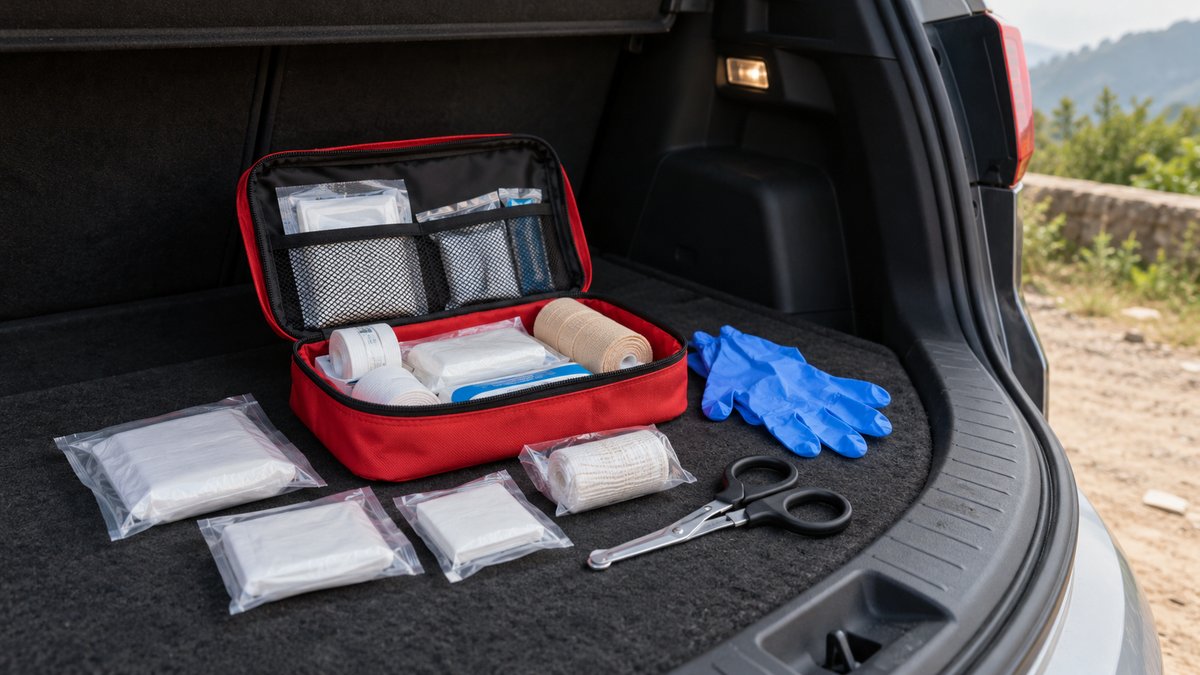
Buy a car first aid kit with sealed dressings, disposable gloves, clear instructions and compartments you can identify quickly. Choose accessible contents over an impressive piece count. Check expiry dates and storage limits before loading it. A kit supports basic assistance; it does not replace emergency services, first aid training or medical advice.
Count useful supplies rather than pieces
A kit advertised with many items may contain mostly small adhesive strips. Read the complete inventory, including sizes and packaging. Look for a sensible mix for minor wounds rather than assuming a high total means broader capability. If a seller will not provide a legible contents list and expiry information, choose a better documented option.
The Red Cross first aid kit checklist includes dressings, gauze, adhesive tape, nonlatex gloves and instructions. Use it as a starting reference for supplies, then adapt quantities to passengers and journey length. Avoid buying unfamiliar specialist tools merely because they make a kit look more advanced.
Inspect the items you may need first
Sealed sterile dressings should have intact wrappers and legible dates. Gloves need their own protection from dirt and damage. A pair of blunt-ended scissors can help with packaging, but should sit in a protected compartment. Check that tape is usable without hunting for a hidden edge and that adhesive strip sizes suit the intended users.
A printed first aid guide remains useful when mobile data is unavailable. Keep emergency contact details separately in a readable format, with essential personal information shared only as appropriate. If someone has a condition requiring specific supplies, plan that with their clinician. Do not assume a generic car kit covers prescribed care or a passenger's individual medical needs.
Compare buying formats
- A compact dressing pouch fits daily driving and is easy to move between cars. Verify that its small size has not eliminated useful dressing sizes or gloves.
- A larger family kit can provide more supplies, but needs an organised layout. Several unlabeled packets inside one deep pocket are difficult to search under pressure.
- An empty water-resistant bag lets you select contents individually. This takes more care to track dates, packaging and compatible storage instructions for each supply.
- Refill packs can maintain an existing kit. Match the actual items used or expired rather than repeatedly adding duplicates until the pouch cannot close properly.
Select a pouch you can open
Try the closure with clean dry hands while stationary. A bright pouch is easier to spot among luggage, but colour alone does not reveal its contents. Clear internal sections help distinguish dressings from tools. A wraparound zip can expose everything at once, while a narrow top opening may force you to remove several items to find one packet.
Water-resistant fabric helps with everyday splashes but does not guarantee waterproof storage. Ask what the rating means and how the contents are protected. Muddy boot floors and wet umbrellas are poor neighbours for medical supplies. Keep the pouch separate from cleaning chemicals, fuel containers and tools that can puncture sterile wrappers or damage glove packaging.
Plan heat-sensitive items separately
Follow the storage directions on every included item. Parked cars can become very hot, so a car kit containing medicines is not automatically suitable for year-round storage. Ask a pharmacist about anything with uncertain temperature requirements. Do not leave prescription medicines in the glovebox merely because they came inside a pouch labelled for automotive use.
For a journey, carry personal medicines according to their instructions in a separate, identified bag. Keep original labels and do not share medicines between passengers. Consumables such as wipes and adhesives also deserve inspection after harsh storage. Check the manufacturer's instructions and replace items with damaged seals, altered appearance or unreadable labels instead of relying solely on the outer kit date.
Choose access before the trip begins
Decide where the kit will stay and tell regular passengers. It should be secured and reachable without unloading the entire boot. Keep it away from airbags, pedals and seat mechanisms. Do not place it loose on the parcel shelf because a bright bag there looks convenient. Access matters, but the package must not become another unsecured object.
Use the organiser guide to arrange a dedicated location. Add the kit to your packing checklist before luggage, rather than trying to squeeze it into a leftover gap. Anyone borrowing the vehicle should know where it is and how to open its storage compartment.
Run a practical readiness checklist
- Open the pouch and compare contents with its inventory. Replace missing items after use, even when only a single dressing was removed for a minor cut.
- Inspect seals, expiry dates, glove packaging and the condition of tape. Date checks should include individual packets, not only a sticker on the outside of the bag.
- Keep emergency numbers and relevant contacts readable without accessing someone else's phone. Confirm local emergency arrangements for the route before travelling into unfamiliar regions.
- Check the kit after a leak, flood exposure or unusually harsh storage. A clean exterior does not prove everything inside has remained dry and within temperature limits.
- Review personal requirements before travelling with children, older relatives or someone with a medical condition. Arrange suitable supplies with qualified advice rather than guessing at treatment.
Keep roadside safety alongside medical supplies
Before helping, consider traffic, fire and other immediate hazards. Call appropriate emergency services for a serious incident and follow dispatcher instructions. Move only when necessary for safety and within your training. Do not attempt procedures because a tool appears in the bag; competence matters more than owning equipment with a specialist name.
Read the warning-triangle and safety-kit guide when arranging the rest of your roadside equipment. Store a torch and reflective clothing accessibly as separate items. After any use, record what needs replacing while it is fresh in your memory. An orderly refill habit keeps a modest kit useful for the next journey.
What to look for when you buy
Compact dressing kit
Sealed dressings, gloves and an itemised contents list.
Water-resistant organised pouch
Clearly separated compartments and easy opening.
Trip-specific refill pack
Suitable replacement supplies with visible expiry dates.
Frequently asked questions
Is a larger kit always better?
No. Accessible, suitable supplies are more useful than a high count of duplicate items.
Can medicines stay in the car?
Follow each medicine storage instructions and ask a pharmacist; parked-car heat may be unsuitable.
Where should the kit go?
In an accessible secured location known to regular passengers, away from direct sun and moisture.
Does a kit replace first aid training?
No. Training helps you recognise emergencies and use supplies within your competence.
More guides

Safety gear
Car Safety Around Firecrackers: Parking for Diwali
A practical parking and inspection plan for Indian car owners before and after Diwali celebrations.
Safety gear
Night Driving Checklist: Lights, Glare, Fatigue and Kit
Prepare for an evening drive with checks for lights, glass, mirror glare, fatigue and breakdown equipment, plus clear reasons to delay.
Safety gear
Tyre Tread Depth: Check Wear Before Buying Replacements
Inspect tread grooves, wear indicators and uneven wear before choosing replacement tyres. Know when a professional inspection cannot wait.