Car care gear
Car Cleaning After Diwali: Remove Ash Without Scratching
By Samveg Jain · Updated 25 October 2026 · 5 min read
Some links on this site may be affiliate links. If you buy through them we may earn a commission, at no extra cost to you. It never changes what we recommend. How this works.
Quick answer
Inspect for heat damage or suspicious debris first, then rinse cooled ash and dust off before touching the paint. Wash with suitable car shampoo and clean wash materials, and use separate cloths for glass and the cabin.
To clean your car after Diwali, rinse away loose, cooled ash and dust before putting a mitt or cloth on the paint. Then wash with suitable car shampoo, rinse thoroughly and dry with a clean soft towel. Inspect for heat damage and suspicious firework debris first; cleaning should wait if there is a safety concern.
A grey film on the roof can tempt you to brush it off before breakfast. Resist that shortcut. Ash can sit alongside gritty road dust, and dragging the mixture over paint can leave scratches. Work on cool panels in shade, with enough clean water and separate materials for the body, wheels, glass and interior.
Separate ordinary dirt from damage before getting it wet
Walk round the parked car without touching deposited material. Look for melted trim, blistered paint, cracked glass, sharp fragments or debris caught near tyres. If you notice heat, smoke, a fuel smell or a fresh leak, keep away and seek professional help; call emergency services for an immediate hazard.
Do not handle unexploded firecrackers or wash them into a drain. Keep others away and contact the responsible local authorities for advice. This is general care and safety information. For disposal and washing restrictions, check the current rules where you drive and the relevant local authority guidance.
Photograph suspected damage before washing. Fused material and scorched paint need assessment rather than harder scrubbing. Our firecracker safety guide for parked cars covers the checks that should come before cleaning or driving.
Set up clean tools before the first rinse
Read the shampoo dilution and surface instructions, particularly if the car has a coating, film or repaired paint. Use products approved for those surfaces. Dishwashing liquid, household scouring powder and kitchen sponges are poor substitutes for a suitable car wash product and soft wash material.
Prepare a wash mitt, a separate means of rinsing it, a drying towel and glass cloths. Keep wheel brushes and cloths apart from paint tools. The microfibre cloth and wash kit guide explains the differences. A soft cloth stops being suitable for paint once it carries grit.
Choose a place where runoff is permitted and where you will not leave a slippery footpath. Keep electrical equipment and connections away from water. If local water restrictions or the available space prevent a thorough rinse, take the car to a suitable wash facility and ask for a rinse before any contact wash.
Lift loose ash away before moving a mitt
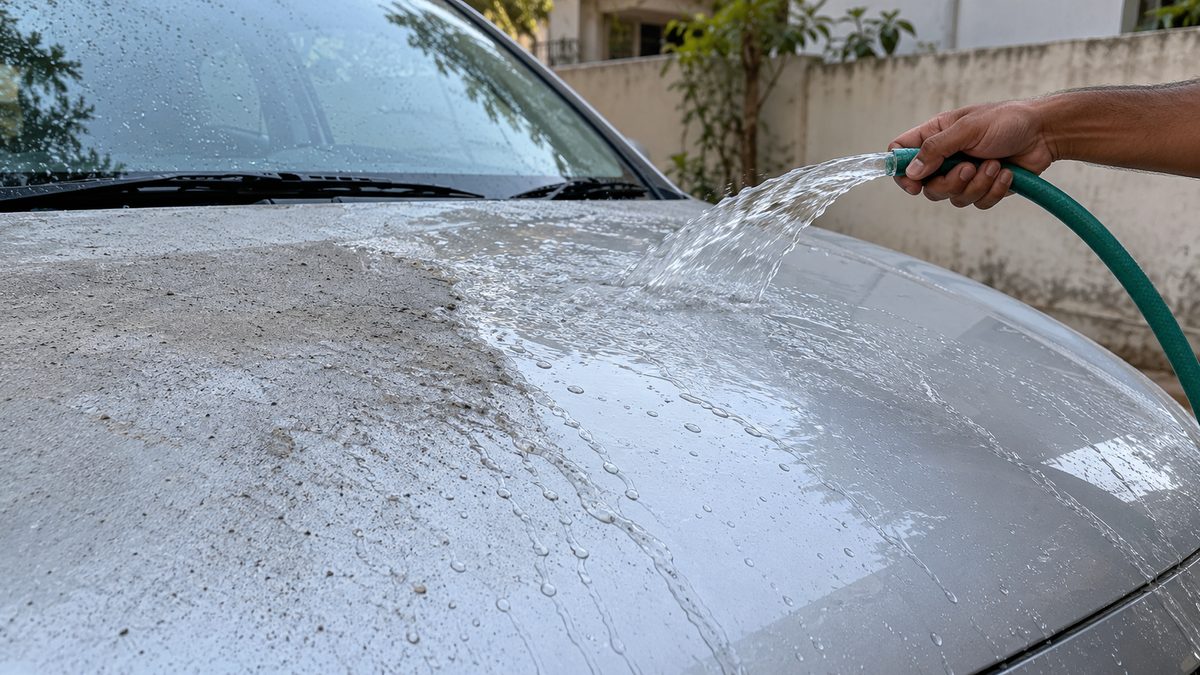
Rinse from the roof down, letting water carry loose material away. Pay attention to the base of the windscreen, panel gaps and the edges of the boot where residue collects. Do not push debris into vents or direct a concentrated jet into seals, sensors or damaged paint.
If using a pressure washer, follow its instructions and the vehicle guidance for nozzle choice, distance and sensitive areas. More pressure is not a remedy for stubborn contamination. Once the rinse has removed loose grit, apply diluted shampoo as directed and work gently in manageable sections, starting with the cleaner upper panels.
- Rinse the whole exterior before touching the paint.
- Wash a small section with a clean, well-lubricated mitt and light pressure.
- Rinse the mitt separately and inspect it before returning to the wash solution.
- Leave lower dirty panels until later and use dedicated tools on wheels.
- Rinse shampoo off before it dries, then check the surface without rubbing it dry.
If the mitt drops on the ground, replace it with a clean one rather than trusting a quick shake. If a mark remains after a gentle wash, stop treating it as loose dirt. Repeated rubbing can damage the surrounding finish without removing the mark.
Clear the windscreen before testing the wipers
Flush loose residue off the glass before moving the wiper blades. Clear accessible debris from the area at the base of the windscreen without dismantling trim. Lift blades only if the vehicle instructions allow it, using the prescribed service position where needed; some arms can strike the bonnet if raised incorrectly.
Clean the blades according to their care instructions, and inspect for damage or material stuck to the edge. Finish the glass with a compatible automotive cleaner and separate lint-free cloths. Spray cleaner onto the cloth for interior glass so overspray does not coat the dashboard or electronics.
For persistent streaking, inspect the blade and glass rather than pressing harder. The wiper blade guide helps with replacement decisions. Check mirrors and lamp lenses too, using materials safe for their surfaces.
Remove cabin dust without spreading it through the car
With the exterior openings cleaned, remove mats carefully so loose dirt stays on them. Vacuum the mats outside the car, then the carpets and seat seams with a suitable attachment. Avoid compressed air, which blows deposited dust into other areas, and do not shake dirty mats beside an open door.
Wipe hard surfaces with a lightly dampened cloth and a compatible interior cleaner where required. Keep liquid out of switches, screens, airbag seams and seat electronics. Wash or replace dirty cloths rather than carrying soot from the door sill onto the dashboard. Follow the interior cleaning checklist for fabric and trim care.
Dry, inspect and decide what needs a specialist
Use a clean drying towel with light contact, changing it if it picks up contamination. Check door shuts and seals for remaining dirt without flooding them. Do not use the same towel on tyres and then return to the bonnet. Let cleaned mats dry before refitting and secure the driver's mat correctly.
Once dry, inspect the panels in good light. Leave scorch marks, fused specks and suspected paint damage to a bodywork specialist. Do not start abrasive polishing to meet a departure deadline. Before driving, confirm clear glass, working wipers and lamps, and a cabin floor free of loose cleaning equipment.
What to look for when you buy
Car wash shampoo
Compatibility with the paint finish and any protective coating, with clear dilution instructions.
Microfibre wash mitt and drying towel
Clean soft fibres, intact edges and enough separate materials to keep wheel dirt away from paint.
Automotive glass cleaner
Suitability for fitted tint or coatings and a residue-free finish when used as directed.
Cabin vacuum
Effective dust collection, a soft attachment and access to mats and seat seams without scratching trim.
Frequently asked questions
How should I clean a matte-painted car?
Follow the finish-specific maintenance instructions. Avoid polishing, wax or cleaners unless approved for that finish; glossy-paint routines can change its appearance.
Can I clean the car if I have no hose?
Use a suitable wash facility if you cannot rinse loose residue away with enough clean water. A dry wipe is a poor substitute when the panels carry visible ash or grit.
What if decorative adhesive remains on a panel?
Use only a remover approved for that surface, testing as instructed. Do not scrape with a blade or use household solvents; ask a detailer if the residue resists gentle treatment.
Should I steam-clean the engine bay after Diwali?
Do not add engine-bay cleaning to a routine ash wash. Follow the vehicle instructions and ask a workshop about contamination near wiring or intakes.
Does rain mean I can skip the wash?
Inspect the car after it dries. Rain can leave residue in streaks and around seals, so use a proper rinse and wash if contamination remains rather than rubbing away the marks.
More guides
Car care gear
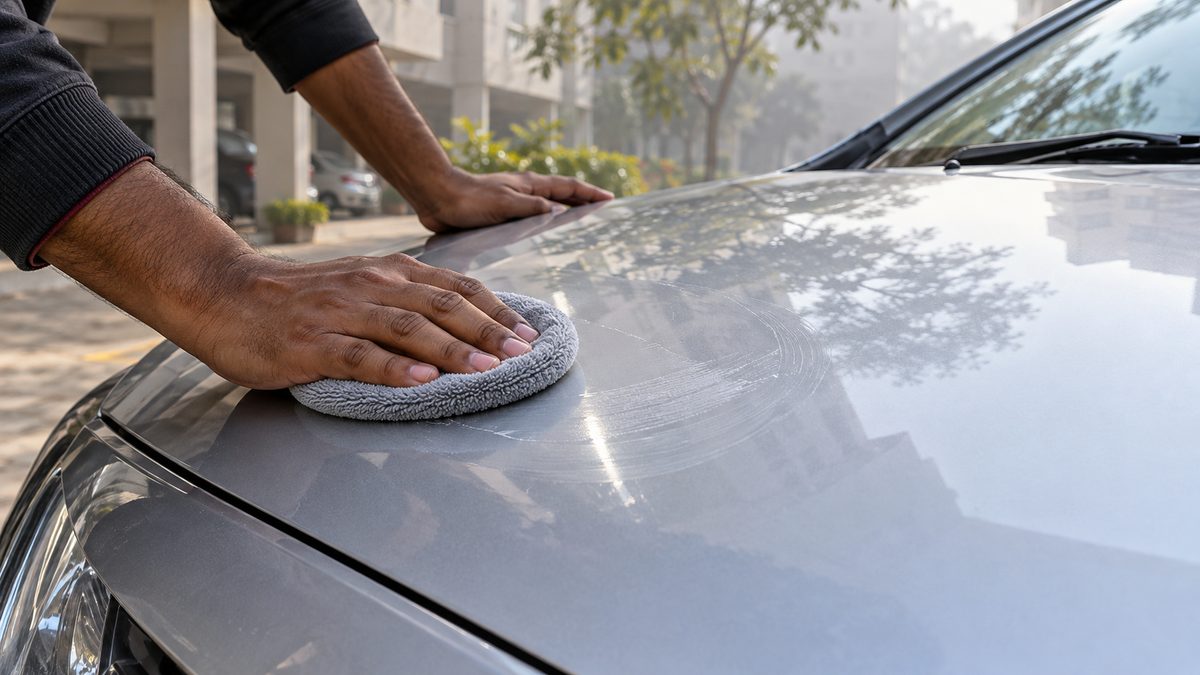
Car Wax for Winter: Dust, Fog and Paint Care
Choose wax or sealant for clean paint, then manage winter dust and damp with gentle washing, careful drying and sensible parking.
Car care gear
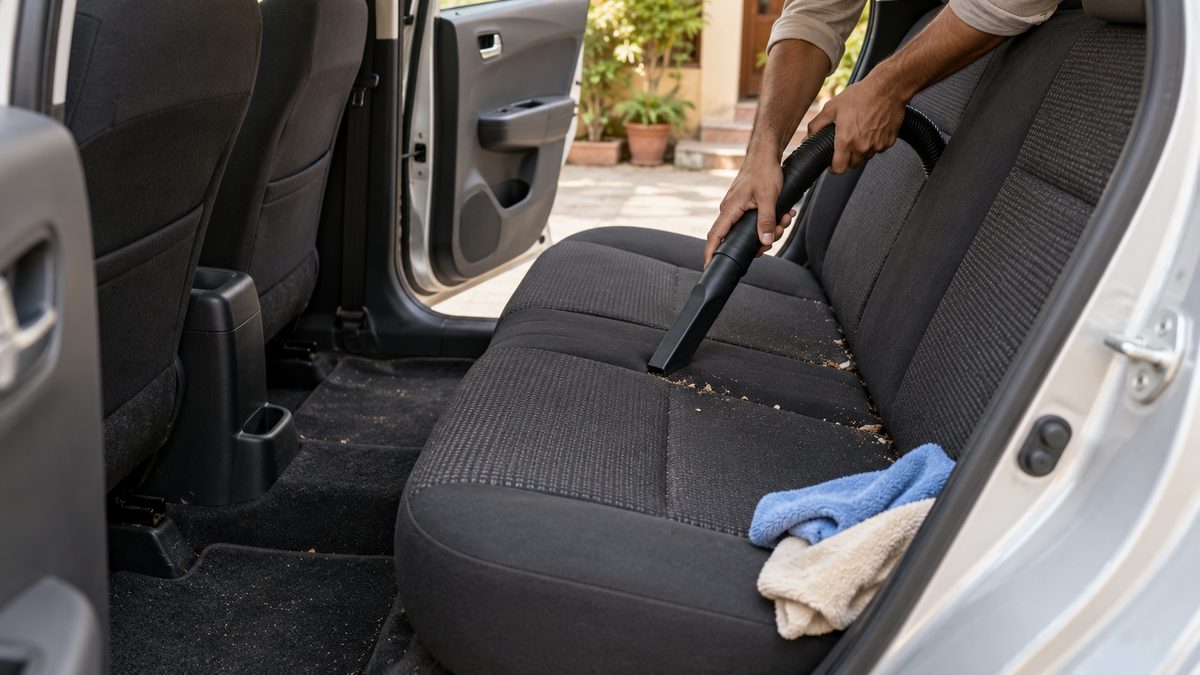
Clean the Car Interior Before Festive Travel, Zone by Zone
A practical order for cleaning the boot, seats, floor, dashboard, vents and glass, with drying and child-seat checks before travel.
Car care gear
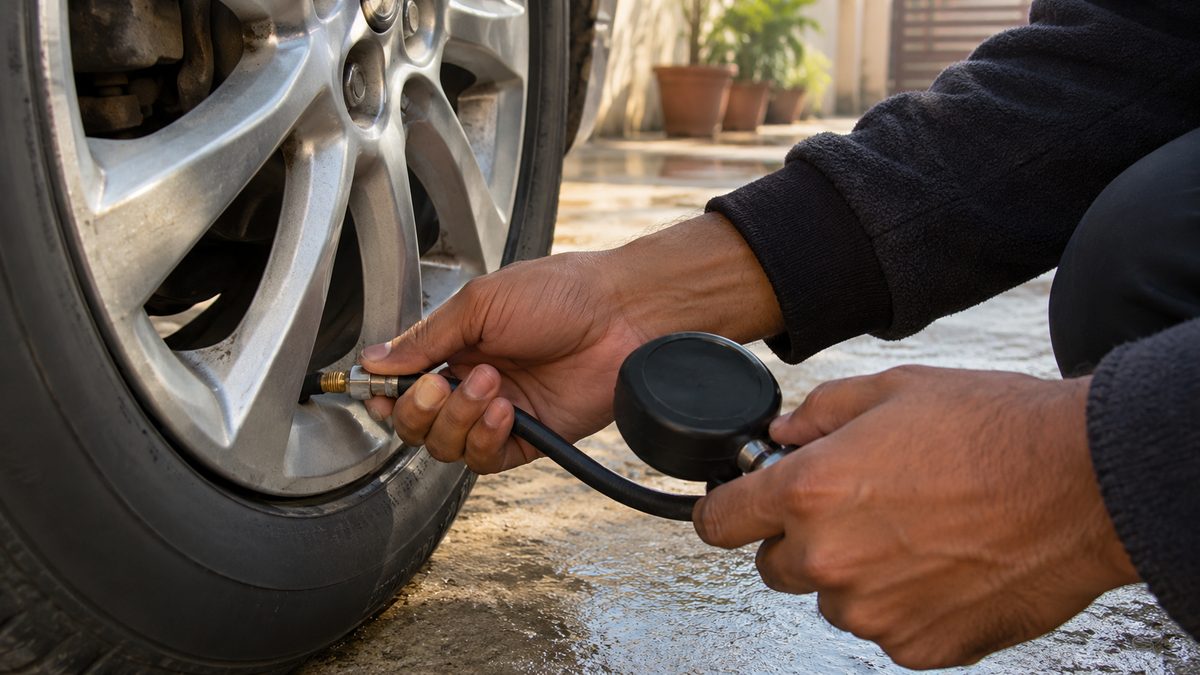
Tyre Pressure on Cold Mornings: Check Before You Drive
Why cold mornings lower tyre pressure, how to take a cold reading and which handbook setting to use before an Indian road trip.