Car care gear
Clean the Car Interior Before Festive Travel, Zone by Zone
By Samveg Jain · Updated 23 October 2026 · 6 min read
Some links on this site may be affiliate links. If you buy through them we may earn a commission, at no extra cost to you. It never changes what we recommend. How this works.
Quick answer
Empty the car, remove loose dirt from top to bottom, then clean each surface with a compatible product. Leave time for seats and mats to dry before festive travel.
Deep-clean the car interior by emptying it first, vacuuming loose dirt, then cleaning upholstery, trim and glass with products suited to each material. Work from the higher surfaces towards the floor and leave enough drying time before loading for festive travel. A damp seat hidden beneath a cover is unfinished cleaning.
Treat the cabin as several small rooms: the boot, rear passenger area, front seats and dashboard. This stops the job becoming a hurried wipe around visible surfaces while crumbs, spilled drinks and greasy glass remain. Set aside separate cloths for the dirty lower areas and the glass.
Empty the boot before opening the cleaner
Remove shopping bags, rubbish, loose accessories and luggage. Check door pockets, seat-back pockets and the space beneath the seats. Put medicines, documents and small valuables somewhere safe before you begin, and dispose of forgotten food rather than masking its smell.
Lift the boot mat and inspect the storage well for dampness, spill residue or a leak. Keep tools and the spare-wheel arrangement in order so you can replace them correctly. If water returns after cleaning, investigate the source instead of repeatedly drying the carpet.
Shake loose mats outside the cabin, away from people, then vacuum them. Keep them aside until the floor is finished. The floor mat comparison explains why fit and secure attachment matter as much as cleaning convenience.
Vacuum the passenger spaces while everything is dry
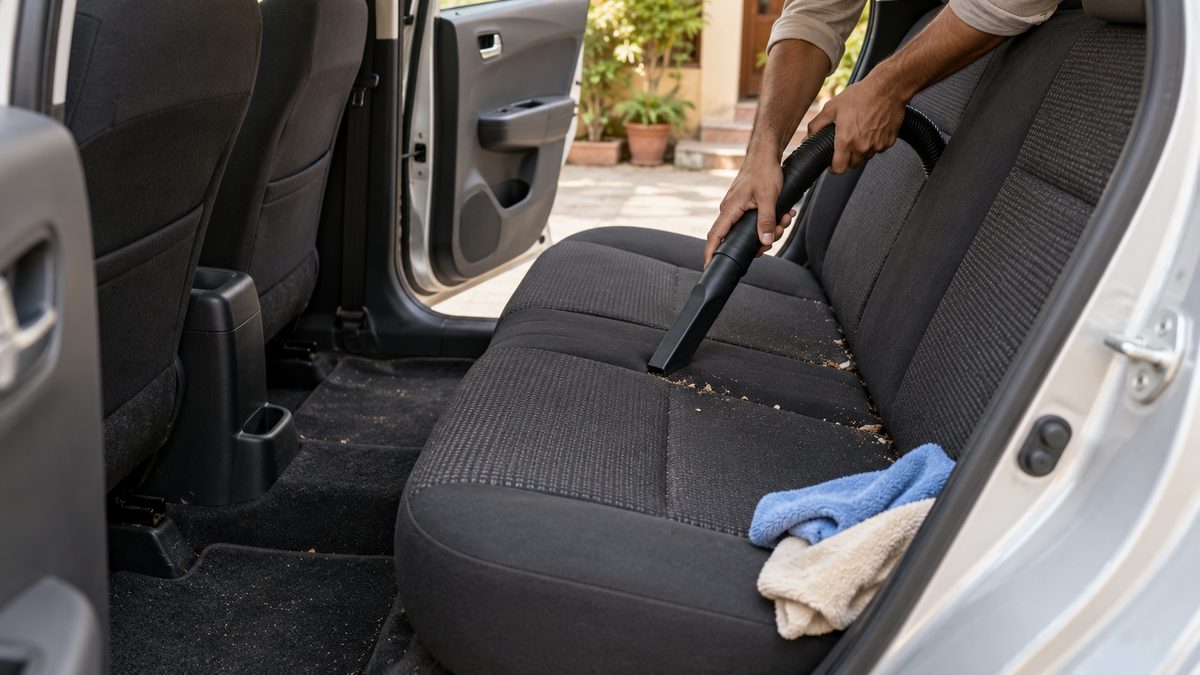
Start with seat seams, backrests and accessible parcel shelves, then move down to cushions, seat rails and carpets. A soft attachment helps on trim; a crevice nozzle reaches gaps. Check the nozzle for grit before letting it touch delicate surfaces.
Move the seats through their normal adjustment range to expose the floor, with the ignition off and fingers clear of mechanisms. Do not pull wiring beneath the seats or disconnect plugs. Avoid pushing the nozzle into electrical connectors, seat-belt buckles or seat controls.
Make deliberate passes where heels grind dust into the carpet. Lift crumbs with the nozzle rather than scraping the fabric with hard plastic. If the vacuum is intended only for dry debris, do not use it on wet patches. Our car vacuum guide covers attachments and collection types.
Clean seats according to their covering
Check the handbook and any seat-cover care label. Cloth, leather, coated leather and synthetic coverings can respond differently to the same cleaner. Test an inconspicuous area, allow it to dry and check for colour transfer or a changed finish before treating a larger patch.
For fabric, use the approved cleaner sparingly and blot a spill rather than grinding it deeper. Do not saturate padding. Excess liquid takes time to escape and can reach seat electronics or leave a persistent damp smell. An extractor requires both suitable upholstery and enough drying capacity.
Wipe permitted smooth coverings with a lightly dampened cloth and the specified cleaner. Avoid aggressive household chemicals or oily dressings. Perforations, seams and worn areas deserve extra care because moisture can enter beneath the surface.
Seat belts need their own care instructions. Keep harsh chemicals away from the webbing and let any permitted damp cleaning dry before retraction. Do not lubricate belt mechanisms or buckle openings. If a belt is frayed, damaged or fails to latch, arrange professional attention.
Brush the dashboard and vents without flooding them
Use a soft brush to loosen dust on accessible vent slats, lifting it away with the vacuum nearby rather than forcing it deeper. Do not push tools into the ducting. A visible vent clean does not replace checking a dirty cabin filter.
Apply a compatible cleaner to a cloth, not directly onto switches, screens or vents. Follow the display care instructions, since some coatings are easily marked. Clean the steering wheel and gear controls without leaving a slippery residue.
Keep the dashboard finish low-glare and keep pedals completely free of polish. Strong scent cannot solve damp carpets, spoiled food or a clogged filter. The cabin filter guide helps distinguish surface dust from a ventilation maintenance task.
Finish with glass and the floor under the pedals
Clean interior windows after the dusty and damp work. Use a product compatible with any tint or coating, apply it to a dedicated cloth and buff with a separate dry cloth. Reach the lower windscreen carefully without soaking the dashboard.
Use light pressure around rear-screen heating lines and follow the glass maker's care advice. Check the windscreen from different angles for streaks. A film that looks invisible in the shade can scatter oncoming lights, making the night-driving checks a useful final inspection.
Wipe approved rubber mats away from the car and dry them before refitting. Secure the driver's mat to its proper fixings, with no stacked mat underneath. Check that the pedals can move freely and that no bottle or loose cleaning tool remains in the footwell.
Cabin sign-off before the luggage goes back
- Boot storage is dry, tools are secured and no loose bottle can roll into the cabin.
- Seat cushions, carpet and mats are dry to the touch, including seams and edges.
- Belts extend, retract and latch normally, with buckles clear of debris.
- Vents are unobstructed, glass is clear and driving controls are free of slippery residue.
- Seats are locked in position and child restraints are reinstalled to their instructions.
- Cleaning bottles, brushes and cables have been removed before passengers get in.
Dry the car in a secure, ventilated place without leaving it open and unattended. If upholstery remains wet close to departure, delay covering it or loading luggage against it. Pack only after the cabin passes the dry check, keeping emergency equipment accessible rather than buried beneath festive bags.
What to look for when you buy
Crevice-tool vacuum
A nozzle that reaches seat gaps without sharp edges and a filter that can be maintained.
Separate microfibre cloths
Washable cloths reserved for glass, cabin surfaces and dirtier lower areas.
Material-specific upholstery cleaner
Clear suitability for the seat material and instructions for spot testing and drying.
Soft detailing brush
Gentle bristles suitable for trim and accessible vent slats without forcing parts.
Frequently asked questions
Can I clean the headlining with the seat cleaner?
Do not assume so. Roof linings can be sensitive to moisture and adhesive damage. Follow the handbook, use minimal moisture if permitted and seek a specialist for widespread staining.
Should I remove the front seats to reach every crumb?
Routine home cleaning should not require seat removal. Wiring, airbags and fasteners can need specialist procedures. Use suitable vacuum attachments and leave removal to a competent workshop.
How should I clean a fitted child seat?
Follow its own manual for covers, harness and shell. Do not soak harness straps or substitute cleaning products, and verify the installation after refitting.
Can I use a steam cleaner everywhere?
No. Heat and moisture can harm adhesives, electronics and some upholstery. Use steam only where the vehicle and material instructions allow it, with suitable equipment and technique.
What should I do with pest droppings in the cabin?
Pause ordinary vacuuming and arrange appropriate pest and cleaning advice. Avoid stirring up contaminated dust, and have damaged wiring or nesting material inspected before travel.
More guides
Car care gear
Car Cleaning After Diwali: Remove Ash Without Scratching
A rinse-first cleaning routine for the morning after Diwali, with separate steps for paint, glass and the cabin.
Car care gear
Car Wax for Winter: Dust, Fog and Paint Care
Choose wax or sealant for clean paint, then manage winter dust and damp with gentle washing, careful drying and sensible parking.
Car care gear
Tyre Pressure on Cold Mornings: Check Before You Drive
Why cold mornings lower tyre pressure, how to take a cold reading and which handbook setting to use before an Indian road trip.