Car care gear
Car Wax for Winter: Dust, Fog and Paint Care
By Samveg Jain · Updated 24 October 2026 · 5 min read
Some links on this site may be affiliate links. If you buy through them we may earn a commission, at no extra cost to you. It never changes what we recommend. How this works.
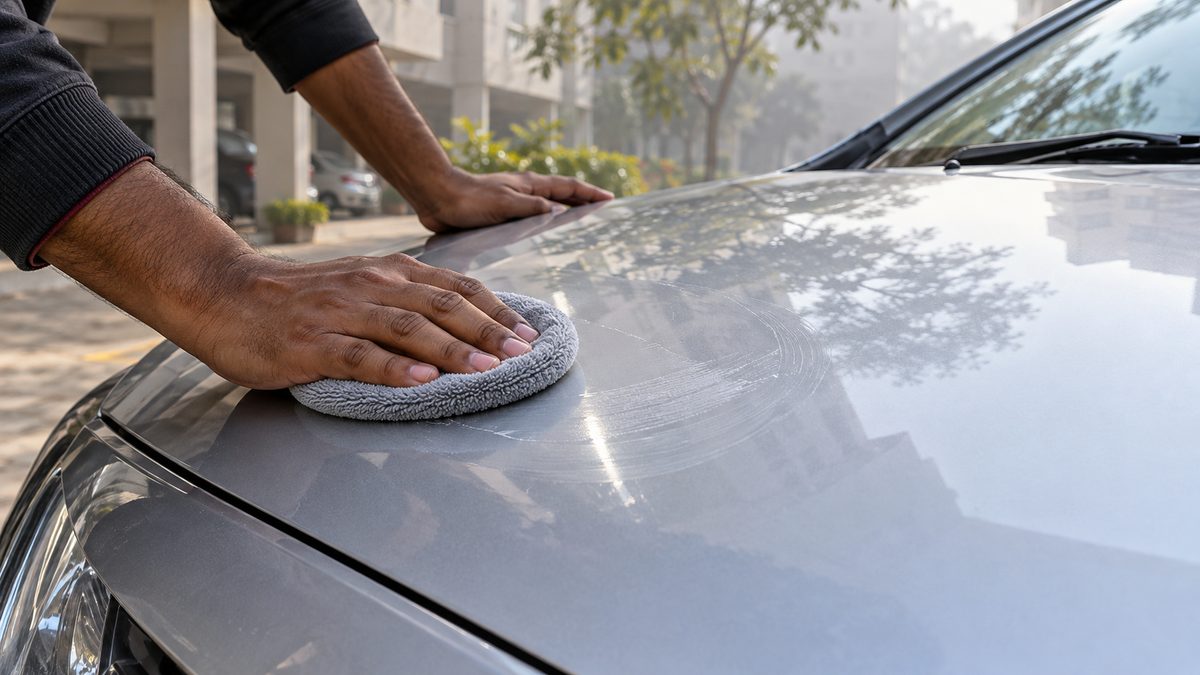
Quick answer
Wash away grit before applying wax or sealant to clean, cool paint. Choose a product compatible with the finish and follow its curing instructions; protection does not replace washing.
For dusty, foggy winter months, apply wax or a suitable paint sealant only after washing and drying the car properly. Both can add a protective surface layer, but neither makes a dusty panel safe to wipe dry. The useful routine is gentle cleaning, compatible protection and parking that limits avoidable contamination.
A car parked outside in northern India may collect fine dust by afternoon and moisture overnight. That combination can tempt you to rub the bonnet with whatever cloth is nearby. Keep a clean wash kit ready instead, and decide whether the car needs washing or simply needs leaving alone until you can clean it properly.
Remove winter grit before touching the paint
Start with the car in shade and the panels cool. Rinse loose dirt away, including grit around lower doors and wheel arches. If water use is restricted, choose a cleaning method intended for the amount of dirt present and follow local restrictions. A heavily soiled car needs more than a lightly damp cloth.
Use a car shampoo at its stated dilution, with a clean wash mitt. Work from cleaner upper panels towards dirtier lower areas, rinsing the mitt frequently. Keep wheel tools separate. Do not grind a stubborn mark into the finish; soften and treat it using a cleaner approved for that contamination and paint type.
Our microfibre cloth and wash kit guide helps you separate washing, drying and dirty jobs. A cloth that feels soft can still hold grit, so inspect it before every use and put dropped cloths aside for washing.
Choose protection you can apply correctly
Wax and sealant labels cover different formulations. Do not choose solely by a claimed lifespan, the depth of shine in a photograph or the size of the container. Read which surfaces are allowed, how thinly to apply it, when to remove residue and what conditions it needs afterwards.
| Choice | Check before buying | Practical limitation |
|---|---|---|
| Wax | Paint compatibility and removal instructions | May mark unpainted trim if applied carelessly |
| Sealant | Curing needs and permitted existing coatings | Outdoor damp may interrupt the application window |
| Spray protection | Whether it goes on wet or dry panels | Using too much can leave streaks |
The coating versus wax comparison explains the wider choices. No protective layer prevents every scratch, stone chip or stain. Keep expectations tied to maintenance rather than treating any finish as a reason to stop cleaning the car.
Plan around dew instead of the calendar
Choose a dry period with enough time for washing, drying, application and any required curing. Late afternoon can be awkward if dew is likely before the product has settled. Follow the temperature and humidity guidance on the container rather than assuming winter sunshine makes the conditions suitable.
Dry panel gaps and mirror housings before applying protection, because trapped water can run onto a finished door. Use separate clean applicators and removal cloths. Work on a small section, inspect it from another angle and then continue. A thin, even layer is easier to control than a thick smear that becomes difficult to remove.
If residue will not buff away easily, stop and consult the product instructions. Scrubbing harder can introduce marks. Avoid stacking unfamiliar products in an attempt to fix streaking, and keep any treatment away from glass, lamp lenses, seals and textured trim unless those uses are expressly permitted.
Respond to dirt without creating extra scratches
Bird droppings and tree sap deserve prompt attention, but not dry scraping. Use an appropriate cleaner and let the contamination soften as instructed. Lift it with a clean cloth using little pressure, then inspect the area. Persistent staining or damaged clear coat is a reason to ask a competent detailer or paint workshop.
After a foggy night, do not use the dew on the bonnet as wash water. Moisture does not remove the grit underneath it. Likewise, avoid writing in dust or letting children brush patterns across dirty doors. The visible mark may wash off while fine scratches remain.
Make parking part of the routine
Covered parking can reduce direct exposure, but avoid spaces below leaking pipes, dripping air-conditioning outlets or trees that repeatedly shed sap. Leave the car where you can get in and out without brushing dirty panels. Do not park somewhere unsafe merely to keep the finish cleaner.
A cover needs a clean car, a suitable fit and handling that does not drag dirt across the paint. Wind can move a loose cover against the body. Read the car cover buying guide before using one outdoors, and let a wet cover dry according to its care instructions before storing it.
Use condition to decide the next treatment
Keep a simple note of what you applied and how the car was washed afterwards. Inspect clean paint for uneven residue, rough contamination and visible deterioration. Water beading alone is not a complete measure of protection, and dirt can change how water behaves on the surface.
Reapply according to the product guidance and the condition of the finish, after cleaning. If the paint has peeling clear coat, deep scratches or exposed metal, wax is not a repair. Have those defects assessed before adding another cosmetic layer.
What to look for when you buy
Car wash shampoo
Paint compatibility and clear dilution instructions.
Paint wax
Permitted surfaces, application method and drying conditions.
Paint sealant
A suitable finish and practical curing requirements.
Drying cloth
Clean, soft microfibre with enough absorbency for gentle drying.
Frequently asked questions
Can I wax a recently repainted panel?
Ask the refinishing workshop when that particular paint system can be protected. Do not assume a generic waiting period applies.
Should I wax matte paint?
Only use products specifically approved for that finish. Ordinary gloss wax or polishing can alter its appearance.
Can a wax applicator be reused?
Clean it according to its instructions and inspect for embedded grit. Keep applicators separate from wheel-cleaning equipment.
Does a new car need polishing before wax?
Not automatically. Polishing removes or refines material and should address an identified defect, rather than become a routine preparation step.
What if the product freezes or separates in storage?
Follow its storage guidance and ask the maker about usability. Do not assume shaking restores a damaged formulation.
More guides
Car care gear
Car Cleaning After Diwali: Remove Ash Without Scratching
A rinse-first cleaning routine for the morning after Diwali, with separate steps for paint, glass and the cabin.
Car care gear
Clean the Car Interior Before Festive Travel, Zone by Zone
A practical order for cleaning the boot, seats, floor, dashboard, vents and glass, with drying and child-seat checks before travel.
Car care gear
Tyre Pressure on Cold Mornings: Check Before You Drive
Why cold mornings lower tyre pressure, how to take a cold reading and which handbook setting to use before an Indian road trip.