Car care gear
Car Cover Buying Guide for Monsoon Parking
By Samveg Jain · Updated 21 October 2026 · 6 min read
Some links on this site may be affiliate links. If you buy through them we may earn a commission, at no extra cost to you. It never changes what we recommend. How this works.
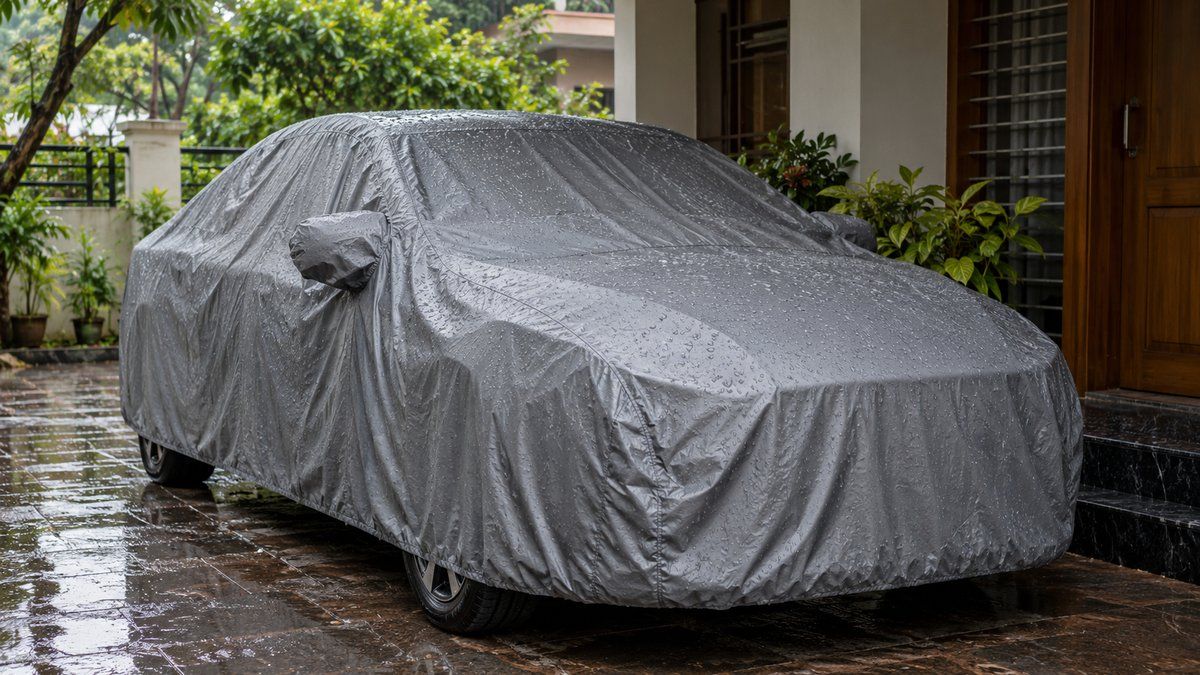
For monsoon parking, choose a cover that fits the car closely, has documented outdoor suitability and comes with clear drying instructions. Buy for the parking space as well as the vehicle. A cover can become inconvenient if rainwater, grit or loose fabric remains trapped against the car. Inspect underneath regularly instead of treating covered parking as maintenance-free.
Decide whether the parking space needs one
A car under a sound roof has different exposure from one parked beneath trees. List the problems you face: dust, leaf debris, bird droppings or wind-driven rain. A heavy outdoor cover may be unnecessary in a dry garage, while an indoor dust sheet is unsuitable for open monsoon parking. Choose the intended use before comparing layer counts.
Consider how often the car moves. Daily removal means handling a wet or dirty sheet each morning. An infrequently used car needs a regular inspection plan so a cover does not hide water ingress or other problems. If the space floods or has persistent drainage issues, a cover is not a solution to that site hazard.
Measure the fitted car
Check length, width and height against the maker's fitting method. Mirror pockets, spoilers, roof rails and external accessories change the shape. A listing that names your car may still refer to another body style or generation. Confirm compatibility with the actual vehicle and remove only accessories the vehicle maker permits you to remove.
Inspect how the lower hem and straps hold the cover. A loose sheet can move against the body; an over-tight one stresses seams and is awkward to fit. Fasteners should not rub paint or pull against delicate trim. Do not secure straps around hot exhaust components, suspension parts or unidentified underbody fittings. Follow the designed fastening route rather than improvising.
Compare cover categories
- A fitted outdoor cover can reduce excess fabric and improve handling, but exact compatibility matters. Ask how mirrors, aerials and other protrusions are accommodated without stretching seams.
- A universal outdoor cover may be easier to source, but needs more careful dimension checks. Extra fabric is not an advantage if it catches wind or collects water.
- An indoor dust cover can be light and easy to wash. It should not be selected for rain exposure unless the manufacturer specifically approves that use.
- A very heavy multi-layer cover may feel substantial, but can become difficult to lift when wet. Judge drying, storage and fit alongside material thickness.
Ask what weather resistance means
Water-resistant fabric, coated fabric and sealed seams describe different details. Ask what testing or rating supports the claim and which parts of the finished cover it applies to. A material sample does not establish the performance of stitched seams, mirror pockets or openings. Breathability also deserves a separate explanation, rather than an assumption based on the word premium.
Look for care guidance that addresses rain, drying and storage. If the product promises complete protection but gives no practical instructions, the claim is difficult to use. Check the manufacturer's instructions for covering a wet vehicle and for wind conditions. Do not assume a cover can safely remain fitted through every storm, particularly when the fastening system is poorly documented.
Prepare the car and the cover
Manufacturer guidance on paint protection stresses a clean car and proper cover fit. Grit belongs outside the interface between fabric and paint. Clean the vehicle as directed and let surfaces cool before covering. Shake loose debris from the cover without dragging its dirty outside over the paint. Read the vehicle care manual for any restrictions around fresh paint, repairs or special finishes. A recently refinished panel may need separate professional guidance.
The home wash-kit guide helps plan cleaning without mixing wheel dirt into paint towels. Mark the front and inner face of the cover discreetly if the maker permits, so handling is consistent. Do not put gritty fabric down on the driveway and then place that same face against the car.
Practise removal on a dry day
Learn a folding method that keeps the inner surface clean. Work from the ends towards the centre rather than pulling a large dirty sheet across the bonnet. Fold it into a manageable package before lifting it away. If the car is tall or the cover heavy, ask another adult to help rather than dragging fasteners over the body.
Decide where the wet cover will dry after morning removal. A small storage bag is for packing, not a substitute for drying space. Keep the bag with your boot storage, but do not let a damp cover sit against luggage or medical supplies. Clean and dry the storage bag when necessary too.
Review a monsoon purchase checklist
- Confirm outdoor suitability and dimensions for your body style. Include roof accessories and ask about limitations before ordering a cover that relies on stretching to fit.
- Inspect seam quality, mirror pockets and fastening protection. Check whether hard clips can touch painted panels during installation or when the cover moves in wind.
- Obtain washing instructions, compatible detergents and drying advice. A large cover that cannot be cleaned conveniently may become a source of trapped dirt.
- Plan daily handling and a drying location. Consider whether one person can remove it safely in the available parking space without brushing adjacent cars.
- Read the return terms and inspect fit before outdoor use soils the cover. Keep packaging until dimensions, fasteners and material condition have been checked carefully.
Reassess after the first rainy week
Lift the cover and inspect the car, paying attention to places where fabric touches corners or trim. Check seams and fasteners for wear. Look for areas that retain water rather than assuming all moisture has escaped. If fit is wrong, stop using the cover while resolving it. Repeated adjustment is preferable to accepting a fastener rubbing the same panel daily.
Keep visibility maintenance separate from parking protection. The wiper and rain-repellent guide addresses driving in rain, while the trip packing list helps decide whether carrying a bulky cover is worthwhile. A cover should solve your actual parking problem without adding a difficult wet-storage task to every journey.
What to look for when you buy
Fitted outdoor cover
Declared outdoor use, compatible shape and secure fastening.
Breathable weather-resistant cover
Clear water-resistance and drying instructions rather than vague waterproof claims.
Soft indoor dust cover
Washable material for dry covered parking, kept separate from outdoor dirt.
Frequently asked questions
Should I cover a dirty car?
Avoid trapping grit against paint. Follow the cover maker instructions for surface preparation.
Does waterproof mean breathable?
No. Ask separately about water resistance, moisture escape and seam construction.
Can I put a wet cover in its bag?
Follow care instructions and dry it before long storage to avoid retaining moisture.
Is a universal size sufficient?
Measure the body, mirrors and accessories; secure fit matters more than the size label.
More guides
Car care gear
Car Cleaning After Diwali: Remove Ash Without Scratching
A rinse-first cleaning routine for the morning after Diwali, with separate steps for paint, glass and the cabin.
Car care gear
Car Wax for Winter: Dust, Fog and Paint Care
Choose wax or sealant for clean paint, then manage winter dust and damp with gentle washing, careful drying and sensible parking.
Car care gear
Clean the Car Interior Before Festive Travel, Zone by Zone
A practical order for cleaning the boot, seats, floor, dashboard, vents and glass, with drying and child-seat checks before travel.