Road trips
Pre-Trip Car Inspection: Mechanical Checks Before Travel
By Samveg Jain · Updated 22 October 2026 · 6 min read
Some links on this site may be affiliate links. If you buy through them we may earn a commission, at no extra cost to you. It never changes what we recommend. How this works.
Quick answer
Before a long trip, inspect tyres, approved fluid levels, lights, visibility equipment and starting behaviour, then assess brake feel on a safe short drive. Book unresolved faults into a workshop before departure rather than treating a packing list as a mechanical inspection.
Before Diwali or wedding-season travel, check tyres, fluids, lamps, visibility equipment and starting behaviour, then assess braking on a safe short drive. Do the inspection early enough to arrange repairs and verify the result. This is a mechanical readiness check; luggage, snacks and entertainment belong on a separate packing list.
Give repairs time before the departure morning
Review the service record and handbook for due work, recurring faults and warnings that have appeared recently. Tell a workshop about a new vibration, difficult start, fluid loss or change in pedal feel while there is time to investigate it. A hurried inspection beside a loaded car cannot establish why an intermittent problem has returned.
If servicing or repairs are needed, leave time for the specified follow-up checks and an ordinary local drive before setting off. Check for leaks, warning messages and unusual behaviour after the work. Avoid introducing unfamiliar modifications just before a long journey. A longer trip should not become the first test of a repair whose result you have not assessed.
Read fluid levels using the correct conditions
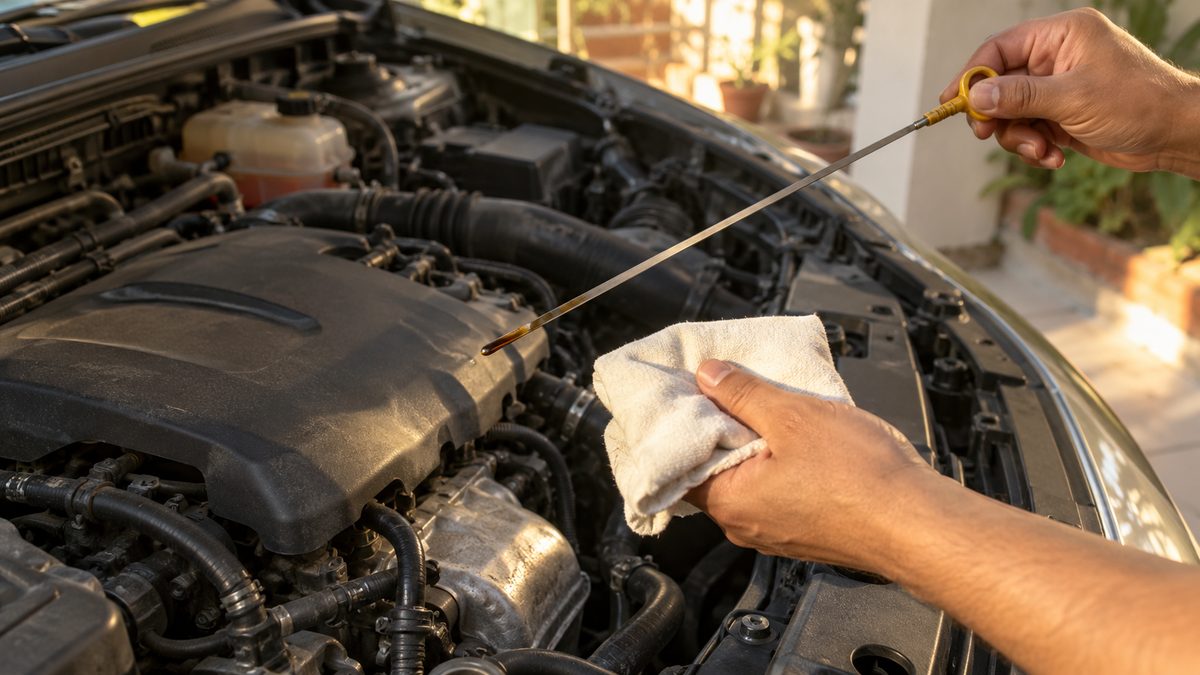
Park on suitable level ground and follow the handbook for engine temperature, waiting time and checking method. Some vehicles use an electronic oil reading rather than a dipstick. Check engine oil against the stated range without adding extra for a long journey. Overfilling is not preventive maintenance and can cause problems of its own.
Check the coolant reservoir only as instructed, and never open a hot pressurised cooling-system cap. Use the specified coolant and investigate an unexplained low level rather than mixing whatever fluid is available. A rising temperature warning or visible leak needs attention before travel. Do not assume a topped-up reservoir has repaired the reason fluid was lost.
Brake fluid needs particular care. A low level or braking change requires assessment; topping up alone can conceal leakage or another issue. Follow the maker's instructions for checking any other serviceable reservoirs and avoid opening sealed systems. Fill washer fluid with an approved mixture, then test delivery so a blocked jet is found before insects or road dirt cover the windscreen.
Inspect tyres for the planned load
Check pressures under the vehicle maker's specified conditions and use the recommendation for the intended passenger and luggage load. Do not use a tyre sidewall maximum as your setting. Inspect cuts, bulges, embedded objects and uneven wear, including inner edges where safely accessible. The tread-depth inspection guide explains how to check more than one convenient groove.
Inspect the spare, or the supplied mobility kit if there is no spare. Confirm any sealant remains usable under its instructions and that the equipment is complete. The jack and wheel-tool checklist covers fit and safe-use questions. A pressure warning that returns after adjustment needs diagnosis rather than another reset before departure.
Walk around the lights and clear the glass
With the car parked safely, check the lighting functions with a helper or an appropriate reflection where practical. Include brake lamps, indicators, tail lamps and number-plate lighting as fitted. Check the handbook for any failed bulb before buying a replacement. The headlight bulb guide explains why correct specification and beam aim matter more than advertised brightness.
Clean the windscreen and mirrors, then test wipers, washers and demisting equipment. Look for smearing or a blade that is not secure. Inspect the inside of the windscreen too, where film can scatter glare after dark. Do not drive with a large unwiped area, ineffective demisting or an obstruction in the driver's view simply because the weather looks clear at departure.
Check starting and brake feel without risky testing
Notice whether cranking is slower than normal and whether warning lamps complete the sequence described in the handbook. If there is doubt about starting power, arrange a battery and charging-system assessment. Do not repeatedly crank an unwilling engine. The cold-morning battery guide helps distinguish observations worth passing to a technician.
On a safe, familiar local drive, pay attention to normal braking, steering and unusual noises. A soft or sinking brake pedal, pulling, grinding or reduced braking calls for professional inspection before the trip. Do not attempt high-speed emergency stops as a home test. A short drive can reveal a change in behaviour, but it cannot certify the braking system's condition.
Use a departure decision checklist
- Proceed only when required fluid levels are correct, any unexplained loss has been investigated and the car behaves normally. Keep the exact specification available for any consumable the handbook says you may need to carry.
- Resolve tyre damage, repeated pressure loss or doubtful tread before loading passengers. Confirm the spare or repair equipment is accessible and that the chosen load stays within the vehicle's permitted limits.
- Confirm that lamps, washers, wipers and demisters work. Match driving plans to expected conditions; a working lighting system cannot make dense fog or heavy rain safe at an unsuitable speed.
- Delay departure for unresolved brake, steering, overheating or significant electrical warnings. Ask a qualified workshop or roadside service for advice if you cannot decide safely from the handbook's instructions.
- After loading, check tyre-pressure recommendations and headlamp levelling instructions again. Secure the load and make sure nothing can roll into the driver's footwell or interfere with controls during braking.
Look for changes where the car normally parks
Inspect the ground beneath the usual parking position for new drips, and note their location without touching or tasting unknown fluid. Air-conditioning water can be normal, but an unfamiliar oily patch or repeated loss deserves assessment alongside reservoir readings. Look at visible hoses and belts only where the handbook allows an owner check, with the engine off and cooled appropriately. Keep hands clear of fans, which may operate unexpectedly. You do not need to dismantle anything: the useful result is a clear observation that a technician can investigate before departure.
Keep packing and official travel checks separate
Once mechanical issues are settled, use the road-trip packing list for supplies and luggage. For families, check child-seat fit and restraints before departure rather than rearranging them at the roadside. Carry the handbook and assistance details where they can be reached without unloading the boot or depending on a mobile signal.
Festival and wedding-season journeys can involve queues, unfamiliar roads and late arrivals, so build in time for breaks and delays. Check current weather, route information and official travel advice before leaving, and check the current rules where you drive. If conditions or the car's behaviour deteriorate en route, reassess the plan instead of relying on the morning's checklist.
What to look for when you buy
Tyre pressure gauge
A readable, repeatable gauge suitable for the vehicle?s recommended pressures.
Inspection torch
A dependable light for fluid markings, tyre condition and the tool compartment.
Vehicle-specified consumables
Only approved fluids and bulbs, bought after identifying the exact specification needed.
Frequently asked questions
Should I get a full service before every trip?
Use the service schedule, journey demands and the car?s condition. A trip does not automatically require every service item, but overdue work and unresolved faults need attention.
Can a dashboard with no warnings prove the car is ready?
No. Tyre damage, low washer fluid and some mechanical faults may not produce a warning. Physical checks and normal operation still matter.
Should I change all fluids just before leaving?
Only when the service schedule or diagnosis calls for it. Correct specification and a checked repair matter more than unnecessary last-minute replacement.
What if a warning appears during the journey?
Stop safely when required by the handbook, read its instructions and seek assistance. Do not keep driving merely because the car passed an earlier check.
More guides

Road trips
Diwali Traffic Driving Tips for Crowds, Smoke and Delays
How to prepare for a slow festive journey and give yourself room to react when crowds and smoke change the road ahead.
Road trips
Car Seat Cushions: Fit Checks for Long Drives
Check cushion thickness, belt routing, pedal reach and airbag clearance before adding seat padding or lumbar support for a long drive.

Road trips
Camping from Your Car: A Practical Gear List
Start car camping with shelter, sleeping insulation, water and lighting. Pack to the campsite facilities and keep fuel equipment outside enclosed spaces.