Power & charging
Car Battery Winter Care: Check Before Cold Mornings
By Samveg Jain · Updated 22 October 2026 · 5 min read
Some links on this site may be affiliate links. If you buy through them we may earn a commission, at no extra cost to you. It never changes what we recommend. How this works.
Quick answer
A weak battery may struggle on a cold morning, but slow starting also needs charging-system and connection checks. Inspect safely, arrange a battery test and replace only with the specification approved for your vehicle.
Cold mornings can expose a weak car battery, especially when starting has already become slower. Begin with a safe visual inspection and a proper battery and charging-system test before buying a replacement. A loose connection, charging fault or electrical drain can leave a new battery struggling too.
For Indian drivers, winter conditions vary considerably between a coastal city and a hill destination. Think about where the car will spend the night, how often it runs and any recent starting changes. A battery that copes with frequent longer drives may show its weakness after repeated short journeys and overnight parking.
Separate slow cranking from other starting faults
Listen to what happens when you start the car normally. A starter turning sluggishly suggests a different investigation from an engine that turns at its usual speed but will not fire. Clicking, dimming lights or lost settings are useful observations for a workshop, but none identifies the failed component by itself.
Stop repeated starting attempts and follow the handbook's limits and waiting instructions. Extended cranking can add strain without solving the cause. Note whether the problem happens only after overnight parking, after several idle days or even with a warm engine. Give that pattern to the technician rather than requesting a battery swap immediately.
Inspect the case and connections without disturbing them
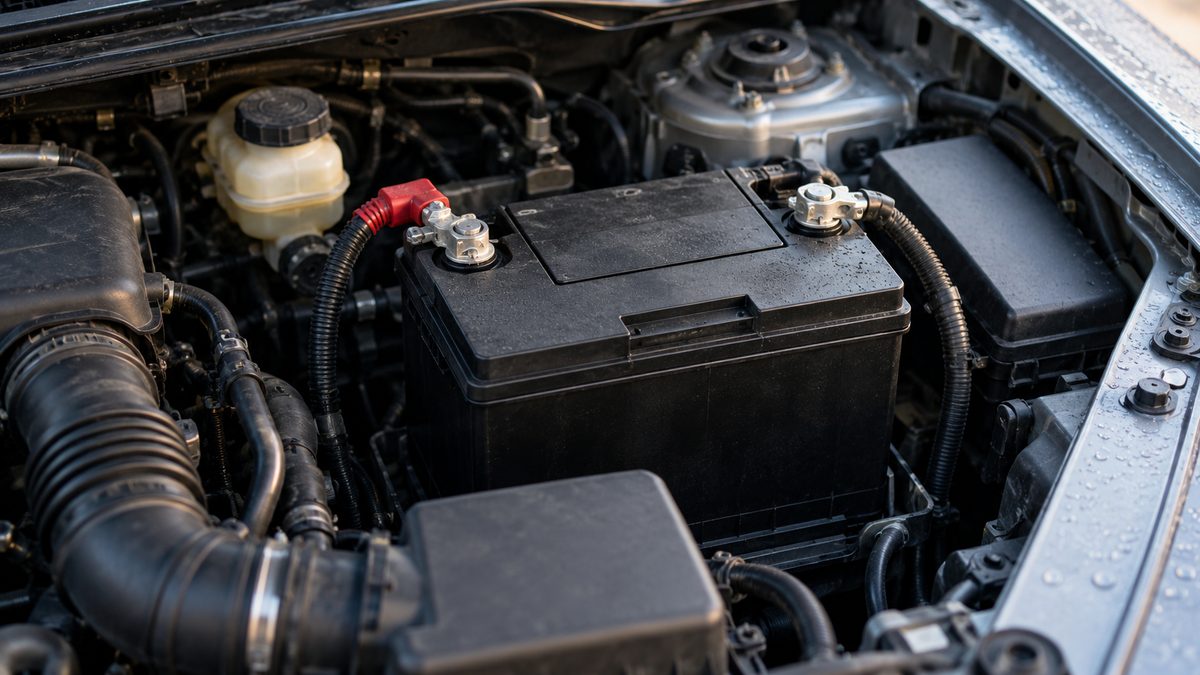
Park safely, switch the engine off and locate the battery using the handbook. Some cars put it away from the engine bay and provide separate connection points. Look for an insecure retaining bracket, damaged cables, heavy corrosion or a swollen, cracked or leaking case. Avoid touching leakage or trying to repair a damaged battery.
Remove jewellery and keep tools clear of exposed terminals. A tool bridging a terminal and metal bodywork can cause a dangerous short circuit. If corrosion obscures a connection, have it cleaned and inspected through an appropriate service procedure. Do not loosen cables simply to see whether tightening them improves the next start.
Ask for a test that includes the charging system
A useful assessment considers the battery's condition, its state of charge and the vehicle's charging performance. Tell the workshop if you recently needed a jump start or left a lamp on. A discharged battery and a battery unable to hold useful capacity are different problems, and the remedy should reflect that distinction.
If testing finds a charging fault, repair it before relying on a replacement. If the car repeatedly loses charge while parked, ask about an electrical drain. Permanently powered accessories deserve attention; the parking-mode power guide explains why accessory supply arrangements matter when the engine is off.
Compare replacement specifications before capacity claims
Use the vehicle handbook and a verified application listing together. Check battery technology, capacity specification, starting specification, physical dimensions, hold-down arrangement, terminal orientation and any vent connection. A battery that fits the tray can still be electrically unsuitable. Do not choose a larger unit solely because a seller describes it as stronger.
Cars with stop-start systems or managed charging can need a particular battery technology and a registration procedure after replacement. Ask the installer to confirm both before purchase. Keep the fitting record and specification details, and make sure any required vent tube and retaining hardware are refitted rather than discarded during installation.
Choose a charger for the battery already fitted
A maintenance charger can help in suitable storage situations, but its supported chemistry and charging programme must match the battery. Check the vehicle's approved connection points and the charger maker's instructions. Managed electrical systems may require a specific earth connection so charging is recognised correctly.
Use a suitable dry, ventilated location and arrange cables so they cannot be trapped by a bonnet or become a trip hazard. Do not charge a damaged, leaking or suspected frozen battery. Drivers unfamiliar with the battery type or connection procedure should ask a competent technician to set up the process.
Use this cold-start decision checklist
- Starting has slowed gradually: arrange testing before an early departure, and record how long the car has been parked between journeys.
- A lamp was left on: follow an approved recovery and charging procedure, then reassess battery condition rather than assuming permanent failure.
- The case is swollen or leaking: stop handling it and arrange professional assessment; do not connect a charger or jump leads.
- A replacement goes flat again: investigate charging and parked electrical loads before buying another battery.
- A trip is approaching: leave time for diagnosis, correct installation and a normal start after overnight parking.
A portable starting device is a recovery tool with its own compatibility requirements. Read the jump-starter comparison before buying one, and follow both the vehicle handbook and the product maker's instructions. It cannot repair a failing battery or charging system.
Keep replacement and disposal arrangements clear
Ask who will handle the removed battery and how it will enter an appropriate collection route. Do not leave it loose in the boot or attempt to dismantle it. Before collecting the car, confirm that the replacement is securely retained and that protective terminal covers are present. Start the engine normally and check for new warnings. If the workshop has reset settings or registered the battery, ask what was done and retain that information with the service record. This helps the next technician distinguish a recent correctly fitted replacement from an unknown battery.
Reduce avoidable drain between journeys
Switch off unnecessary electrical accessories before leaving the car and check that cabin and boot lamps go out. Review plug-in equipment that may remain powered after locking. If the vehicle is used rarely, ask about a suitable maintenance plan rather than assuming occasional brief idling restores everything consumed during starting.
Before a winter journey, include the battery in the mechanical departure inspection. Keep service contact details available and plan recovery if starting fails away from home. Battery care is useful preparation, but a reliable cold start depends on sound connections, correct charging and a battery suited to the car.
What to look for when you buy
Vehicle-compatible replacement battery
Correct technology, dimensions, terminal layout and electrical specification from the handbook.
Battery condition test
A workshop test that considers starting performance and the charging system.
Compatible maintenance charger
Support for the battery chemistry and vehicle-approved connection procedure.
Frequently asked questions
Does a new battery need registration?
Some vehicles require a battery management reset or registration. Ask the workshop to check your model before fitting.
Can I replace a stop-start battery with a conventional one?
Use only the technology approved for that vehicle. A cheaper conventional battery may not support its charging strategy.
Does a dashboard clock resetting prove battery failure?
No. It suggests a power interruption, which can also come from loose connections or another electrical fault.
Should I disconnect the battery during storage?
Check the handbook first. Disconnection can affect alarms, settings and vehicle systems; an approved maintenance charger may be preferable.
More guides
Power & charging
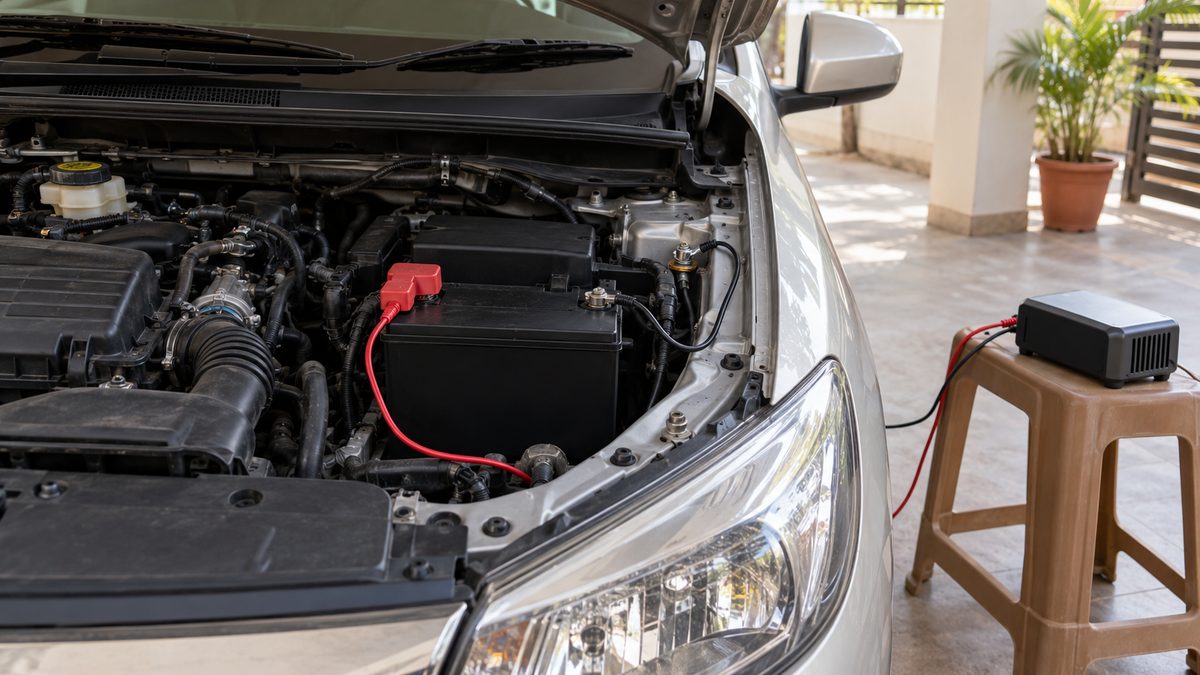
A Charger for a Car Parked for Weeks: What to Check First
Choose a charger for a parked car by battery chemistry, voltage and maintenance mode, with connection checks and clear reasons to stop.
Power & charging
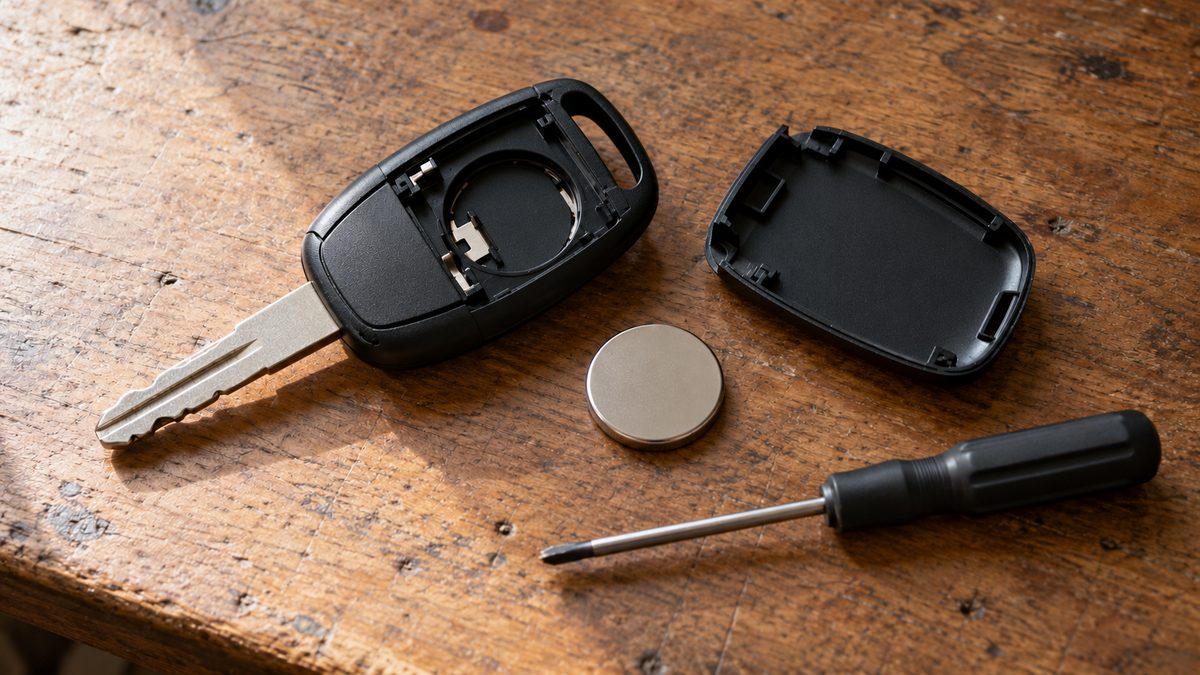
Car Key Fob Battery: Symptoms and Safe Replacement
Identify a weak key fob battery, confirm the exact coin cell and follow a careful replacement process without damaging the casing.
Power & charging
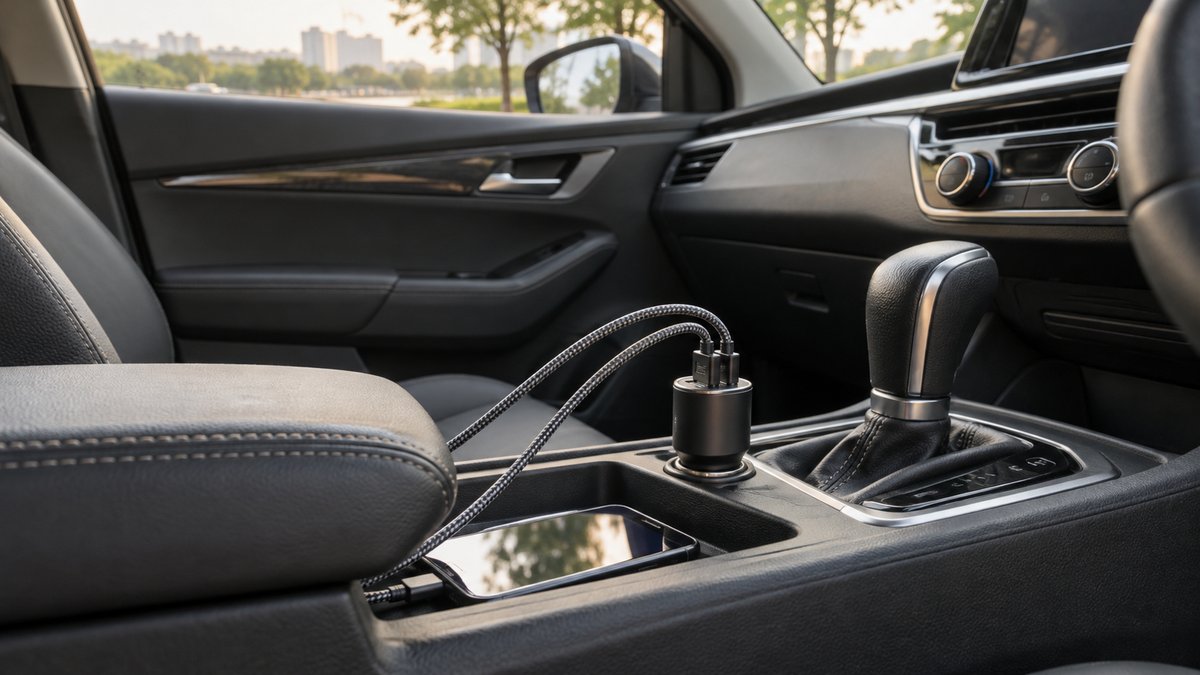
Car Mobile Charger Buying Guide: Ports and Fit
Choose a car charger that fits the socket securely, powers your usual devices together and lets cables reach safely without crossing controls.