Safety gear
Car Jack and Wheel Spanner: Check Your Kit Before Travel
By Samveg Jain · Updated 22 October 2026 · 6 min read
Some links on this site may be affiliate links. If you buy through them we may earn a commission, at no extra cost to you. It never changes what we recommend. How this works.
Quick answer
Choose a jack approved for the vehicle and a spanner that correctly fits its wheel fasteners. Inspect the spare and handbook procedure before travelling, and use roadside assistance whenever the location or equipment makes lifting unsafe.
Before a trip, confirm your jack suits the car's specified lifting points and your wheel spanner fits the wheel fasteners properly. Check the spare, locking-wheel adaptor and the complete handbook procedure as part of the same inspection. If a puncture occurs beside fast traffic, on unstable ground or anywhere you cannot work safely, call roadside assistance instead of lifting the car.
Unpack the kit while the car is still at home
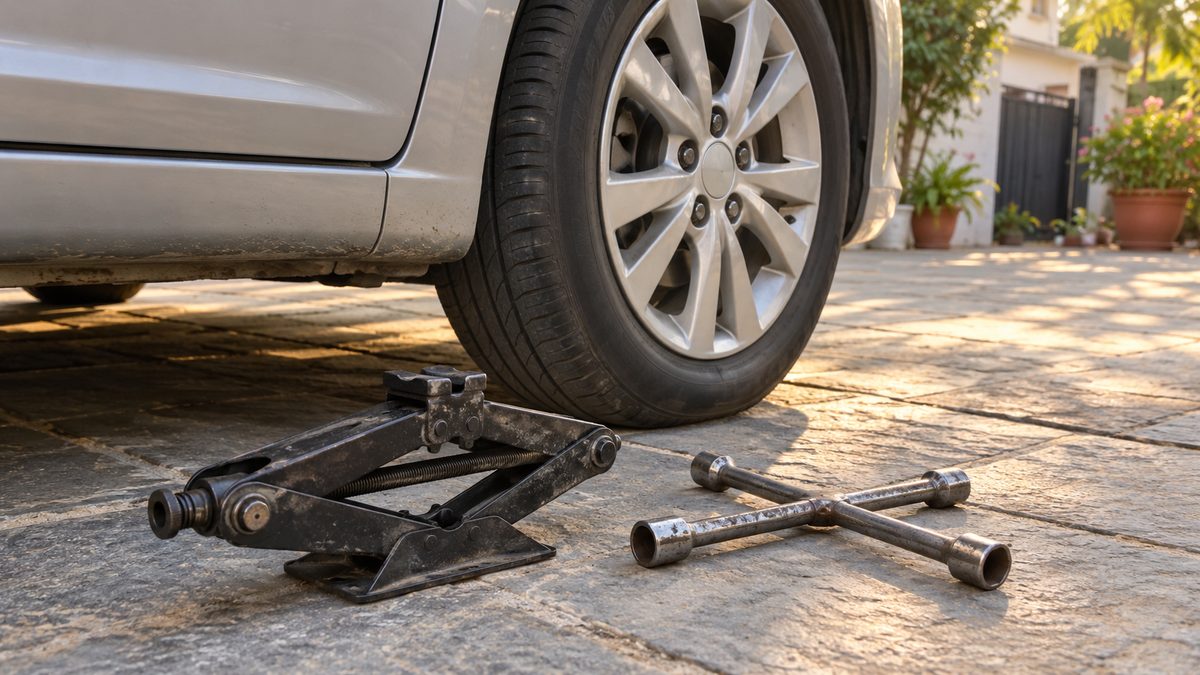
Locate the supplied jack, winding handle, wheel spanner, any wheel-trim tool and locking-fastener adaptor. Some vehicles use a repair kit rather than a spare wheel, so inspect what your car has instead of assuming a wheel-changing kit is hidden beneath the boot floor. Read the handbook and check all required parts are present and usable.
Look for bent components, damaged threads, rust that affects operation and a spanner with rounded contact faces. Confirm separate handle sections fit together securely. A tool stored unused for years still deserves inspection. Do not test a doubtful jack by lifting the vehicle; have it assessed or replace it with an approved unit before relying on it during a breakdown.
Match the jack to the lifting point
Capacity is only one part of compatibility. The jack needs the right lift range, base and saddle shape for the intended vehicle and jacking point. A jack advertised for heavier vehicles can still be unsuitable if it slips off the sill feature or cannot reach safely. Verify application information rather than selecting by a load figure alone.
Use only the jacking points identified in the vehicle handbook. A nearby panel, axle part or convenient-looking bracket is not an acceptable substitute. Corrosion or collision damage around a designated point needs professional attention. Follow any special procedure for air suspension or other vehicle systems; do not begin lifting until you understand how the car must be prepared.
Inspect the spare as carefully as the tools
Check spare tyre condition and pressure using the vehicle instructions, and confirm the wheel is secured in its storage location. A temporary spare may require different pressure and have operating restrictions. Read those limits from the vehicle and tyre information before travel. Make sure the fasteners used with the spare are the specified ones for that wheel.
Our tread and condition inspection covers damage that a quick glance can miss. Use a suitable gauge as described in the pressure gauge guide. A good jack cannot make an underinflated or damaged spare suitable, and a spare that cannot be accessed under luggage may delay an already difficult roadside stop.
Decide whether the location permits a wheel change
A suitable working area must be away from traffic, firm and level, with enough space to follow the vehicle's procedure. Soft soil, a slope or a narrow shoulder can make jacking dangerous. Do not crawl into traffic to inspect a wheel, and do not attempt to improve a bad location with stacked stones or loose packing under the jack.
Secure the car and arrange occupants' safety according to the circumstances and official roadside guidance. Do not leave people sitting in a vehicle being lifted. The warning and safety kit guide can help with preparation, but placing warning equipment must not expose you to traffic. Check the current rules where you drive and contact assistance when conditions are unsafe.
Check the wheel-changing sequence against your handbook
- Before lifting, select the specified transmission position, apply the parking brake and place suitable wheel chocks as directed. Identify the correct wheel fasteners and remove any covers with the proper tool while the car remains stable.
- Follow the handbook's sequence for initially loosening fasteners while the wheel is on the ground. Use a correctly fitting spanner fully seated on the fastener. Do not jump on the handle, improvise an extension pipe or use sudden force that could make you fall.
- Position the jack exactly as instructed and watch its base and lifting contact as the load comes on. Stop if either shifts, the ground gives way or the vehicle appears unstable. Never put any part of your body beneath a car supported only by a jack.
- Lift only as required by the approved procedure, then remove and refit the wheel using the specified handling and tightening sequence. Keep wheel mating surfaces and fasteners in the condition required by the maker, without adding unapproved grease or spacers.
- Lower the car and complete tightening in the instructed sequence to the specified torque. If the supplied emergency procedure does not allow you to verify torque, follow its directions and have a competent workshop check it promptly before further demanding travel.
Buy a spanner for fit and controlled handling
Check the exact fastener size and access inside the wheel recess, including aftermarket wheels if fitted. A socket that touches the recess before engaging fully can damage the fastener. A telescopic handle needs a secure mechanism and enough room to work. Longer reach does not justify excessive force or compensate for the wrong socket.
If buying a torque wrench, choose one whose working range includes the required wheel torque and learn its instructions before use. It is a measuring tool, not automatically a breaker bar. Keep the locking adaptor with the vehicle's tools and record its identification securely. A workshop can resolve damaged or overtightened fasteners more safely than roadside improvisation.
Store tools so the next check is straightforward
Refit the jack in its intended holder and secure the spanner, chocks and spare according to the vehicle instructions. Loose heavy equipment can move during braking. Keep tools clean and dry, inspecting them after use rather than returning a damaged part to storage. If the jack maker specifies maintenance, follow that procedure without applying lubricant to wheel fasteners or braking surfaces. A brief kit check after a tyre service is useful too: confirm the locking key came back and that the spare compartment still contains all the tools you expect.
Finish the repair with a travel decision
Secure the removed wheel and tools before moving. Observe every restriction attached to a temporary spare or emergency repair, and arrange proper tyre assessment. Include a complete kit check in your mechanical travel inspection. Buying the correct equipment is useful preparation, but choosing assistance remains the right decision whenever safe lifting, fastening or roadside access cannot be assured.
What to look for when you buy
Vehicle-approved jack
Suitable capacity, lift range and saddle fit for the designated jacking points.
Correct wheel spanner
Full engagement with the fitted wheel fasteners and any required locking-key adaptor.
Wheel chocks and storage
Suitable chocks used as instructed, with secure storage for the complete tool kit.
Frequently asked questions
Can I use a jack from a different car?
Only with verified suitability for the vehicle, lifting point, capacity and range. Similar appearance is not enough.
Can a puncture kit replace the missing spare?
It may address only certain punctures under its instructions. It cannot repair every failure or establish that a damaged tyre is safe.
Can I lubricate wheel bolts to make removal easier?
Do not add lubricant unless the vehicle maker specifically requires it. It can change the relationship between tightening torque and clamping force.
What if the locking wheel key is missing?
Resolve it with a competent workshop before travel. Improvised removal can damage the wheel or fastener and leave you unable to fit the spare.
More guides

Safety gear
Car Safety Around Firecrackers: Parking for Diwali
A practical parking and inspection plan for Indian car owners before and after Diwali celebrations.

Safety gear
Night Driving Checklist: Lights, Glare, Fatigue and Kit
Prepare for an evening drive with checks for lights, glass, mirror glare, fatigue and breakdown equipment, plus clear reasons to delay.
Safety gear
Tyre Tread Depth: Check Wear Before Buying Replacements
Inspect tread grooves, wear indicators and uneven wear before choosing replacement tyres. Know when a professional inspection cannot wait.