Power & charging
Wireless Car Charger Guide: Heat, Grip and Alignment
By Samveg Jain · Updated 21 October 2026 · 5 min read
Some links on this site may be affiliate links. If you buy through them we may earn a commission, at no extra cost to you. It never changes what we recommend. How this works.
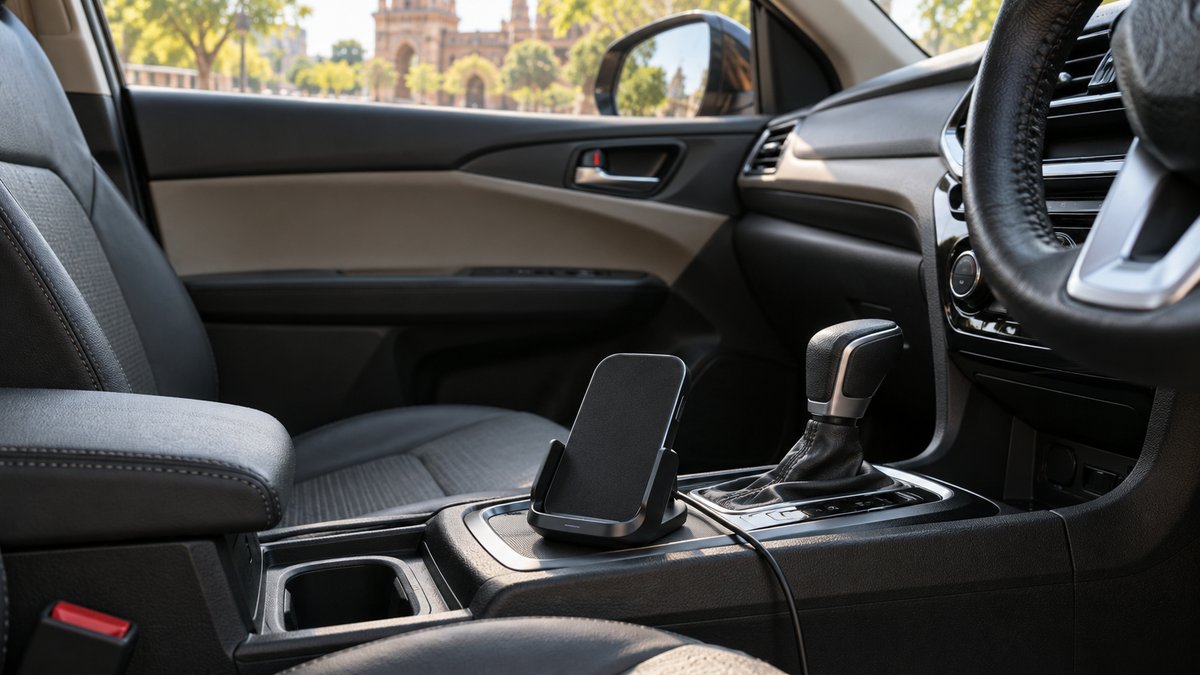
A wireless car charger is worth considering when you want easy phone placement and can keep the phone securely aligned without excessive heat. Confirm compatibility with the exact phone and case, then check the mount and power adapter. Keep a suitable charging cable for long navigation sessions: a wireless charging symbol does not prove the phone is gaining enough energy for the trip.
Check the entire charging chain
The cradle needs power, even though the phone does not plug directly into it. Some listings include the vehicle adapter, while others supply only the charging head and lead. Identify the supported input requirements and what is included before comparing cost. A high claimed wireless output is not useful if the supplied adapter cannot support the required input.
Check your phone's supported wireless charging method and the charger's documented compatibility. Do not infer the expected rate from a similar phone in the same family. Software, accessories and operating conditions may affect behaviour. The car mobile charger guide covers adapter fit, cable routing and shared-port use without making this another protocol comparison.
Choose retention and placement before output
| Design | Convenience | Buying check |
|---|---|---|
| Clamp cradle | Can support phones without magnetic attachment | Jaw clearance, coil position and release |
| Magnetic charging head | Quick placement with a compatible arrangement | Phone and case compatibility plus grip |
| Charging tray | Keeps the phone away from the windscreen | Retention during turns and access to controls |
Choose a location that preserves your road view and leaves airbags and controls clear. Vent geometry, trim material and phone weight determine whether the base fits, regardless of the charging head. Our phone-holder comparison separates base attachment from phone retention so you can assess both parts rather than trusting a single compatibility label.
Make alignment work with your normal case
Wireless charging depends on an appropriate relationship between the phone and charging coils. A mount may grip firmly while holding the phone too high or low. Check whether its support foot or charging head can be adjusted, and use the case you normally carry during the test. Camera bumps, thick backs and folding stands can prevent a suitable fit.
Do not improvise with metal plates in the charging area. The Wireless Power Consortium's charging introduction explains that conductive foreign objects can heat and that case materials can affect energy transfer. Follow the accessory instructions and remove unsupported attachments instead of trying different placements while the phone continues to warm.
Take summer heat seriously without guessing performance
Sunlight, navigation and screen use can make a demanding combination. Read the operating limits and the phone's temperature warnings. Charging may slow or pause when protection intervenes. That is a reason to improve the setup within its instructions or use another approved method, rather than defeat warnings or assume the advertised rate applies throughout a hot journey.
A fan-equipped cradle needs space for airflow and a noise level you can accept. It is not proof of a cool phone under every condition. Directing conditioned cabin air nearby may help some arrangements, but the mount must still fit safely and allow required ventilation functions. Never cool electronics with water, ice packs against connectors or improvised wet materials.
Look for verifiable safety and compatibility information
Prefer a traceable manufacturer, clear instructions and independently verifiable certification claims rather than a printed badge alone. The Wireless Power Consortium's foreign-object detection specification explains protection against unsafe heating of foreign objects. Such protection does not replace the charger's own operating limits, secure mounting or inspection of damaged cables.
Ask what happens if the input power disappears. A motorised clamp should have a documented way to release the phone without forcing the jaws. Check whether a power interruption makes the cradle open, close or reset. For a car whose socket switches with the ignition, that behaviour affects how convenient and secure the holder feels at every stop.
Test net charging on a representative journey
Set navigation while parked and let a passenger observe results, or inspect them after stopping. Compare starting and finishing charge under similar use, noting temperature messages and interruptions. The purpose is to find out whether your combination serves your journey, not to create a universal speed claim. A short parked demonstration cannot establish performance during a hot afternoon drive.
Also test retention on ordinary roads, watching for movement only when it is safe to do so. If the phone shifts or repeatedly disconnects, stop and correct the fit. Do not hold it in position while driving. Check the cable and adapter for loose contact, and keep leads clear of pedals, seat tracks and steering movement.
A shared car also needs a shared charging plan. Check each regular driver's phone and case separately, and avoid a fixed magnetic arrangement that works for one passenger but leaves another improvising with unsupported plates or unstable positioning.
Budget for a fallback and sensible storage
- Keep a compatible wired lead for journeys where wireless charging cannot keep up.
- Carry only adapters and accessories that fit the chosen power arrangement.
- Remove the phone from a hot parked car and follow storage limits for the charger.
- Check grip, cable condition and airflow after changes to the phone case or mount.
Plan the equipment with your road-trip packing list, leaving frequently used items accessible. Wireless charging earns its space when placing the phone is easy, retention stays dependable and battery level remains useful. If your phone, case or mounting location cannot meet those conditions, a secure holder and a suitable cable are a practical alternative.
What to look for when you buy
Clamping wireless cradle
Phone size support, adjustable alignment, secure base and accessible release without power.
Compatible magnetic charging mount
Verified charging compatibility with the exact phone and case, retention and temperature guidance.
Fixed charging tray
A retained phone position, unobstructed controls and an installation approved for the vehicle space.
Frequently asked questions
Does a magnetic ring prove charging compatibility?
No. Mechanical alignment and electrical charging compatibility must both be confirmed for the phone, case and charger combination.
Why can the phone show charging but gain little battery?
Navigation, screen use, heat and charging limits can reduce the net battery gain. Test the actual journey setup and keep a supported wired option.
Can I put cards between the phone and charger?
Keep cards, metal objects and unsupported accessories out of the charging gap. Follow the phone and charger instructions for cases and attachments.
Does wireless mean no cable in the car?
The charger normally still needs a cable and compatible power source. Wireless refers to the final connection between the cradle and phone.
More guides
Power & charging
A Charger for a Car Parked for Weeks: What to Check First
Choose a charger for a parked car by battery chemistry, voltage and maintenance mode, with connection checks and clear reasons to stop.
Power & charging
Car Key Fob Battery: Symptoms and Safe Replacement
Identify a weak key fob battery, confirm the exact coin cell and follow a careful replacement process without damaging the casing.
Power & charging
Car Battery Winter Care: Check Before Cold Mornings
Slow starts on cold mornings need diagnosis. Check battery condition, terminals and charging before choosing a compatible replacement.