Power & charging
A Charger for a Car Parked for Weeks: What to Check First
By Samveg Jain · Updated 23 October 2026 · 6 min read
Some links on this site may be affiliate links. If you buy through them we may earn a commission, at no extra cost to you. It never changes what we recommend. How this works.
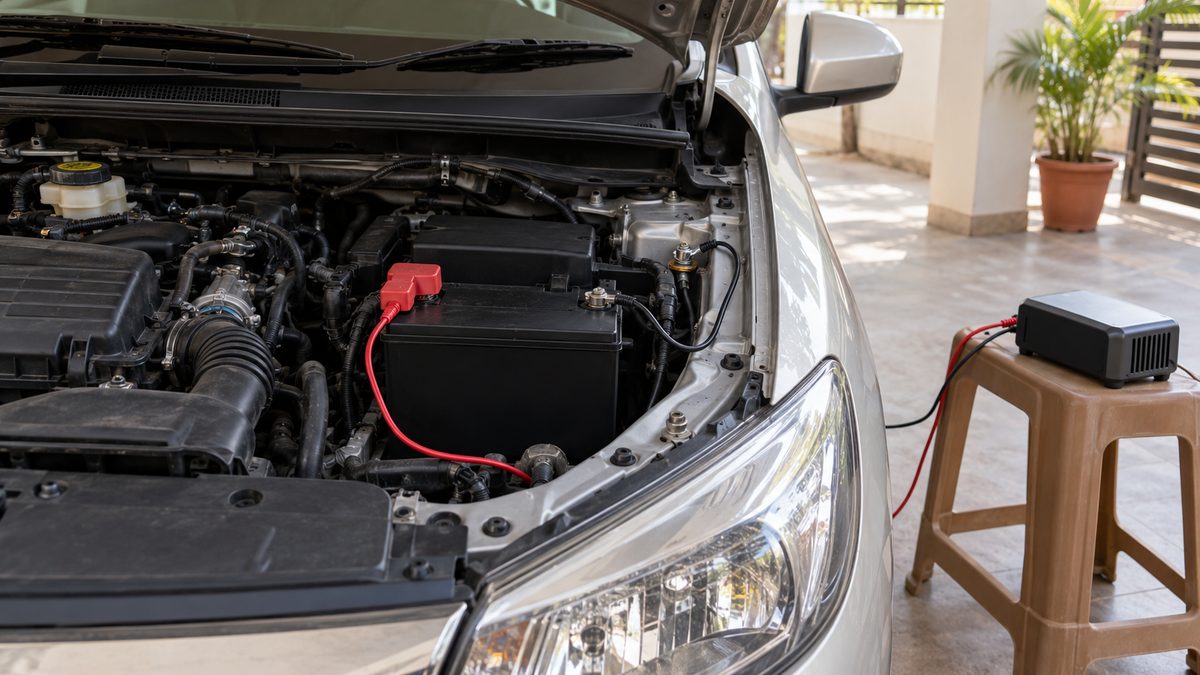
Quick answer
For a car parked for weeks, consider an automatic charger with a maintenance mode approved for its battery. Confirm voltage, chemistry and the vehicle connection procedure before using it.
A car parked for weeks may benefit from an automatic battery charger with a maintenance mode, provided the vehicle and battery makers permit it. Choose by battery voltage, chemistry and capacity, then follow the car handbook and charger instructions for connection. A basic continuous trickle charger is not automatically suitable for leaving attached.
This concerns the car battery that supports starting or auxiliary electrical systems. It is not a procedure for charging or servicing an electric vehicle traction battery. If the handbook restricts external charging, use the vehicle maker's approved approach.
Establish why the parked car loses charge
Alarms, clocks and other systems can draw power while a car stands. A battery also loses charge over time. Short journeys may not replace what starting and electrical loads have used, so a car can be parked with less charge than its owner expects.
A maintainer can support a healthy battery during storage, but repeated flat batteries can indicate ageing, a charging-system fault or an electrical drain. Have those causes tested. Review permanently powered accessories using our parking mode guide rather than assuming every overnight loss is normal.
Starting the engine briefly in the parking space is a poor substitute for a charging plan. Never run it in an enclosed area. If the car is difficult to start even after proper charging, a workshop should test the battery and vehicle charging system.
Read the battery label before the charger box
Identify the specified battery voltage and chemistry. Conventional flooded lead-acid, enhanced flooded and absorbent glass mat batteries may need different charging settings. A lithium battery needs a charger expressly approved for that chemistry; a lead-acid setting is not a safe assumption.
Check that the charger's supported capacity range includes the battery. A maintenance-only device may be unsuitable for recovering a discharged battery, while a more powerful charger still needs the correct mode. Automatic detection does not excuse skipping the compatibility checks.
| Charger description | Decision before purchase |
|---|---|
| Basic continuous trickle charger | Find out how charging is limited and when it must be disconnected; do not assume storage use is allowed. |
| Automatic smart charger | Check supported chemistries and whether it has an explicit long-term maintenance mode. |
| Battery maintainer | Confirm it can maintain this battery and whether initial charging needs separate equipment. |
| Recovery or reconditioning mode | Use only when both battery and vehicle instructions permit it; some modes are unsuitable with connected electronics. |
A jump starter serves a different purpose: it supplies a short starting boost rather than a controlled storage charge. The jump starter comparison explains that distinction when planning a breakdown kit.
Decide if the parking space can support charging
You need a secure place with ventilation and a suitable mains supply. Charging lead-acid batteries can release flammable gas. Keep sparks, smoking and flames away, and do not enclose the battery or charger under a cover that traps heat or gas.
Keep the charger and connections dry within their stated environmental limits. Do not trail a cable across a shared walkway or vehicle route. A wet basement floor, damaged socket or improvised extension connection is a reason to arrange a safer location, not an invitation to improvise insulation.
Ask a qualified electrician about an unsuitable supply. Arrange permission for any shared parking electrical point and follow the site's requirements. The charger should stand securely away from the battery, heat and moving components, as its instructions specify.
Connect with the mains switched off
- Read both instruction sets, switch off the car and its accessories, and keep the key away as directed. Let the vehicle complete any shutdown process.
- Inspect the battery and leads. Do not charge a leaking, swollen, cracked, unusually hot or possibly frozen battery. Stop if there is a strong unusual smell.
- Locate the approved charging points. Some cars use remote terminals and a designated earth point so battery monitoring works correctly.
- With the charger disconnected from mains power, attach its leads in the exact sequence specified. On a conventional negative-earth system, instructions commonly call for positive first and then the designated earth point; the vehicle-specific procedure takes priority.
- Route the leads clear of belts, fans, hinges and sharp edges. Do not crush cables under the bonnet. Select the approved mode before supplying power as instructed.
- Observe the initial operation. Stop for an error, excessive heat, swelling or an unusual smell rather than repeatedly restarting the cycle.
Do not disconnect the vehicle battery simply to make access easier. Some cars need particular shutdown, reconnection or relearning procedures. If the charging points are inaccessible or the instructions conflict, have a competent workshop set up an approved connection.
Maintenance mode still needs a checking routine
Leave a charger attached only when its instructions explicitly allow that use, in the conditions they specify. Check periodically for errors, cable damage, dampness and unexpected heating. Arrange for someone to inspect it during an extended absence.
Before driving, switch off and disconnect mains power, then remove the leads in the prescribed order. Secure any permanent connector, close protective caps and account for every cable before shutting the bonnet. The battery care guide adds the inspections worth doing when the car returns to regular use.
If safe mains access is unavailable, discuss storage options with the vehicle workshop. Taking the battery out or disconnecting it can affect vehicle systems and security. The appropriate storage plan depends on the car, rather than on the cheapest charger available.
What to look for when you buy
Automatic battery maintainer
Explicit compatibility with the battery voltage, chemistry and capacity, plus an approved unattended maintenance mode.
Fused charging lead
A lead approved for the charger and vehicle connection arrangement, with protected connectors.
Protected mains connection
A sound earthed supply where required, suitable electrical protection and a dry cable route away from traffic.
Frequently asked questions
Can a charger replace a failing battery?
No. Charging can restore charge to a serviceable battery, but it cannot reverse every internal fault or age-related loss of capacity. Repeated starting trouble needs testing.
Will a solar panel maintain the battery?
Only a system suited to the battery and fitted with the necessary charge control should be considered. Shade, parking position and a socket that switches off with the ignition can prevent useful charging.
Can I share one charger between two cars?
Charge them separately unless the equipment expressly supports independent battery outputs. Confirm compatibility for each car; do not join batteries with improvised leads.
Does a maintained battery power all parking accessories indefinitely?
Do not assume so. Accessory demand may exceed charger output or the vehicle may restrict operation. Review the accessory installation and have unexplained drain diagnosed.
What if I cannot identify the battery chemistry?
Check the battery label and vehicle documents, or ask the workshop that services the car. Do not choose a mode by trial and error.
More guides
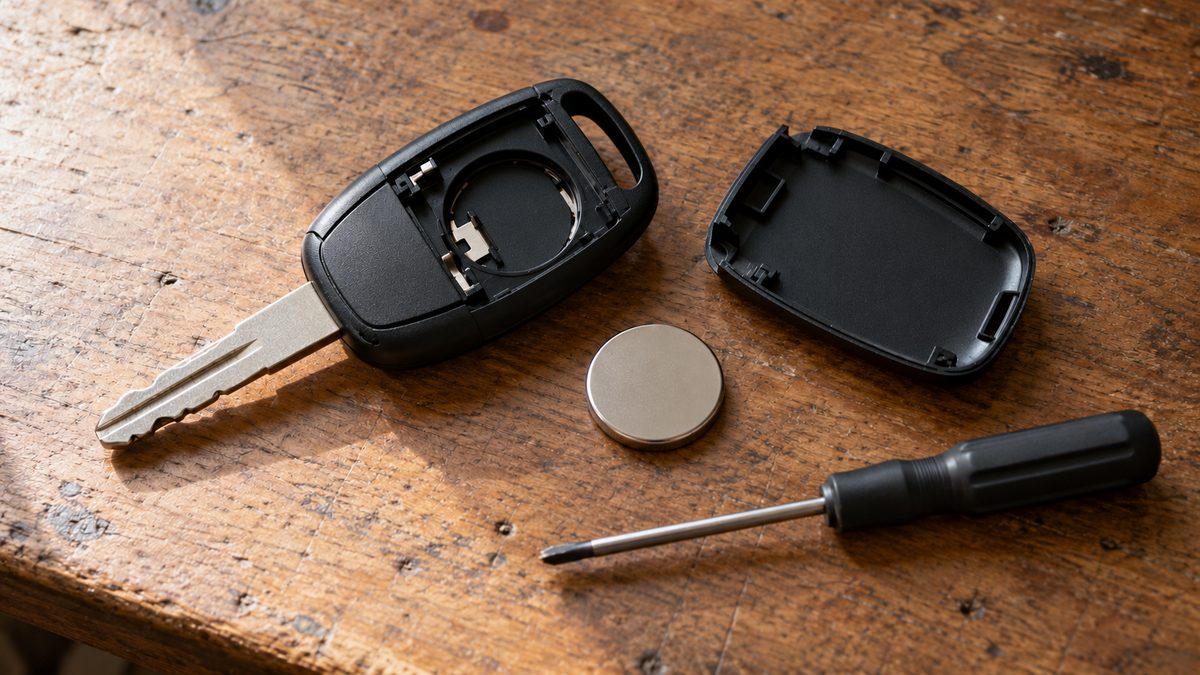
Power & charging
Car Key Fob Battery: Symptoms and Safe Replacement
Identify a weak key fob battery, confirm the exact coin cell and follow a careful replacement process without damaging the casing.
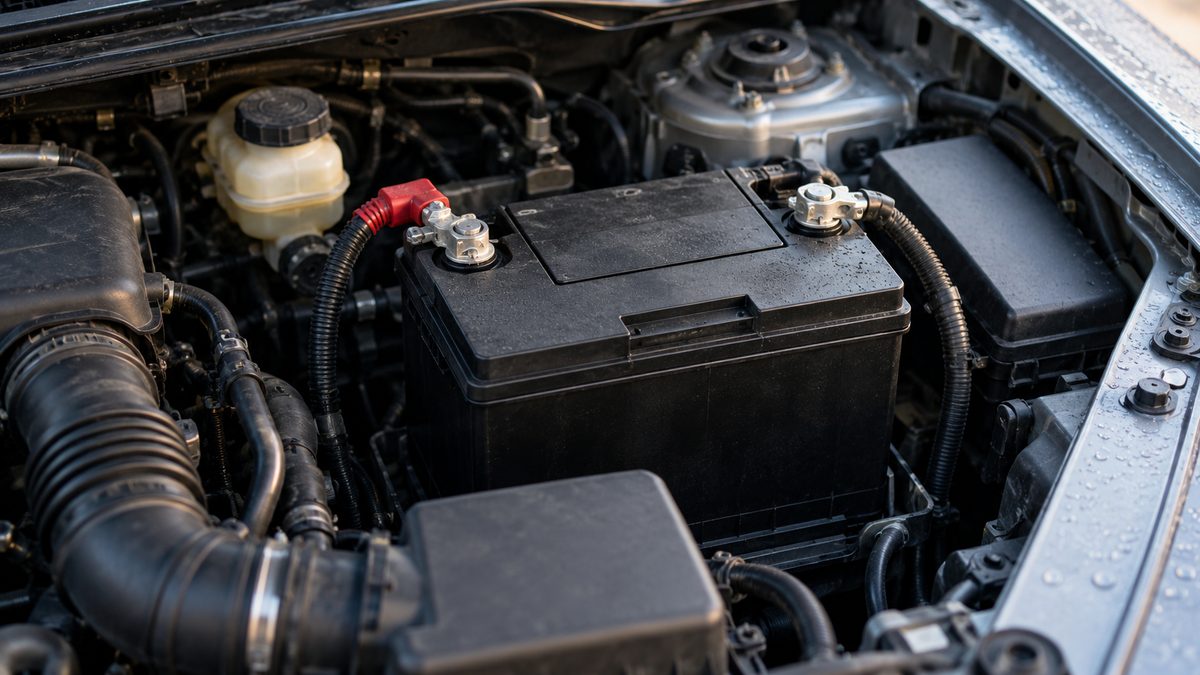
Power & charging
Car Battery Winter Care: Check Before Cold Mornings
Slow starts on cold mornings need diagnosis. Check battery condition, terminals and charging before choosing a compatible replacement.
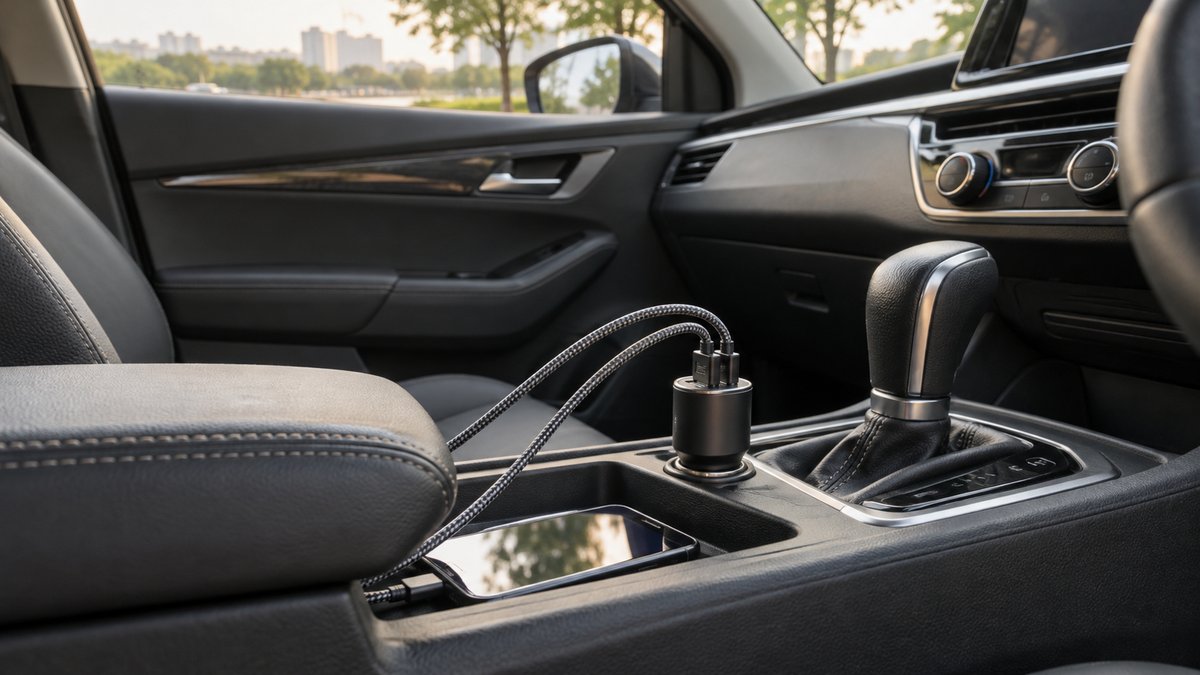
Power & charging
Car Mobile Charger Buying Guide: Ports and Fit
Choose a car charger that fits the socket securely, powers your usual devices together and lets cables reach safely without crossing controls.