Road trips
Family Road Trip with Kids: Car Gear Checklist
By Samveg Jain · Updated 21 October 2026 · 6 min read
Some links on this site may be affiliate links. If you buy through them we may earn a commission, at no extra cost to you. It never changes what we recommend. How this works.
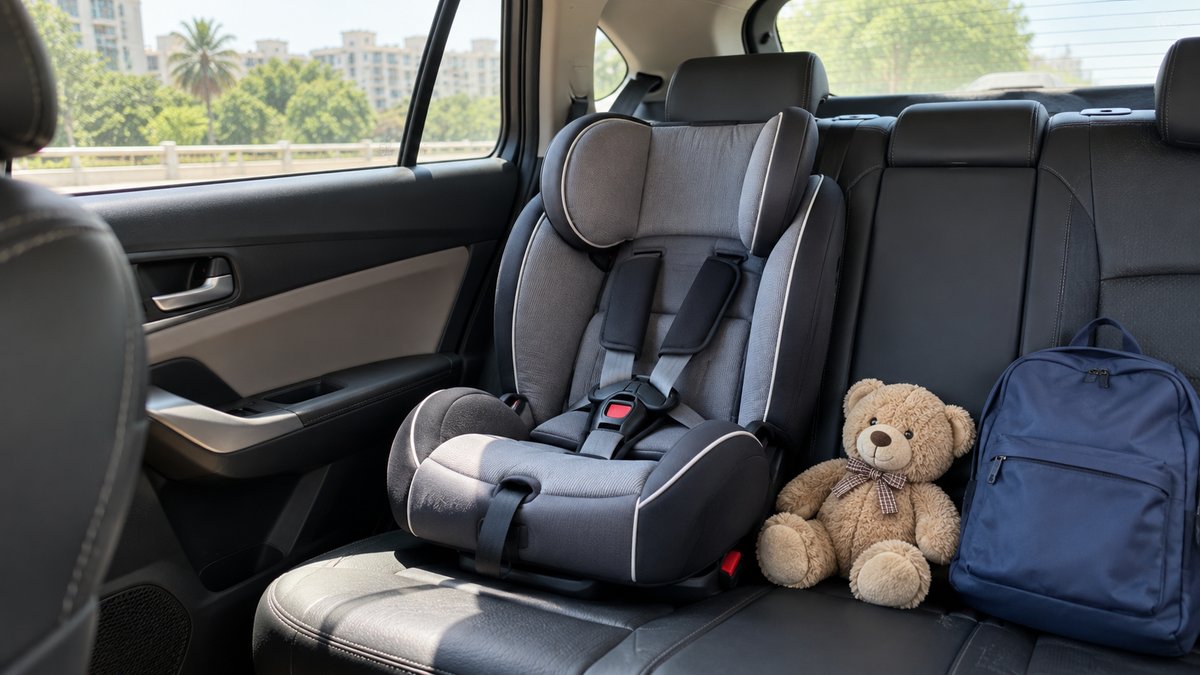
For a family road trip, buy and fit the child's restraint before shopping for entertainment accessories. Add a compact care bag, accessible water and simple soft activities, then test the packed car with everyone seated. No organiser, pillow, screen holder or seat protector should change restraint installation, belt routing or access to the buckle.
Begin with the child, restraint and car together
Age alone is not enough to select a seat. Check the child's height and weight against the restraint limits, confirm it can be installed in the vehicle, and follow the local rules that apply to your journey. A seat that looks comfortable online may be unsuitable for the available rear seating position or your car's installation method.
NHTSA's child restraint guidance recommends choosing for the child's age and size, checking vehicle fit, and following the seat and vehicle instructions. Its categories explain the progression from rear-facing seats to boosters, but Indian buyers should confirm applicable local requirements and approval details rather than treating another country's legal framework as their own.
Allow time for a trial installation before departure day. Check the manufacturer's instructions for the child restraint and the car, including approved seating positions and any support leg or top tether requirements. Do not improvise a fitting method because a retailer calls the seat universal. If the installation remains unclear, seek competent fitting help before travelling.
Do not fill the restraint with extra padding
Aftermarket cushions, belt positioners and thick seat protectors can change how a restraint sits or how its harness fits. Use only accessories approved for that particular restraint. A sleeping child's posture is a reason to review the approved fit and take a break, rather than adding a strap or pillow that holds the head in place.
Keep bulky bags away from the buckle and seat base. An organiser should not pull on restraint anchors, cover airbag seams or hide a loose object beside the child's hips. Our seat and boot organiser guide can help with storage, but the restraint installation must determine where accessories are allowed.
Build one care bag that opens at a stop
Pack spare clothing, wipes, tissues, small waste bags and any personal care supplies your child regularly uses. Keep wet clothing in a separate washable or sealable pouch. A complete change of clothes is easier to find when packed as a set rather than spread across several suitcases beneath the boot floor.
Carry medication only with storage and use instructions appropriate to it. If temperature matters, ask a pharmacist how to manage the journey. Do not rely on the glovebox for medicines that cannot tolerate cabin heat. Put a first aid kit in a separate marked location so everyday rummaging does not scatter its sealed contents.
A spare layer and small towel may earn more space than a large themed travel kit. Think through the familiar tasks you will perform at a service stop: changing clothing, washing hands and finding something dry to sit on. Choose pouches that make those jobs easier with one adult supervising the child.
Choose entertainment that stays manageable
Soft books, drawing supplies used under supervision at suitable times, and a small selection of familiar toys can be easier to contain than a large activity organiser. Pack only what you can keep track of. Loose hard toys, rolling parts and long cords create retrieval problems that grow as the journey gets longer.
If you use a screen, fit any holder only where the vehicle and accessory instructions permit it. Avoid hard hardware near a passenger's head, airbag deployment areas or the driver's view. Set content and controls before moving, and let another adult manage changes where possible. A promise to keep children occupied does not make a poorly placed mount acceptable.
Leave some activities for later legs of the trip instead of emptying the full bag at departure. Rotate items while stopped. If the child repeatedly drops something, remove it until the next break rather than asking the driver to retrieve it. Quiet, contained equipment reduces the number of things that demand attention at once.
Food, drinks and comfortable stops
Plan stops around your family's normal care routine and the safe stopping opportunities on the route. Bring water in manageable containers and keep supplies reachable after parking. Avoid layouts where a rear passenger must lean across a child seat or unbuckle to retrieve snacks. Travelling needs should shape the schedule rather than be squeezed around a fixed arrival target.
If food requires chilling, plan the temperature control and cleaning separately. The cool box and car fridge guide covers the storage choices. A bag of snacks does not replace a proper meal break, and a comfortable restraint does not remove the need to stop for care and movement.
Family packing check before the first kilometre
- Each child has the correct restraint fitted according to both manuals.
- Harnesses, buckles and adjustment points remain visible and reachable.
- No unapproved cushion or belt accessory has been added.
- The care bag is reachable at a stop without unloading all luggage.
- Heavy bags and hard equipment are secured in the boot.
- Window visibility, airbag areas and the driver's footwell are clear.
- The adults know who will manage navigation, supplies and care while travelling.
Trial the loaded car before the holiday
Make a short local journey with the restraint, bags and intended accessories in place. Check what slips, rattles or prevents opening a door. Test whether a passenger can access the care bag while everyone is safely parked. Correcting those small frustrations at home is easier than rearranging luggage in heavy rain beside an unfamiliar road.
Use the broader India road trip packing list for documents, vehicle equipment and luggage zones. Keep the children's list short enough to check before every departure. The useful family setup has a reliable restraint, predictable supplies and a travel schedule that allows adults to respond without rushing.
What to look for when you buy
Compatible child restraint
Approval for your market, correct child size range and documented vehicle fit.
Small soft activity bag
Quiet items without hard mounts near occupants or loose pieces under seats.
Washable travel day pouch
Separate compartments for spare clothes, wipes and wet items.
Removable parked-car sunshade
Vehicle-compatible sizing and storage that keeps windows clear during driving.
Frequently asked questions
Does a child need a separate restraint?
Choose a restraint appropriate to the child’s size and the vehicle, following local requirements and the manufacturer’s instructions.
Can I add a head cushion to a child seat?
Use only accessories approved by the child restraint manufacturer for that seat.
Where should toys go?
Use a small contained bag and favour soft items. Keep hard objects and cords away from the child’s restraint and the driver.
Can the child sleep lying across the rear seat?
No. Travel in the correct seated position with the restraint used as instructed, and stop when care or repositioning is needed.
More guides
Road trips
Diwali Traffic Driving Tips for Crowds, Smoke and Delays
How to prepare for a slow festive journey and give yourself room to react when crowds and smoke change the road ahead.
Road trips
Car Seat Cushions: Fit Checks for Long Drives
Check cushion thickness, belt routing, pedal reach and airbag clearance before adding seat padding or lumbar support for a long drive.
Road trips
Pre-Trip Car Inspection: Mechanical Checks Before Travel
Check fluids, tyres, lights and brake behaviour before Diwali or wedding-season travel, with time to repair faults before departure.