Road trips
Car Cool Box vs Car Fridge for Indian Road Trips
By Samveg Jain · Updated 21 October 2026 · 6 min read
Some links on this site may be affiliate links. If you buy through them we may earn a commission, at no extra cost to you. It never changes what we recommend. How this works.
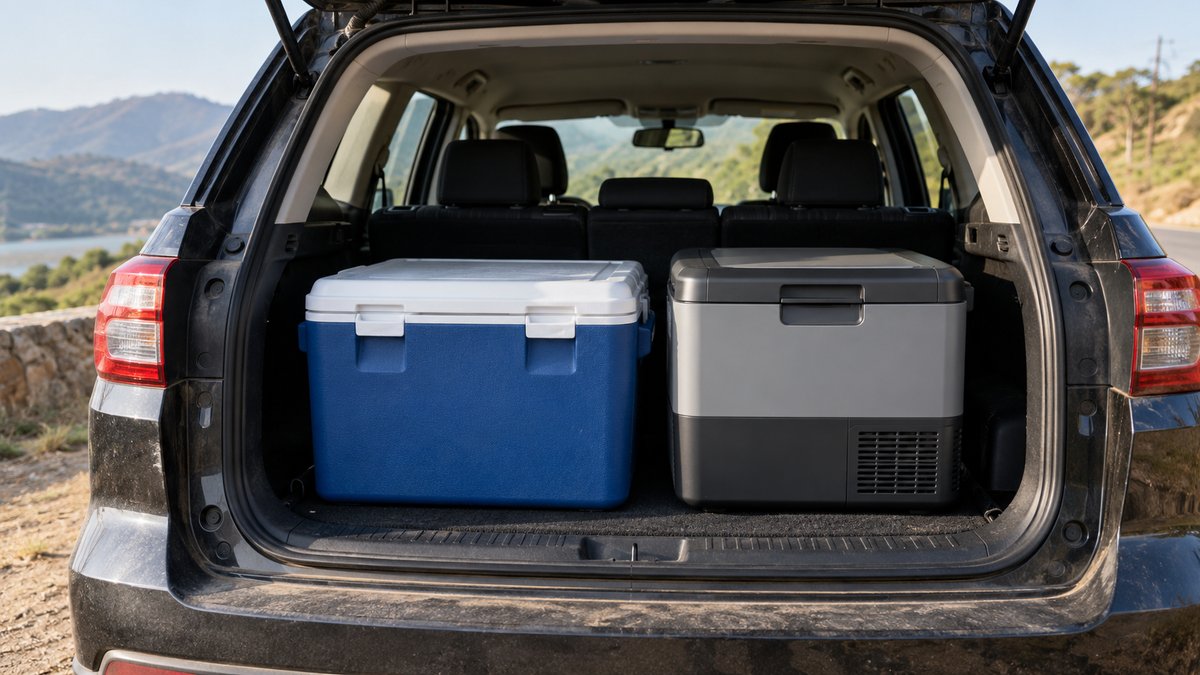
An insulated cool box suits day trips when you can start with cold food and replenish ice. A compressor car fridge suits longer journeys where controlled cooling is useful and a suitable power supply is available. A thermoelectric box sits between them, but its cooling depends on ambient conditions. Compare the whole travel setup, including space, power and food temperature, before choosing.
Separate three products that share similar names
An ice cool box uses insulation to slow warming. It needs ice or frozen packs, and those occupy part of its advertised capacity. Its strengths are a simple layout and freedom from cables. Its limits become clear when the ice supply is uncertain or repeated opening adds warm air throughout the day.
A thermoelectric box uses electricity to move heat. Listings often describe cooling relative to outside temperature rather than a guaranteed compartment temperature. That distinction matters in a hot boot. Read the actual operating limits, not an illustration of chilled drinks. A fan and power lead do not by themselves make a box suitable for storing perishable meals.
A compressor fridge cycles a refrigeration system to reach a set temperature within its stated operating conditions. It still needs ventilation, appropriate power and room to open the lid. A temperature setting on the control panel should be checked against a separate thermometer where food safety matters. None of these products can compensate for an overloaded, poorly ventilated installation.
Start with the food plan
Write down what you want to carry and when you will eat it. Sealed drinking water and dry snacks create a different requirement from milk, cooked meals or raw ingredients for camp. If cold storage is only for pleasant drinks, accepting gradual warming may be reasonable. Perishable food needs a reliable temperature plan.
FoodSafety.gov's road trip advice recommends keeping perishable food at 4°C or below and using a thermometer in the cooler. Pack chilled food directly from the refrigerator and keep raw items contained separately. If you cannot maintain safe storage, change the menu rather than treating a cooling gadget as a guarantee.
Avoid planning around an unsupported number of hours printed on a box. Retention depends on loading, starting temperature, cooling packs, weather and opening. Ask what conditions were used for any claimed performance. A useful specification explains those conditions; a dramatic ice-retention badge without them leaves the buying decision unresolved.
Measure usable space, not headline capacity
Make a cardboard outline of the candidate's footprint. Test it in the boot with your normal bags, spare-wheel access and parcel shelf in place. Check the height with the lid open. A large top-opening unit may fit on paper but require unloading luggage every time someone wants water.
Include handles, hinges, cable bends and specified ventilation clearance in the measurement. For an ice box, allow room for cooling packs around the contents. For a powered fridge, inspect whether the vents will face a seat back or a pile of soft bags. Follow the manufacturer's instructions for orientation and clearances, and secure the box using suitable vehicle luggage points.
The boot organisation guide helps separate food storage from cleaning bottles and tools. Put frequently needed drinks where a passenger can reach them at a stop, rather than burying the cooler beneath the holiday luggage. Avoid any arrangement that encourages reaching into the boot while driving.
Compare the full ownership burden
- Ice box: budget space for ice, meltwater handling and drying after use.
- Thermoelectric box: check ambient cooling limits, fan noise and continuous electrical demand.
- Compressor fridge: check temperature range, power requirements, service support and ventilation.
- Every type: inspect lid seals, carrying handles, cleaning access and a way to secure the load.
Think through the return journey as well. An empty ice box remains bulky, while a powered unit still needs careful storage and a clean dry interior. A drain can make cleaning easier, but inspect whether its plug is protected from luggage impacts. Removable baskets can improve access, provided their handles do not obstruct the lid seal.
Plan electrical supply separately
Check the car socket rating, fridge connector and manufacturer's specified power requirements. A plug that physically fits is only one part of compatibility. Find out whether the socket remains live with the ignition off, and do not assume a fridge's battery protection setting guarantees the vehicle will restart under every condition.
An overnight fridge installation may require a separately designed power arrangement. Get competent advice rather than improvising with multiple socket adapters or loose wiring. For background on choosing an AC conversion setup, read inverter sizing; many travel fridges can use an approved DC supply directly, so an inverter may be unnecessary.
Use our car charger buying guide to think through other devices competing for sockets. A phone, fridge and inflator may have very different operating needs. Plan when each will be connected instead of buying a splitter and assuming every socket can carry its full label rating at once.
Choose by your hardest regular journey
For a picnic with access to ice and a short return drive, a well-fitting insulated box avoids a complicated electrical setup. For repeated overnight touring, a compressor fridge can be easier to manage if you have planned power at stops and camps. A thermoelectric unit makes more sense when its stated temperature limits match modest cooling needs.
Do a loaded trial before carrying important food. Check temperatures, cable routing and access with the car packed as it will be on the trip. Build the cooling plan into your car camping gear list, including cleaning water and a place to dry the box. The best option is the one that maintains the conditions you need without taking over the entire boot.
What to look for when you buy
Insulated ice cool box
A draining layout, secure lid and room for cooling packs as well as food.
Portable compressor fridge
Documented power draw, clear temperature settings and required ventilation space.
Thermoelectric cool box
An explicit ambient-temperature limit and suitable socket compatibility.
Cooler thermometer
A readable temperature display suited to the food compartment.
Frequently asked questions
Does a cool box need electricity?
An insulated ice box does not. Powered thermoelectric and compressor designs do, so check which type a listing describes.
Can a thermoelectric box store perishable food?
Only if it maintains the required food temperature under your travel conditions. An ambient cooling claim is not a temperature guarantee.
Can I leave a car fridge running overnight?
Only with a suitable planned power supply and the maker’s instructions. Do not assume the starter battery can support it.
What temperature should chilled food stay at?
FoodSafety.gov recommends 4°C or below for perishable food carried in a cooler.
More guides
Road trips
Diwali Traffic Driving Tips for Crowds, Smoke and Delays
How to prepare for a slow festive journey and give yourself room to react when crowds and smoke change the road ahead.
Road trips
Car Seat Cushions: Fit Checks for Long Drives
Check cushion thickness, belt routing, pedal reach and airbag clearance before adding seat padding or lumbar support for a long drive.
Road trips
Pre-Trip Car Inspection: Mechanical Checks Before Travel
Check fluids, tyres, lights and brake behaviour before Diwali or wedding-season travel, with time to repair faults before departure.