Car care gear
Digital Tyre Pressure Gauge: Buying and Checking
By Samveg Jain · Updated 21 October 2026 · 5 min read
Some links on this site may be affiliate links. If you buy through them we may earn a commission, at no extra cost to you. It never changes what we recommend. How this works.
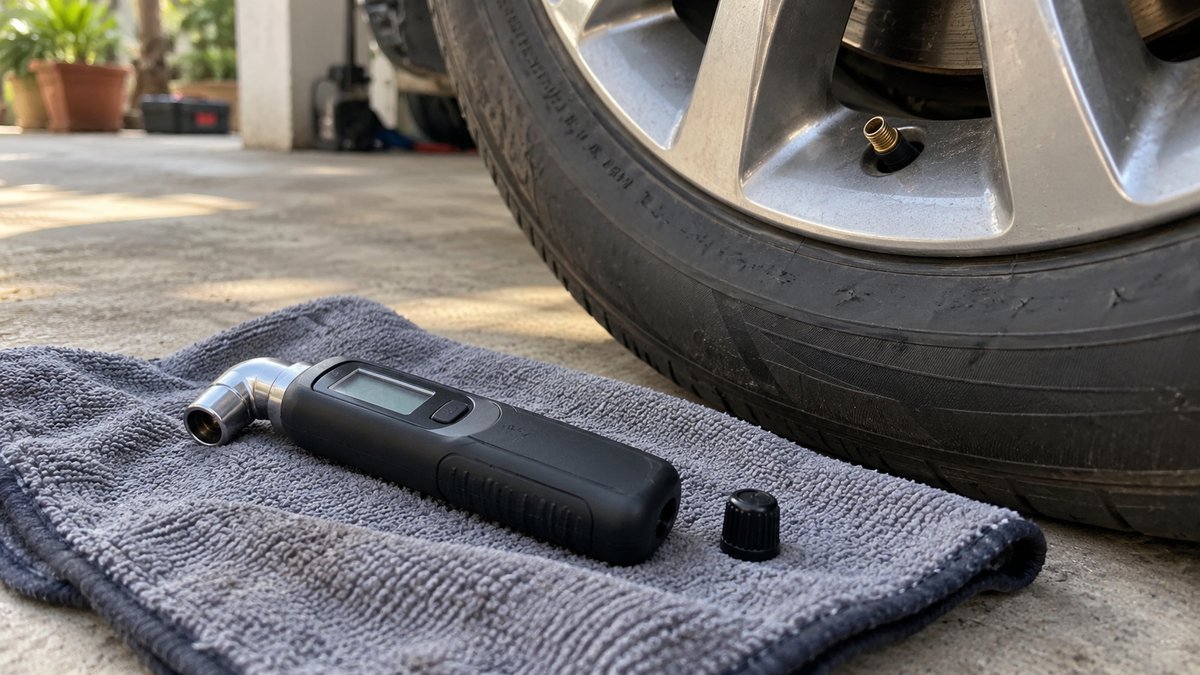
Choose a digital tyre pressure gauge by its stated accuracy, valve fit and readable units, then use it consistently. A bright screen with several decimal places can still give an unreliable result if the head leaks or the instrument has no meaningful tolerance specification. Match the reading to the vehicle's recommended cold pressure, including any different front, rear or loaded settings.
Buy a measuring tool rather than a display
Resolution describes the increments a screen can show. Accuracy describes how close the measurement is expected to be under specified conditions. Those are not interchangeable. Look for a stated tolerance and operating range, and ask what support is available if the gauge starts producing inconsistent results. A listing that only says digital or professional leaves the main buying question unanswered.
For an everyday car, the chosen pressure range should comfortably include all specified tyre pressures without making the useful area of the display awkward to read. Check the spare as well. A temporary spare can have a different requirement from the road tyres, so do not assume a gauge suitable for one task automatically covers every wheel you carry.
Compare the formats at the valve
| Format | Useful feature | Possible inconvenience |
|---|---|---|
| Small digital head | Pocket storage and retained reading | Display angle or small buttons |
| Digital gauge with hose | More freedom to position the display | Extra hose and connector to protect |
| Mechanical dial | No display battery needed | Dial protection and scale readability |
The best shape is one that seals squarely on your valve with little air loss. Deep wheel recesses and short valves can make a bulky head frustrating. If possible, test the fit on the car before keeping the purchase. A rotating head or hose may help access, but it adds joints whose condition also matters.
Check the small controls that affect real use
A retained reading lets you move the display into the light after removing the gauge. Backlighting helps in a dim parking area, while a clear unit label prevents a correct number being interpreted in the wrong unit. Check whether pressing the power button also changes units, and whether the instrument remembers its setting when switched on again.
Prefer accessible battery replacement and a protective case if the gauge will live with roadside tools. A flat battery is an inconvenience; a contaminated valve head can also compromise a reading. Keep the opening away from sand, oily cloths and loose screws. Read the storage-temperature guidance before leaving any measuring instrument in a permanently hot cabin.
Use the car's instructions for the target
The target comes from the vehicle placard or manual for the fitted tyre and load configuration. The tyre sidewall carries tyre information rather than a universal inflation recommendation for your car. The NHTSA tyre-safety guidance explains checking pressure cold and following the vehicle's specification. Keep a photo of your placard for convenient reference.
Front and rear pressures need not be identical. Loaded-trip settings may differ from daily use, and a replacement wheel or nonstandard tyre arrangement deserves advice from the vehicle or tyre specialist. Do not copy a neighbour's pressure merely because the cars look similar. For air top-ups, the inflator buying guide covers power, reach and stopping behaviour.
Develop a repeatable checking routine
Plan checks before a drive, with the tyres in the cold condition specified by the vehicle maker. Remove the valve cap, align the head and take a clean reading. If you hear continued hissing, reseat the head rather than accepting the displayed number. Replace the cap afterwards and avoid leaving small caps scattered where they will be lost.
Repeat an unexpected reading carefully, but do not keep pressing a leaking head onto the valve until enough air has escaped to change the situation. Note which tyre differs and whether the difference returns after correction. Persistent pressure loss needs attention to the tyre, valve or wheel. A gauge identifies a condition; it does not diagnose every cause or make continued driving safe.
Know when to question the instrument
- Compare unusual results with a dependable reference gauge under similar conditions.
- Check the displayed unit before interpreting a large change in the number.
- Inspect the head and battery condition if readings become erratic.
- Follow the maker's inspection or replacement guidance after a hard drop.
- Retire a damaged instrument instead of treating its extra digits as reassurance.
A disagreement between two gauges does not prove which one is right. A tyre workshop with suitable equipment can help investigate. Temperature, a poor seal and actual pressure changes can also explain differences between checks. Keep your method consistent before deciding the tool is faulty, and avoid averaging readings from instruments of unknown accuracy.
Record repeated losses by wheel position rather than just writing down four numbers. That makes a recurring problem easier to describe to a tyre technician, particularly after a rotation changes where a wheel is fitted.
Make the gauge easy to use on a trip
Store it where it can be reached without unpacking the boot onto a roadside shoulder. A dry pouch beside the inflator works better than a dashboard tray, where objects can slide or obstruct an airbag zone. The organiser guide helps keep small maintenance equipment accessible and secure while travelling.
Before a longer journey, check all relevant tyres and inspect for visible damage while you are at each wheel. Read the puncture equipment guide for the limits of portable repair products. Buying a gauge is most useful when it supports a routine you can repeat calmly at home, rather than becoming an unfamiliar gadget first opened during a breakdown.
What to look for when you buy
Pocket digital pressure gauge
Stated tolerance, replaceable battery, legible units and a head that suits your valves.
Hose-style handheld gauge
A flexible hose, leak-resistant connector and a readable display without bending into the wheel.
Mechanical comparison gauge
A suitable pressure range, stated accuracy and a protected dial for a battery-free alternative.
Frequently asked questions
Does a digital gauge measure more accurately than a dial?
The display type does not establish accuracy. Compare specified tolerance, condition and repeatable readings rather than display format alone.
Should I release air from a warm tyre?
Do not bleed a warm tyre down to the cold target just because its pressure has risen. Recheck under the vehicle maker's recommended cold conditions.
Can one gauge check the spare?
It can if its range and connector suit the spare's pressure and valve access. A temporary spare may have a different specified pressure.
Does a warning light replace a handheld check?
Follow the car's monitoring-system instructions, but keep a dependable gauge for planned checks and investigating readings. A warning system and a handheld gauge serve different roles.
More guides
Car care gear
Car Cleaning After Diwali: Remove Ash Without Scratching
A rinse-first cleaning routine for the morning after Diwali, with separate steps for paint, glass and the cabin.

Car care gear
Car Wax for Winter: Dust, Fog and Paint Care
Choose wax or sealant for clean paint, then manage winter dust and damp with gentle washing, careful drying and sensible parking.
Car care gear
Clean the Car Interior Before Festive Travel, Zone by Zone
A practical order for cleaning the boot, seats, floor, dashboard, vents and glass, with drying and child-seat checks before travel.