Safety gear
Child Locks and Safer Family Car Travel
By Samveg Jain · Updated 2 November 2026 · 5 min read
Some links on this site may be affiliate links. If you buy through them we may earn a commission, at no extra cost to you. It never changes what we recommend. How this works.
Quick answer
Use rear door child locks and window locks as your handbook directs, alongside a correctly fitted child restraint. Locks do not replace supervision or restraint.
Use your car's rear door child locks and window lock according to the handbook, and secure each child in a suitable, correctly fitted restraint. Child locks control access to door handles; they do not hold a child safely in a collision. Before a family journey, test the controls while parked and make sure adults understand how everyone will get out.
These are general safety checks for family travel in India. Vehicle features and child restraints differ, so use both sets of instructions. For legal requirements on your route, check the current rules where you drive and consult the relevant official guidance.
Find out which doors the child lock controls
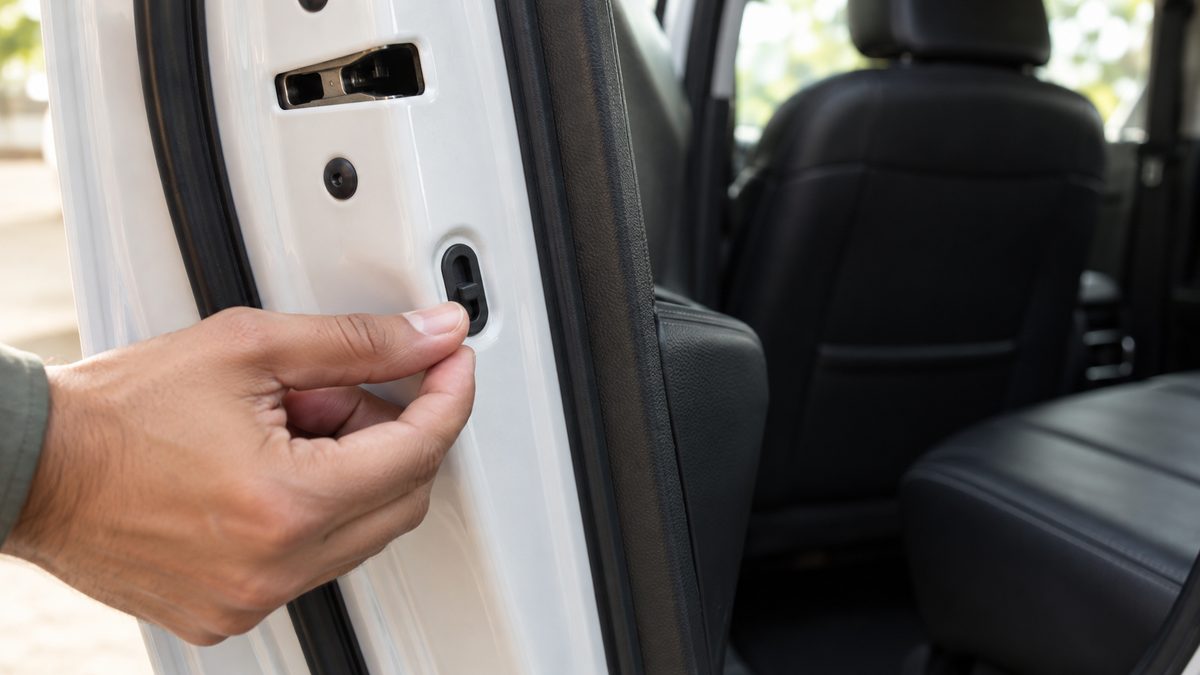
Rear door child locks commonly prevent opening a door using its interior handle. Depending on the car, activation may involve a small control on the door edge or an electronic switch. Identify the exact method in the handbook. Do not confuse child locks with central locking or assume that locking the car from the driver's seat has the same effect.
Check each relevant door separately with an adult helper and the vehicle safely parked. Keep keys available and avoid leaving a child inside during testing. Confirm the intended opening method from outside. Some systems have combined functions or indications that differ by model, so a remembered procedure from a previous car is not enough.
Test window controls as a separate feature
Check what the window lock disables and which controls remain available to the driver. Do not assume it blocks every passenger switch. Set it before departure and explain to older children that hands and objects must remain inside the car. Keep everyone clear of a closing window.
Anti-pinch features do not make playing with windows safe, and their operation may depend on particular conditions. Never test them using fingers or another body part. If a window behaves unexpectedly after electrical work or a battery interruption, follow the handbook's guidance and obtain workshop help where needed.
Choose the seating arrangement before adding luggage
Use a child restraint suitable for the child's measurements and approved for the car's seating position. Rear seating is generally preferred for children, subject to correct vehicle and restraint compatibility. Never put a rear-facing child seat in front of an active airbag. Keep rear-facing travel within the seat maker's permitted limits for as long as the seat allows.
Read the child car seat buying guide before changing seats or installation methods. Check required anchorages and belt paths, then seat the child and adjust the harness as instructed. Do not add cushions, unapproved belt clips or padding to make an unsuitable arrangement appear to fit.
Use an adult-led departure checklist
- Confirm the restraint is installed using its approved method and all required anchorages.
- Check the child's harness or belt fit, including twists and buckle engagement.
- Set rear door child locks and the window lock using the handbook procedure.
- Close doors fully and check warning indications before moving.
- Secure bags, bottles and toys so they cannot slide into passengers.
- Agree which adult will help children leave at the next stop.
Complete the checks after everyone is seated, not only when fitting the restraint earlier in the day. A harness may have been loosened for loading, or a bag may now obstruct a buckle. Give one adult clear responsibility while another handles route planning and luggage if available.
Keep snacks, comfort and breaks compatible with restraint
A sleeping or restless child still needs the approved restraint fit. Never route the shoulder belt behind the back or loosen a harness for comfort while travelling. Check permitted seat recline positions before departure and use only inserts or accessories approved for that seat and the child's stage.
Plan suitable stopping places for feeding, stretching and other needs. An adult reaching backwards repeatedly can become distracted, particularly in city traffic. The family road trip checklist helps organise breaks and supplies. Stop safely when a child needs hands-on help rather than trying to manage an extended task while moving.
Make the exit plan work with the locks engaged
Child locks mean an adult may need to open a rear door from outside. At each stop, choose a safe parking location and help children towards the side away from moving traffic where possible. Check the surroundings before opening any door, including for approaching cycles or two-wheelers.
Learn the vehicle's emergency release and door-opening instructions before a trip. Keep keys under adult control and never leave children unattended in a parked car. A child lock is a deliberate barrier to independent exit; adults need to remain responsible for access, temperature and supervision throughout the stop.
Recheck the setup when drivers or cars change
Show grandparents, relatives and other regular drivers the actual controls rather than sending a general description. A different vehicle may have a different lock arrangement or restraint compatibility. Ask each driver to demonstrate the parked checks and identify the permitted seating positions before transporting the child.
Store cabin supplies with the seat and boot organiser guidance in mind, keeping attachments away from restraint parts and airbags. Revisit the whole arrangement as the child grows or a seat moves between cars. If a correct restraint fit or dependable lock operation is uncertain, resolve that with qualified fitting help or a workshop before travelling.
What to look for when you buy
Compatible child restraint
Suitability for the child’s measurements, the vehicle and the intended seating position.
Secure cabin storage
Covered or retained storage that keeps bags and small items away from passengers and controls.
Handbook access
Clear instructions for door locks, window controls and emergency release procedures.
Frequently asked questions
Should children keep heavy coats on under a harness?
Follow the restraint maker’s instructions. Bulky clothing can prevent a close harness fit; provide warmth without changing the approved restraint arrangement.
Can an older sibling supervise the locks?
An adult should take responsibility for the controls, restraint checks and safe exit plan.
Can I attach toys to the child seat?
Use only attachments permitted by the seat maker. Hard or improvised attachments can interfere with the restraint or become loose objects.
What if a child feels unwell on the journey?
Stop in a safe place to assess and help them. Seek medical care when symptoms are serious or concerning; do not loosen their restraint while moving.
More guides
Safety gear
Refill Your Car First Aid Kit Before Winter Travel
Check expiry dates, sealed dressings, storage damage and access before winter travel. Refill a car first aid kit around practical first aid needs.
Safety gear
Emergency Car Hammers and Belt Cutters: Limits
Check window glass compatibility, protected blades and reachable mounting before choosing an emergency hammer and seatbelt cutter for your car.
Safety gear
Firecracker Damage to Your Car: What to Record Before a Claim
A burn mark does not settle an insurance claim. Preserve evidence, describe what you know and ask your insurer how inspection should proceed.