Safety gear
Emergency Car Hammers and Belt Cutters: Limits
By Samveg Jain · Updated 27 October 2026 · 5 min read
Some links on this site may be affiliate links. If you buy through them we may earn a commission, at no extra cost to you. It never changes what we recommend. How this works.
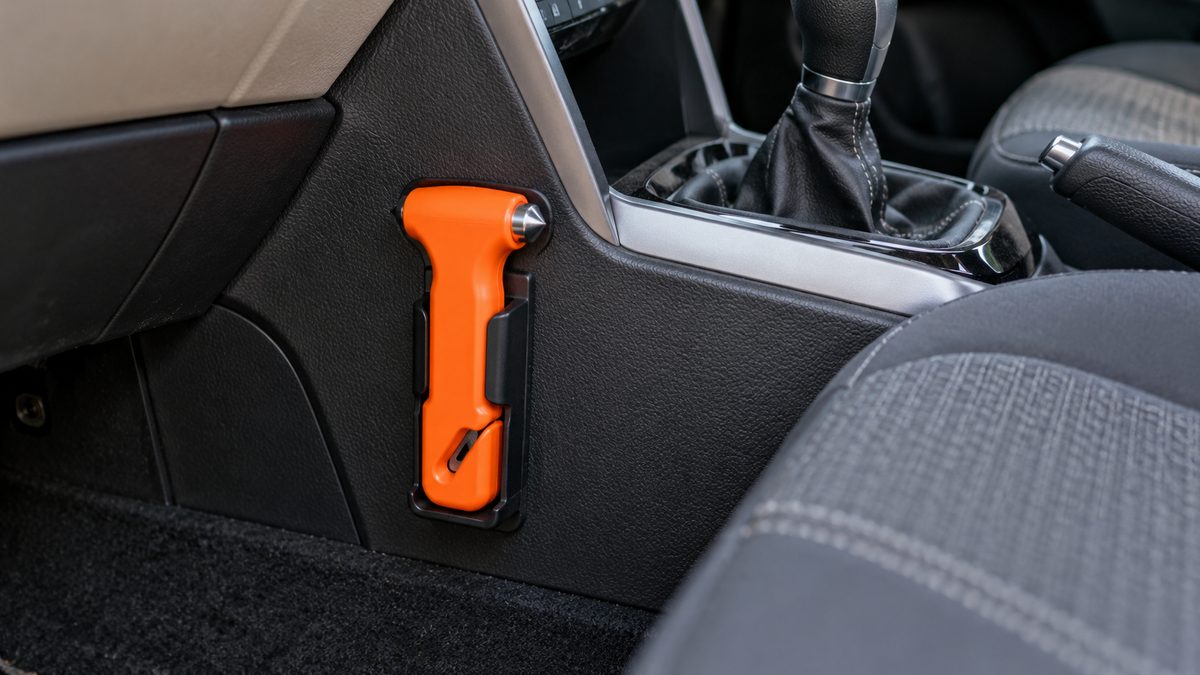
Quick answer
Choose an escape tool only after checking your car’s glass types and a secure reachable mounting point. Many tools are intended for tempered side glass and will not clear laminated glass.
An emergency hammer and seatbelt cutter is a limited escape aid, so choose it around your car's glass and a secure mounting point you can reach while restrained. Many glass breakers are intended for tempered side windows and cannot clear laminated glass. Read the vehicle handbook and the tool instructions before buying, rather than assuming every window will break.
This is general preparation information, not a substitute for emergency training or rescue advice. In an incident, contact local emergency services when possible and follow their directions. A tool does not guarantee escape from a damaged, burning or submerged vehicle.
Identify the glass before selecting the tool
Cars can use different glass constructions in different positions, including within the same vehicle. Tempered glass and laminated glass behave differently when struck. Laminated glass contains a bonded layer that can hold broken material together, so cracking it is not the same as making an opening large enough to leave through.
Check window markings, the handbook and vehicle information for the specific car. Ask the manufacturer or an authorised workshop if a marking is unclear. Do not identify glass solely from the model's age or price, and do not assume the rear side window matches the front side window.
Write down which accessible windows, if any, match the tool's stated use. If compatibility cannot be established, do not build an escape plan around it. A claim that a compact tool works on all car glass needs scrutiny, especially when the instructions do not distinguish glass types.
Compare the mechanism and the protected blade
A hammer-style tool requires space and movement to swing it. A spring-loaded punch uses a different action and still needs the user to reach the glass and operate the mechanism correctly. Choose only after reading the actual operating instructions and checking the intended user's reach and grip.
For belt cutting, look for a recessed blade designed to accept seatbelt webbing while limiting accidental contact with fingers. The instructions should explain how to present and tension the webbing. A loose exposed blade, improvised knife or damaged guard introduces another injury risk in an already difficult situation.
| Feature | What to verify | Reason to reject it |
|---|---|---|
| Glass breaker | Glass compatibility and operating method | Unqualified promises about every window |
| Belt cutter | Recessed blade and clear webbing guidance | Exposed cutting edge or broken guard |
| Mount | Secure vehicle-compatible attachment | Loose storage or blocked reach |
| Instructions | Readable use, care and replacement guidance | No identifiable specification or support |
Choose a mounting point from the seated position
Park the car, fasten your belt and check whether you can reach the proposed position without undoing it. Consider the usual passenger as well as the driver. A tool in the boot, under loose luggage or deep inside a glovebox may be inaccessible when it is needed.
Use only a mounting method suitable for the car and accessory. Keep it away from airbag deployment areas, pedals, steering movement, belt equipment and seat adjustment. Do not drill into trim without understanding what is behind it; wiring, restraints and other components may be hidden.
Check that the tool stays retained when the car moves and can be released as instructed. Heat, worn clips and ageing adhesive can affect a mounting arrangement. Do not assume an attachment is sound simply because the tool has remained in place during ordinary commuting.
Prepare without damaging the car
Let adult occupants read the instructions while the vehicle is parked. Identify the release action, the protected cutter opening and the appropriate windows. Store the tool away from children and explain that it is emergency equipment, rather than something to demonstrate on the car.
Never test the glass breaker on a vehicle window or cut an installed belt for practice. If a maker supplies a dedicated training device or safe demonstration method, follow that guidance. Hands-on rescue training from a qualified provider is more useful than copying an unverified demonstration.
Use the car safety kit guide for other breakdown equipment. A roadside stop and an escape emergency need different responses, so do not treat one accessory as the answer to every incident.
Recognise the limits during an emergency
Try normal releases and exits when they are usable and safe. A cutter is for webbing that needs cutting, not a reason to remove restraint while the vehicle is still moving. Cutting a belt can also let an unsupported occupant fall, particularly if the vehicle is resting at an unusual angle.
Broken glass can injure occupants, and a damaged opening can have sharp edges. Smoke, fire, moving traffic and rising water add hazards that a simple product checklist cannot resolve. Get emergency help and follow professional directions where available. Avoid spending time on repeated attempts with an incompatible tool.
The car first-aid kit checklist supports preparation for injuries, while the car fire extinguisher guide addresses the limits of another emergency accessory. Neither replaces getting people away from immediate danger when that can be done safely.
Inspect it before the next long journey
At a pre-trip check, inspect the mount, blade guard and visible mechanism without deploying it. Replace damaged equipment according to its instructions, and confirm it has not become buried behind chargers or bags. Recheck access after changing seat positions or installing another cabin accessory.
Keep instructions available to the adults who use the car. If equipment requirements affect your route, check the current rules where you drive and consult official sources. The practical aim is a considered backup plan with known limits, supported by safe driving and a maintained vehicle.
What to look for when you buy
Protected belt cutter
A recessed blade, clear instructions and guarded storage.
Glass-breaking tool
Explicit compatibility with the relevant window glass and documented use instructions.
Secure mounting system
Vehicle-compatible attachment reachable from the restrained seating position.
Frequently asked questions
Can I practise on the windscreen?
No. Do not damage any part of the vehicle for practice. Windscreens are generally laminated and are not the intended target for many compact escape tools.
Should each passenger carry a loose tool?
Loose tools can move or injure someone. Consider designated securely mounted tools with clear instructions and appropriate access for the intended occupants.
Can a key-ring tool stay with the ignition key?
Check whether it would remain reachable and usable in that arrangement. A key ring is not automatically a secure or accessible mounting plan.
Does a cutter replace carrying first-aid supplies?
No. An escape tool and first-aid supplies serve different purposes. Choose and store each according to its intended use.
Can a tool be kept after accidental deployment?
Follow its inspection and replacement instructions. A fired mechanism, chipped tip or damaged blade guard may make reuse inappropriate.
More guides
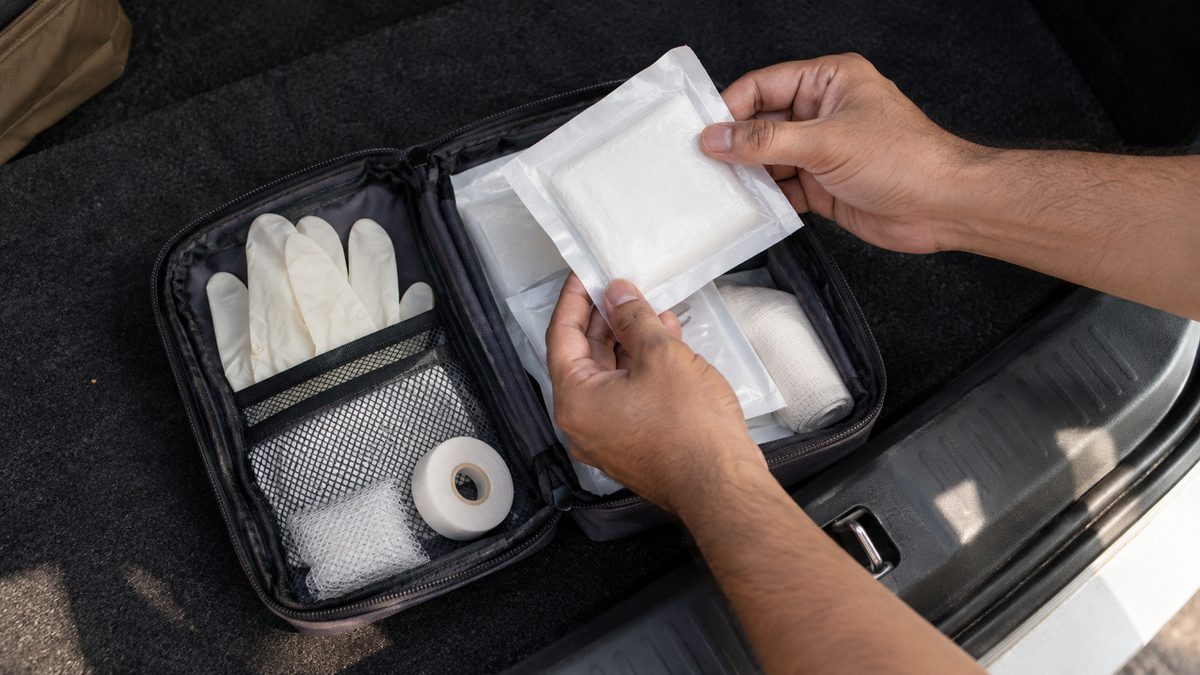
Safety gear
Refill Your Car First Aid Kit Before Winter Travel
Check expiry dates, sealed dressings, storage damage and access before winter travel. Refill a car first aid kit around practical first aid needs.
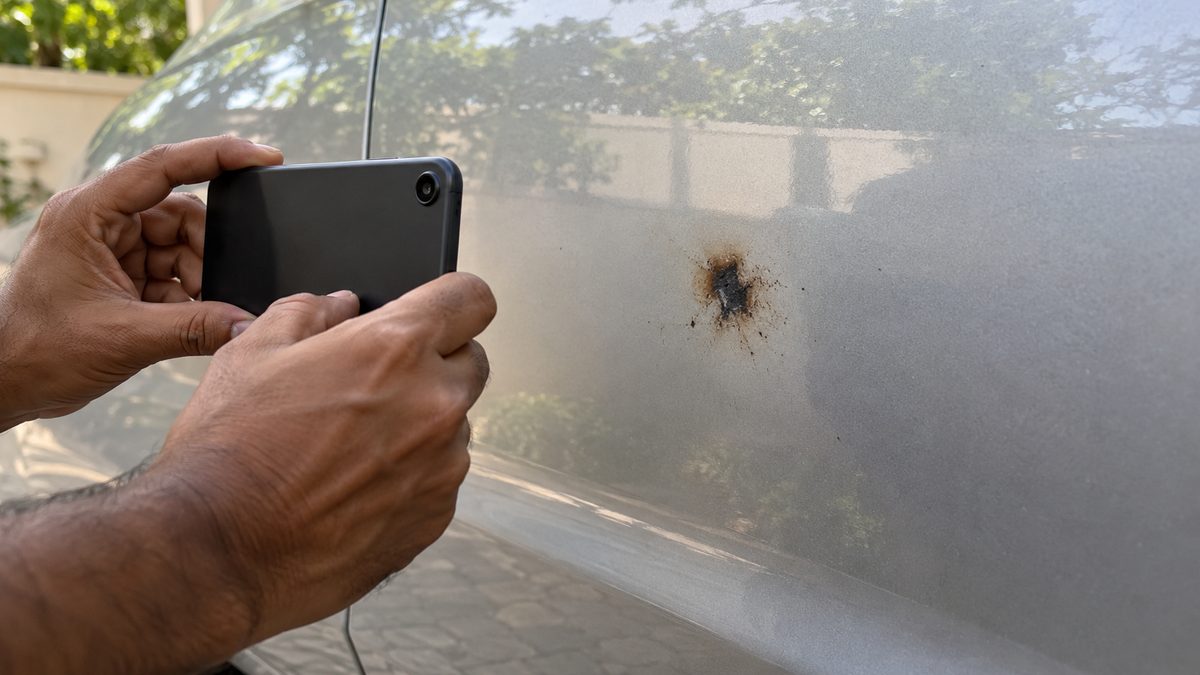
Safety gear
Firecracker Damage to Your Car: What to Record Before a Claim
A burn mark does not settle an insurance claim. Preserve evidence, describe what you know and ask your insurer how inspection should proceed.

Safety gear
Car Safety Around Firecrackers: Parking for Diwali
A practical parking and inspection plan for Indian car owners before and after Diwali celebrations.