Car care gear
Car Vacuum Cleaner Buying Guide for Dust and Sand
By Samveg Jain · Updated 21 October 2026 · 5 min read
Some links on this site may be affiliate links. If you buy through them we may earn a commission, at no extra cost to you. It never changes what we recommend. How this works.
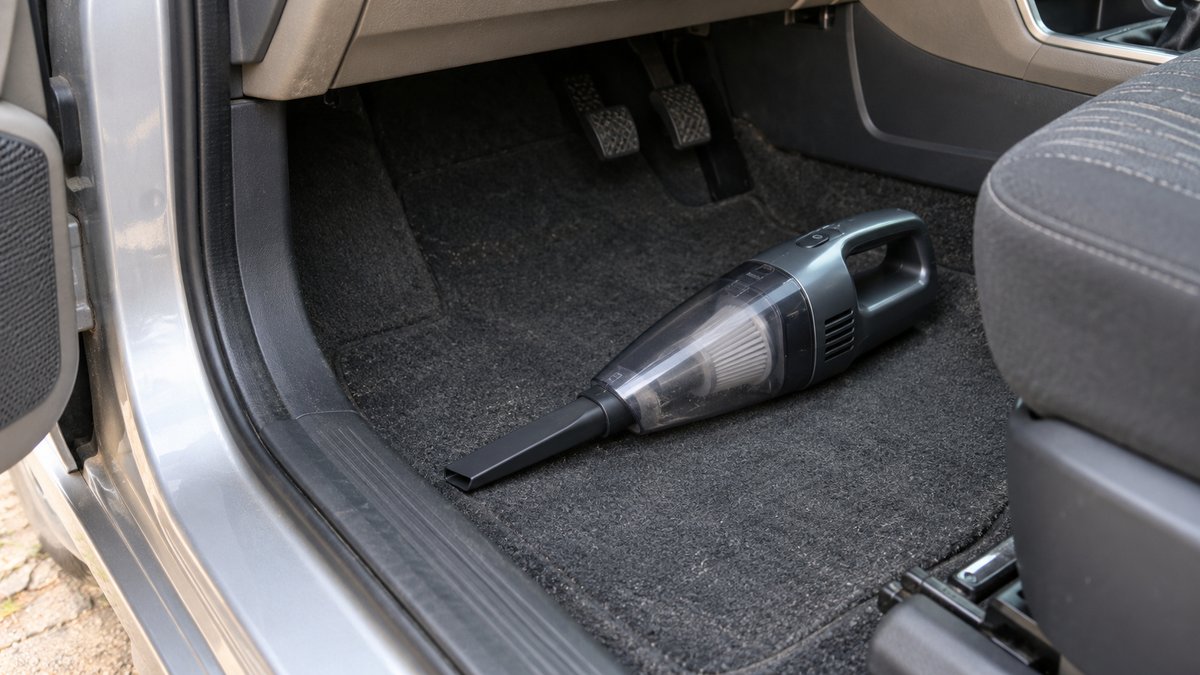
Buy a car vacuum that reaches the awkward areas, handles your usual debris and has filters you can maintain. For quick crumbs, a cordless handheld may be convenient. For a thorough home clean, an existing household vacuum with suitable tools may do the job. Liquid spills need an explicitly compatible wet-pickup machine, rather than a dry cleaner with a powerful-sounding specification.
Identify the dirt you are buying it for
Dust on a seat, sand embedded in a floor mat and pet hair caught in fabric need different approaches. Write down the recurring problem. A light crevice tool can collect crumbs between seats but may struggle to lift hair woven into upholstery. A stiff brush may help a removable mat yet be unsuitable for delicate trim or a display surface.
For Indian daily use, look at dust around seat rails, grit near pedals and dirt carried in during monsoon weather. Let wet mats dry and deal with their source of moisture instead of expecting a dry vacuum to solve everything. If dampness keeps returning, the cabin odour guide explains why masking a smell is a poor first response.
Compare power sources against your cleaning location
| Option | Works well when | Check before buying |
|---|---|---|
| Cordless handheld | You want frequent short cleanups | Runtime, charging access and battery storage |
| Vehicle-socket vacuum | You lack a nearby household socket | Input rating, lead reach and vehicle guidance |
| Home vacuum with tools | You clean in a driveway with safe power access | Hose reach and suitable upholstery attachments |
| Rated wet-and-dry cleaner | Liquid pickup is a defined requirement | Correct filter and tank setup for each task |
Do not buy another machine until you have checked what your existing vacuum can reach. A compatible crevice attachment may solve the problem more economically. Conversely, a large home cleaner is inconvenient if you cannot bring it safely near the vehicle. Compare the complete cleaning arrangement, including power access, storage and emptying, rather than the handheld body in isolation.
Treat suction claims as incomplete information
Motor input wattage, pressure and airflow describe different things. A headline number without test conditions is a weak basis for comparison. Ask for demonstrations on car-like carpet, with the normal filter fitted and a practical attachment. Watch for repeat passes, debris left at the nozzle edge and loss of pickup as the container fills.
A narrow nozzle may work well in a seat gap while taking too long across a large boot floor. Look for both a broad upholstery tool and a crevice tool when those tasks matter. Check that accessories lock in securely and can be replaced. A useful tool that disappears after a few months can leave an otherwise working cleaner much less convenient.
Check access without disturbing safety equipment
Measure the gap between the seat and console, the distance under the front seats and the reach into the boot. A flexible hose can help where a bulky handheld body will not fit. Do not force a nozzle into wiring, seat mechanisms or connectors, and keep hands clear when a seat is being moved.
Remove loose floor mats for cleaning where the vehicle instructions allow, then reinstall and secure them properly. Keep the driver's pedal area clear when finished. For loose items that repeatedly create clutter, consider a small solution from the seat and boot organiser guide instead of treating every cleanup as a reason to buy a stronger vacuum.
Read filter and container instructions before ordering
Look for an accessible filter, clear replacement information and an emptying method that does not scatter debris across the cabin. Check which components can be washed and how long they must dry. A washable label on the dust cup does not establish that the motor filter is washable too. Keep water away from electrical parts unless the instructions explicitly allow the relevant cleaning method.
The manufacturer guidance for wet-and-dry cleaners distinguishes those machines from ordinary dry pickup and directs owners to the product manual. Use that distinction when shopping, without assuming every similar-looking handheld has the same capability. Never vacuum fuel, flammable liquids, hot ash or hazardous contamination with a normal car-cleaning machine.
Make cordless convenience realistic
Check runtime for the power mode and attachment you expect to use. A maximum runtime measured in a low setting may not represent a deep clean with a powered tool. Ask whether the battery is replaceable, what charger is required and whether filters remain available locally. Those details affect ownership more than a collection of rarely used nozzle shapes.
Plan where to charge and store the cleaner within the stated temperature limits. A hot parked vehicle may be unsuitable for a battery-powered appliance. Bring it indoors if its storage instructions require that, and do not charge a damaged or swollen pack. A corded model avoids one charging routine but still needs a compatible supply and intact cable.
Listen for a change in motor sound as well as watching pickup. If a blockage or full container appears, stop and follow the clearing instructions instead of continuing to run a struggling machine against the carpet.
Use a short acceptance checklist
- Try a seat gap, a removable mat and the boot with the supplied tools.
- Check that the bin opens predictably and the filter can be removed without force.
- Confirm cable reach or usable cordless runtime across your normal cleaning session.
- Look for replacement filters and accessories before the return window closes.
Pair the machine with suitable cloths for surfaces it cannot clean. The microfibre and wash-kit guide covers separating dirty work from delicate trim. A vacuum should make routine dirt removal easier while leaving the cabin dry, uncluttered and ready to drive.
What to look for when you buy
Cordless handheld dry vacuum
Useful runtime with the required attachment, accessible filter and easy emptying.
Vehicle-socket dry vacuum
Compatible input current, reach to the boot and a flexible crevice tool.
Home wet-and-dry vacuum
Explicit liquid pickup instructions, suitable accessories and safe power access at home.
Frequently asked questions
Does a bigger wattage mean better cleaning?
Input power alone does not describe debris pickup. Nozzle design, airflow, sealing, filter condition and the cleaning surface all affect the result.
Can a dry vacuum remove a spilled drink?
Use liquid pickup only when the machine and setup are explicitly rated for it. A dry vacuum should not be used as an improvised wet cleaner.
Are all washable filters reusable straight away?
No. Follow the filter's cleaning and drying instructions. Some filters are not washable, and fitting a damp filter can damage the machine or cause odour.
Is a tiny vacuum enough for pet hair?
Loose hair may be manageable, but embedded hair often needs a suitable upholstery tool and manual loosening. Choose from evidence on similar fabric rather than size alone.
More guides
Car care gear
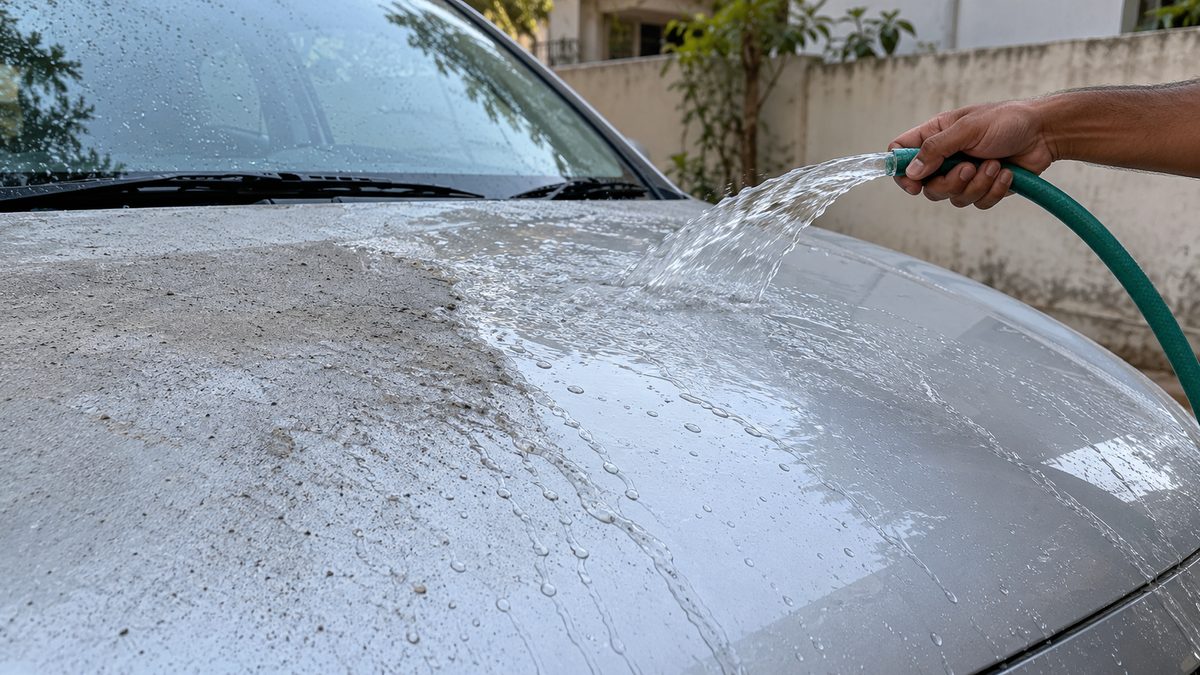
Car Cleaning After Diwali: Remove Ash Without Scratching
A rinse-first cleaning routine for the morning after Diwali, with separate steps for paint, glass and the cabin.
Car care gear
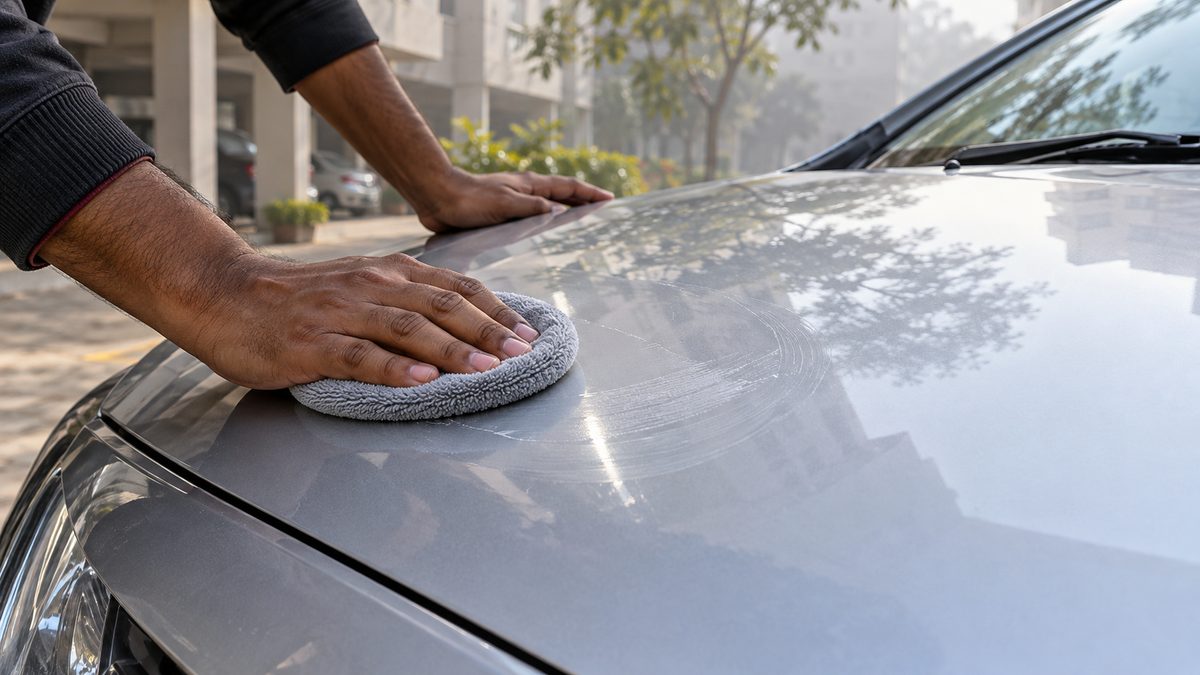
Car Wax for Winter: Dust, Fog and Paint Care
Choose wax or sealant for clean paint, then manage winter dust and damp with gentle washing, careful drying and sensible parking.
Car care gear
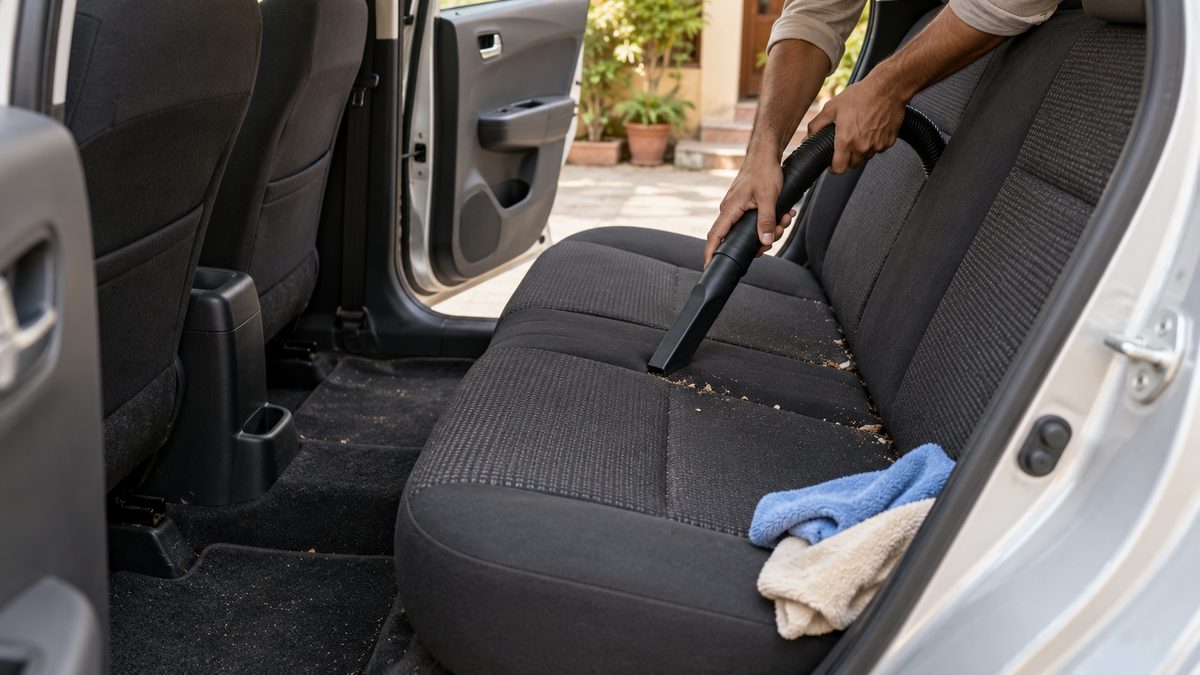
Clean the Car Interior Before Festive Travel, Zone by Zone
A practical order for cleaning the boot, seats, floor, dashboard, vents and glass, with drying and child-seat checks before travel.