Car care gear
A Basic Car Tool Kit for Indian Drivers
By Samveg Jain · Updated 27 October 2026 · 5 min read
Some links on this site may be affiliate links. If you buy through them we may earn a commission, at no extra cost to you. It never changes what we recommend. How this works.
Quick answer
Carry tools for tasks your handbook permits and you know how to perform safely. Keep the vehicle’s correct wheel tools, a torch and a pressure gauge, and leave complex repairs to a workshop.
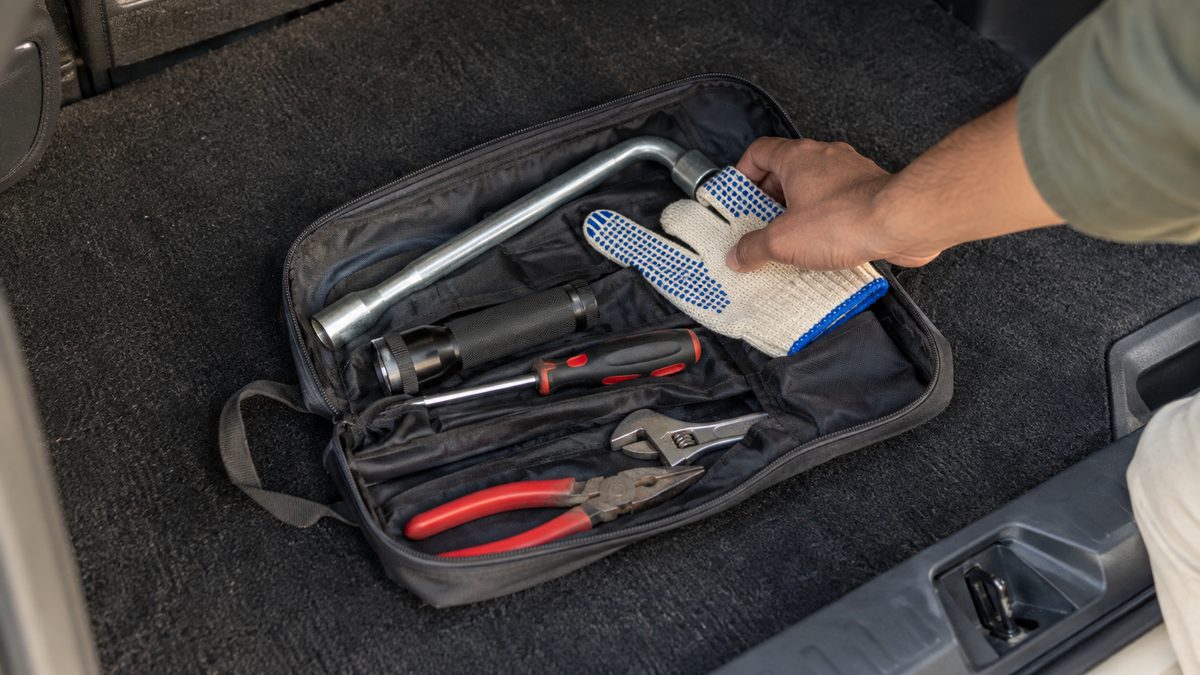
A basic car tool kit should support safe checks and the small tasks your handbook allows, rather than attempt every roadside repair. Start with the correct vehicle wheel tools, a torch, gloves and a tyre pressure gauge. Add tools only when you know the procedure and can perform it safely at the place where the car is stopped.
For Indian drivers, the stopping location often decides what is sensible. A narrow shoulder, passing lorries, soft ground or poor visibility can make a simple job unsafe. Call roadside assistance when the location or fault is beyond your ability, even if you have the equipment in the boot.
Check the tools supplied with your car first
Look beneath the boot floor and in the handbook for the jack, wheel wrench, towing eye and any puncture equipment supplied for your car. Some vehicles do not carry a spare wheel. Do not assume that an empty moulded compartment should contain a tool without checking the vehicle specification and instructions.
Confirm that the wheel wrench fits and that a locking wheel key, if needed, is present. Inspect the jack for damage and missing pieces without improvising a load test. The jack and wheel spanner guide explains why fit and correct jacking points matter more than the number of pieces in a box.
Build the inspection kit around seeing clearly
A torch lets you inspect a tyre, locate a dropped item or read instructions without holding a phone in an awkward position. Check its power before trips and retain it securely. Gloves and a clean cloth can help with dirty equipment, but neither makes hot parts or hazardous fluids safe to touch.
Add a suitable tyre pressure gauge and learn which unit your car's pressure label uses. Keep a note of where that label is, not an invented universal pressure figure. A small notebook or saved handbook page can record symptoms and work already done, helping roadside assistance understand the problem without repeated trial repairs.
Decide what belongs in the bag
| Tool or supply | Useful purpose | Boundary |
|---|---|---|
| Torch | Inspect accessible areas | Do not reach into moving machinery |
| Pressure gauge | Check against the vehicle label | It does not diagnose tyre damage |
| Correct wheel wrench | Approved wheel-change procedure | Only at a safe, suitable stopping place |
| Basic hand tools | Specific permitted minor tasks | No improvised structural or electrical repairs |
A screwdriver or small spanner set is useful only if it matches an identified task. Avoid filling the bag with unfamiliar specialist tools. Wrongly sized tools can round fasteners, and excessive force can damage parts. Keep the kit modest enough that you can find the correct item without emptying everything beside traffic.
Treat a wheel change as a location-dependent task
Read the vehicle's wheel-change instructions before a puncture occurs. The ground must be suitable and the car secured as directed. A roadside emergency jack is intended for the tasks specified by the maker. Never place any part of your body beneath a vehicle supported only by its jack.
If traffic, a slope or unstable ground prevents safe work, stay out of danger and request assistance. Do not use loose bricks, random timber or a different jack to overcome poor conditions. A wheel refit also needs the specified tightening procedure and torque checks; a long wrench and a guess are not a substitute.
Leave fluid leaks and electrical faults for assessment
Smoke, a fuel smell, overheating or a significant fluid leak calls for stopping safely and obtaining professional help. Do not loosen hot cooling-system caps. Do not crawl under the car to trace a leak beside the road. Record what you noticed and where, from a safe position, rather than continuing until the symptoms become worse.
Keep clear of high-voltage equipment in electrified vehicles. Do not cut, disconnect or attempt to repair its cables. Even conventional electrical systems can be damaged by improvised wiring. Jump starting, battery work and fuse replacement need the exact handbook procedure and suitable equipment, not general instructions copied from another car.
Secure metal tools away from people and supplies
Use a sturdy pouch or case that stops sharp edges contacting upholstery and prevents tools rattling loose. Store it low in an appropriate secured boot location. It should remain accessible without resting against a battery, fluid container or first aid pouch. Replace the boot floor correctly after checking underfloor equipment.
The car organiser guide can help with storage, but a soft divider alone does not restrain a heavy case. Inspect the case closures and use the car's permitted load-securing arrangements. A tool kit should not become an object that moves towards passengers during sudden braking.
Practise preparation without inventing repairs
At home, locate the permitted access points and read instructions with the car stationary. Learn where roadside assistance details and the vehicle's location information can be found. Pair this with the pre-trip inspection checklist so tyres, lights and visible leaks are checked before leaving.
After each use, clean and dry tools as appropriate, replace missing pieces and record any fault needing follow-up. If you cannot explain a tool's purpose or the safe stopping conditions for its use, ask a competent workshop before depending on it. The most useful kit supports a clear decision, including the decision to wait for help.
What to look for when you buy
Vehicle wheel tools
The correct jack and wheel wrench specified for the car, with any required locking key.
Inspection torch
A secure light with accessible controls and suitable storage.
Tyre pressure gauge
Suitable range, readable units and a way to compare readings with a trusted reference.
Frequently asked questions
Should I carry a spare fuse?
Only carry the specified type and rating if the handbook permits owner replacement. Repeated failure needs diagnosis, not a stronger fuse.
Is a diagnostic reader a repair tool?
It can provide information on compatible systems, but a code does not identify every cause or prove a car is safe to drive.
Can tools share a bag with first aid supplies?
Use separate protected compartments so sharp or oily tools cannot damage sterile packaging.
Should an electric car have the same kit?
Some inspection tools overlap, but follow its own handbook. Leave high-voltage components and cables to qualified technicians.
More guides
Car care gear
Car Covers for Winter Dust and Morning Dew
Choose a winter car cover by fit, moisture management and parking conditions. Learn when dust, damp paint or hot parts make covering a poor choice.
Car care gear
Low Winter Sun: Sunglasses Storage and Clear Glass
Reduce distractions from low winter sun with clean glass, a working visor and secure sunglasses storage that stays clear of airbags and controls.
Car care gear
Headlight Restoration Kits: Repair or Replace?
Identify external lens haze before choosing a restoration kit. Check preparation, protective coating and signs that need workshop assessment.