Car care gear
Low Winter Sun: Sunglasses Storage and Clear Glass
By Samveg Jain · Updated 27 October 2026 · 5 min read
Some links on this site may be affiliate links. If you buy through them we may earn a commission, at no extra cost to you. It never changes what we recommend. How this works.
Quick answer
Clean the windscreen inside and out, adjust the factory visor and keep suitable sunglasses within easy reach while parked. Stop safely if glare prevents a clear view.
For low winter sun, start with a clean windscreen, a working factory visor and suitable sunglasses stored securely within reach. A sunglasses holder can prevent fumbling, but it cannot correct dirty glass or make severe glare safe. If you cannot see the road clearly, slow appropriately and stop somewhere safe until conditions allow you to continue.
On Indian city roads, a bend or turn out of shade can put the sun directly ahead. Dust on the outside of the glass and a film inside can make that transition harder. Prepare before moving instead of searching a door pocket while steering into bright light.
Remove the film that catches the sun
Clean the windscreen on both sides with products suitable for the glass, any tint and its coatings. Use separate clean cloths for removing residue and finishing the surface. Work while parked in a suitable place, then inspect from the driver's normal seating position. A surface that looks clear from outside can still show streaks from behind the wheel.
Avoid applying shiny dashboard dressings that create distracting reflections. Clear dust from the dashboard with an appropriate method, keeping products away from screens, sensors and airbag covers unless approved. The cloth and car wash kit guide helps you keep glass cloths separate from dirtier cleaning jobs.
Try the visor throughout its permitted movement
Check that the original visor stays where you place it and returns securely to its clip. Use its side position or extension only as the handbook describes. A visor that droops under its own weight needs attention. Adding a heavy holder to it may make an existing fault worse.
Adjust your seat for safe control and visibility first, then assess the visor from that position. Do not crouch behind the steering wheel or move so far back that you lose proper pedal control just to hide from sunlight. If the factory arrangement cannot provide an adequate view, pause the journey and reassess the conditions.
Choose storage that stays put over bumps
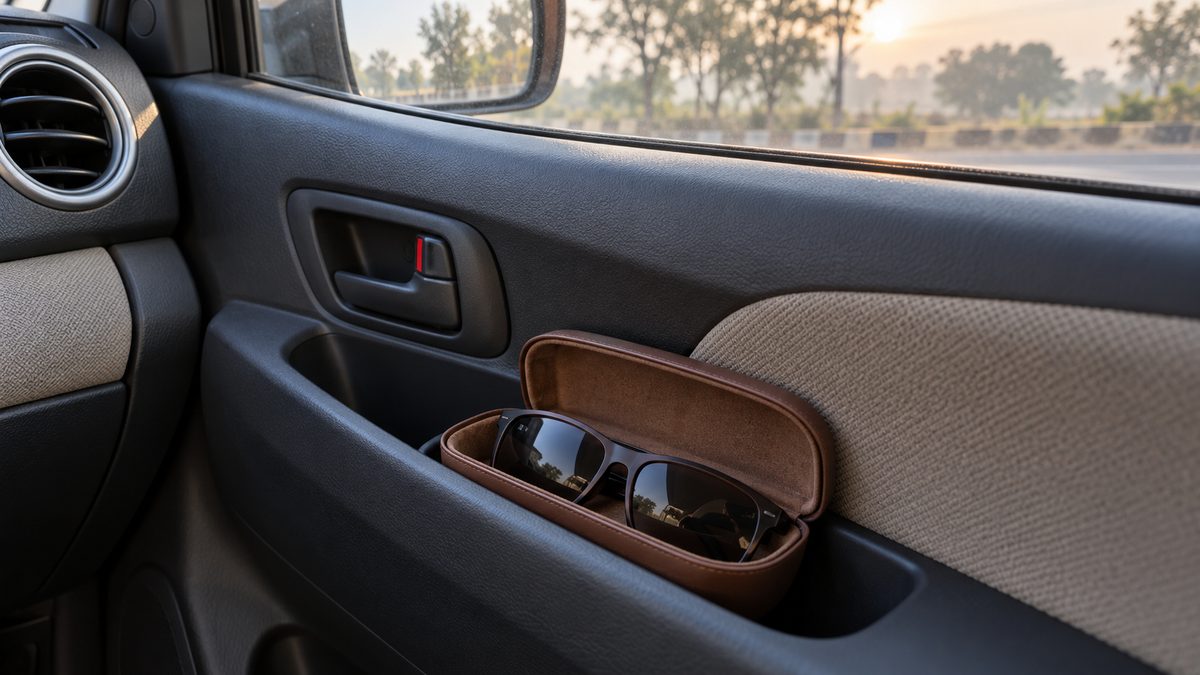
A protective case in a secure compartment is often a practical starting point. Check that the glasses fit without the temples being forced and that the lenses do not scrape the closure. If you choose a visor holder, assess the combined weight and its grip on the specific visor, rather than trusting a universal-fit description.
Keep any accessory away from airbag deployment areas, the driver's view and the visor's warning labels. It must not block mirrors or stop the visor clipping back. Never attach a hard case to an airbag cover or hang it from the rear-view mirror. Loose accessories can become a distraction or strike occupants during sudden braking.
Run a parked glare-preparation check
- Clean glass inside and outside, looking for residue from previous cleaning.
- Check wipers and washers before a journey through dusty conditions.
- Confirm the visor stays secure in the positions the handbook permits.
- Put suitable glasses in a case or holder without forcing the frame.
- Check that the holder leaves mirrors, labels, controls and safety equipment clear.
- Test instrument visibility through the lenses before driving.
Make these checks in normal daylight rather than deliberately staring towards the sun. Move any item that rattles, slides or requires an awkward reach. The useful test is whether the arrangement lets you prepare calmly while parked, not whether you can retrieve glasses quickly with one hand while moving.
Match lenses to daylight and your vision needs
Choose sunglasses intended for driving in the conditions you expect, with appropriate ultraviolet protection and a tint that does not impair recognition of signals. Darkness alone does not prove ultraviolet protection. If you use prescription lenses or have vision concerns, ask an eye-care professional about a suitable driving option.
Polarised lenses can reduce certain reflected glare, but their effect on screens and displays varies. Check instruments, navigation displays and head-up information while stationary. Avoid lenses or add-on filters that make important information difficult to see. Sunglasses cannot compensate for an eyesight problem, scratched lenses or a badly damaged windscreen.
Keep dew and dust from becoming a smear
A dusty windscreen with morning moisture needs proper cleaning before departure. Running dry wipers over grit can scratch the surface, while a poor washer spray may leave smeared areas directly in your view. Follow the washer fluid guidance and address blocked or misdirected jets using the handbook's procedure.
Interior mist needs a different response from exterior dirt. Learn the demister controls before setting off, and use the inside windscreen fogging guide when moisture keeps returning. Do not wipe a small viewing hole and drive with the rest of the windscreen obscured.
Plan for the moment the road turns towards sunlight
Leave room to respond when approaching junctions, pedestrian areas and shaded bends. Glare can hide a cyclist or a slowing vehicle even when the road seemed clear moments earlier. A clean screen and suitable lenses help visibility, but they do not justify keeping the same pace when you can see less.
If strong sunlight overwhelms your view, avoid sudden manoeuvres and find a safe place away from moving traffic to pause. Fit or remove glasses while stopped. For accessory and driving requirements, check the current rules where you drive. Reassess a storage choice after a few journeys if it encourages reaching, interferes with the visor or leaves the glasses exposed to sun.
What to look for when you buy
Sunglasses case
A protective closure and a storage position away from direct sun and loose cabin movement.
Visor holder
Compatibility with the visor without obstructing its movement or nearby safety equipment.
Glass cloths
Clean, lint-free cloths reserved for glass and suitable for the surface finish.
Frequently asked questions
Can I leave prescription glasses on the dashboard?
Use a protective case in a secure location, following the lens and frame maker’s storage guidance. A dashboard exposes them to sun and movement.
Do polarised lenses work with every display?
No. They can change the visibility of some displays. Check your instruments while parked before relying on them.
Should I wear sunglasses in a tunnel?
Avoid lenses that impair visibility in darker conditions. Plan a safe transition and do not fumble with glasses while driving.
Can a cracked visor clip be repaired with tape?
Replace or properly repair the faulty part. Tape may loosen and does not establish that the visor or attached items will stay secure.
More guides
Car care gear
Car Covers for Winter Dust and Morning Dew
Choose a winter car cover by fit, moisture management and parking conditions. Learn when dust, damp paint or hot parts make covering a poor choice.
Car care gear
A Basic Car Tool Kit for Indian Drivers
Build a small car tool kit around safe inspections and handbook-approved tasks. Know which breakdowns need roadside assistance or a workshop.
Car care gear
Headlight Restoration Kits: Repair or Replace?
Identify external lens haze before choosing a restoration kit. Check preparation, protective coating and signs that need workshop assessment.