Buying guides
Car Air Purifier: Filter, Airflow and Running Costs
By Samveg Jain · Updated 21 October 2026 · 5 min read
Some links on this site may be affiliate links. If you buy through them we may earn a commission, at no extra cost to you. It never changes what we recommend. How this works.
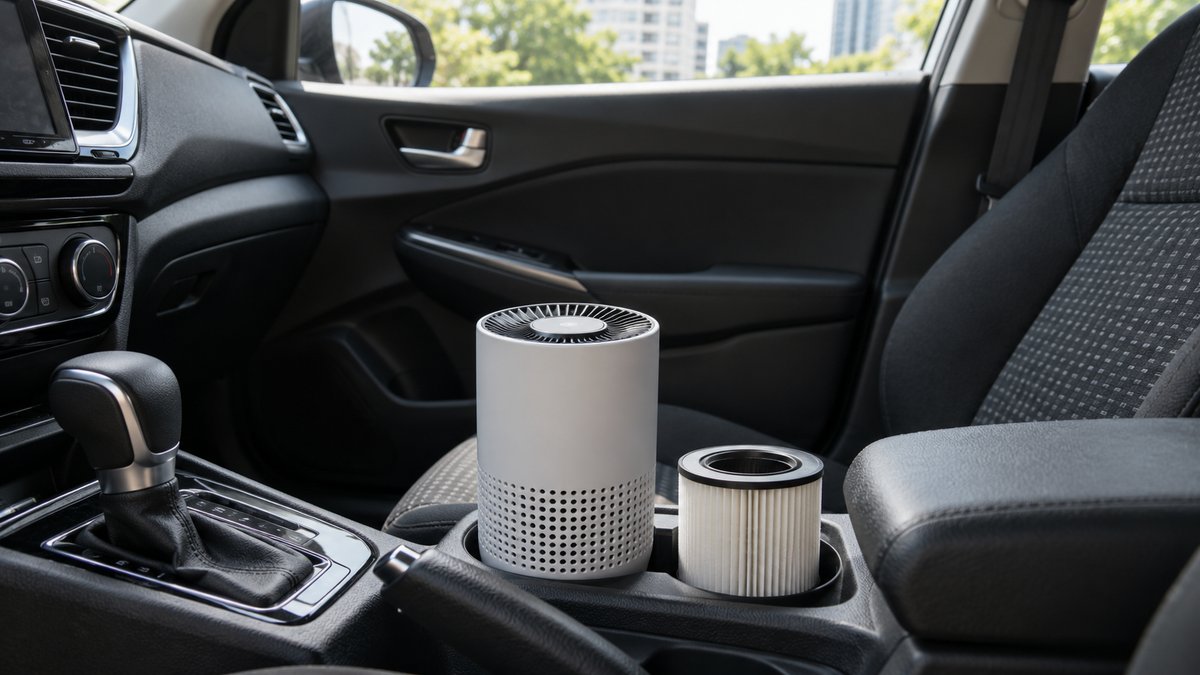
A car air purifier deserves consideration after you identify the problem it should address. For dust and airborne particles, look for mechanical filtration, credible airflow information and obtainable replacement filters. For an unexplained smell, find the source first. Avoid ozone-generating cleaners in an occupied cabin and secure any powered device before driving.
Separate dust from maintenance problems
Road dust, damp floor mats and a musty ventilation system call for different responses. A small purifier cannot dry soaked carpet or remove spilled milk from seat foam. Empty rubbish, inspect wet areas and arrange servicing when the smell appears to come from ventilation. Treat fuel or burning smells as vehicle problems requiring investigation, rather than as air-cleaner shopping prompts.
Start with the vehicle's cabin filter schedule. Its fit and condition matter to the ventilation system. A portable device does not replace that component or its service requirements. Note when the problem occurs: outside traffic, air-conditioning startup, rain or a particular load. That record helps you ask useful questions and avoid buying a device for the wrong task.
Ask what the filter captures
A pleated particle filter and a carbon layer have different jobs. Ask for a specification rather than an unexplained phrase such as advanced purification. A particle-filter claim alone does not establish useful gas removal. Carbon performance depends on the media and conditions. A black sheet in a photograph tells you little about the amount of material or its useful service life.
The EPA's air-cleaner guidance distinguishes particles from gases and puts source control first. This general indoor advice is not a test of a particular car purifier. Use the distinction to question sellers, rather than treating room-air-cleaner language as proof that a small accessory will perform well in your cabin.
Compare usable airflow
A fan must move air through the filter. Ask which speed was used for any stated airflow or cleaning-rate figure. A strong headline result at the loudest setting may be less useful if you always choose a quieter mode. Check whether the maker provides a test method and identifies the filter fitted during that testing.
Placement changes the practical choice. A cupholder device needs open inlets rather than a bag pressed against its side. Floor placement can conflict with passengers' feet. Do not move the unit onto the dashboard or into an airbag area to give it more space. If the only clear location is unsafe, that housing is unsuitable for your car.
Compare the available routes
- Cabin filter maintenance services an existing vehicle component. Confirm the exact fit and service instructions before adding a separate fan and filter to the cabin.
- A compact filter purifier needs credible airflow information, replacement media and a secure position. Assess the device with its cable installed and passengers seated normally.
- An absorber pouch has no powered airflow and should not be treated as a particle purifier. Consider it only for a defined supplementary role after cleaning.
- Multi-technology devices need more scrutiny. Ask what each function does, what it emits and whether unwanted functions can be disabled without affecting normal filtration.
Avoid ozone as a freshening shortcut
The EPA warns about ozone generators marketed as air cleaners for occupied spaces. Ozone can harm lungs, and concentrations compatible with health limits have limited effectiveness against indoor contaminants. Do not choose an intentionally ozone-producing device for use around passengers. A sharp smell is not evidence of safe cleaning.
Some devices combine filtration, ionisation and other named features in one housing. Request clear emissions documentation from the manufacturer. A vague assurance in a marketplace description does not answer what the product releases. If you cannot establish how it operates, choose a straightforward filter unit or postpone the accessory while you resolve the original contamination problem.
Plan filter ownership before purchase
Find the exact replacement-filter identifier before ordering. Check availability, the changing procedure and any indicator reset. A cartridge may be easier to replace than several loose layers, but either design needs clear orientation instructions. Do not wash or vacuum a disposable filter unless the manufacturer permits that method. Improvised cleaning can change the media without restoring its intended performance.
Inspect power requirements and cable routing. A purifier sharing the console with charging equipment should not create loose wiring near the gear selector or pedals. Our car charger buying guide helps plan socket space. Check the manufacturer's instructions for operating and storage temperatures, and remove the device when your parking conditions exceed those limits.
Use a focused buying checklist
- Write the target problem in ordinary words, along with cleaning or servicing already attempted. This prevents an attractive display becoming the main reason for purchase.
- Obtain filter specifications, airflow conditions and noise information for the exact unit being sold. Details for a larger related model do not establish this unit's performance.
- Measure the chosen position with passengers seated. Preserve door-pocket access, drinks storage, seat movement and emergency access after the purifier is installed.
- Check replacement stock and maintenance instructions. Inspect whether the housing closes positively and whether its filter can accidentally be installed backwards or left partly seated.
- Review return terms for a device that proves unexpectedly loud or incompatible with the car. Keep packaging until you have checked its physical fit while parked.
Finish the cleaning job first
Use the vacuum buying guide for physical dirt and the odour-options guide for cleaning and fragrance decisions. Those tasks remain necessary after installing a purifier. Persistent dampness needs a cause and a drying plan, not another cartridge hidden beneath a seat.
Buy when the device has a defined job, a safe position and a realistic filter supply. Thin documentation is a reason to pause the purchase. Cabin-filter maintenance and contamination removal may be better first expenditures. Keep the receipt and filter details with the vehicle records so the accessory remains serviceable after its first month.
What to look for when you buy
Mechanical-filter purifier
Documented airflow, usable noise levels and available filters.
Vehicle-specific cabin filter
Exact fit and the vehicle service schedule.
Secure portable purifier
Compatible power input and unrestricted inlets in a safe location.
Frequently asked questions
Can it replace the cabin filter?
No. Maintain the vehicle cabin filter according to its handbook.
Does a particle filter remove every smell?
No. Particle capture and gas removal are different tasks.
Should I choose an ozone generator?
Avoid ozone-generating cleaners in occupied spaces; EPA guidance describes respiratory risks.
Can filters be washed?
Only when the manufacturer explicitly permits washing that filter.
More guides
Buying guides
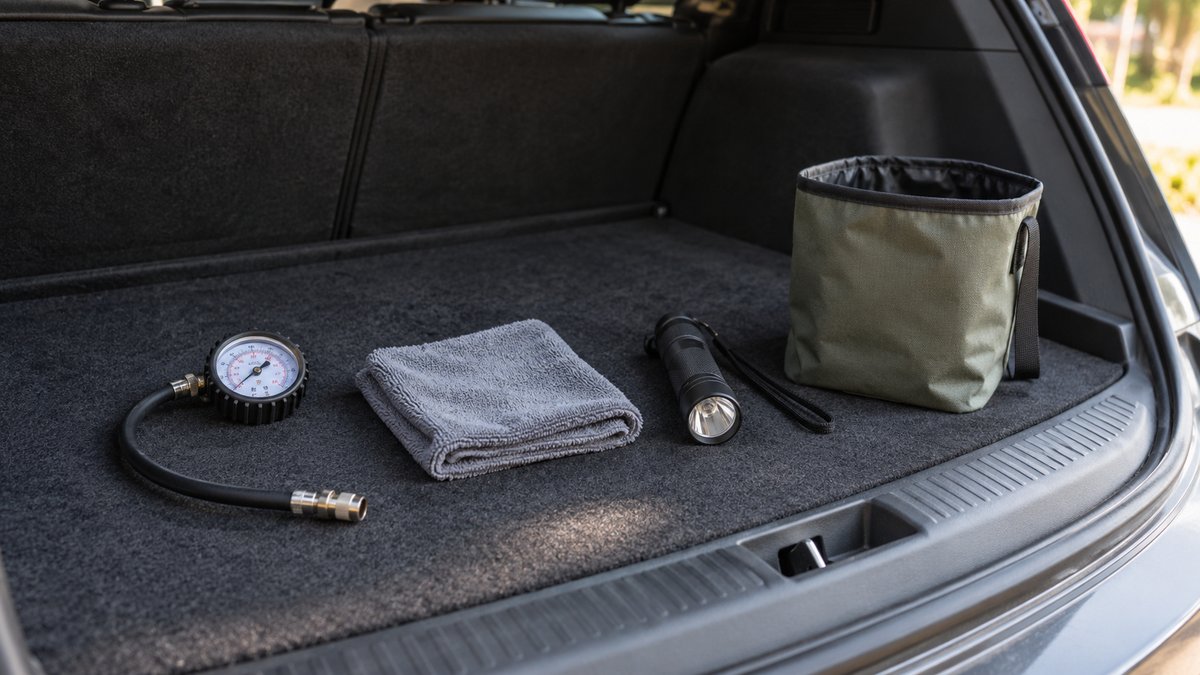
Budget Car Accessories Worth Buying for Daily Use
Prioritise a tyre gauge, useful cloths, a torch and tidy storage before decorative gadgets. Buy for a recurring task and check fit before keeping it.
Buying guides
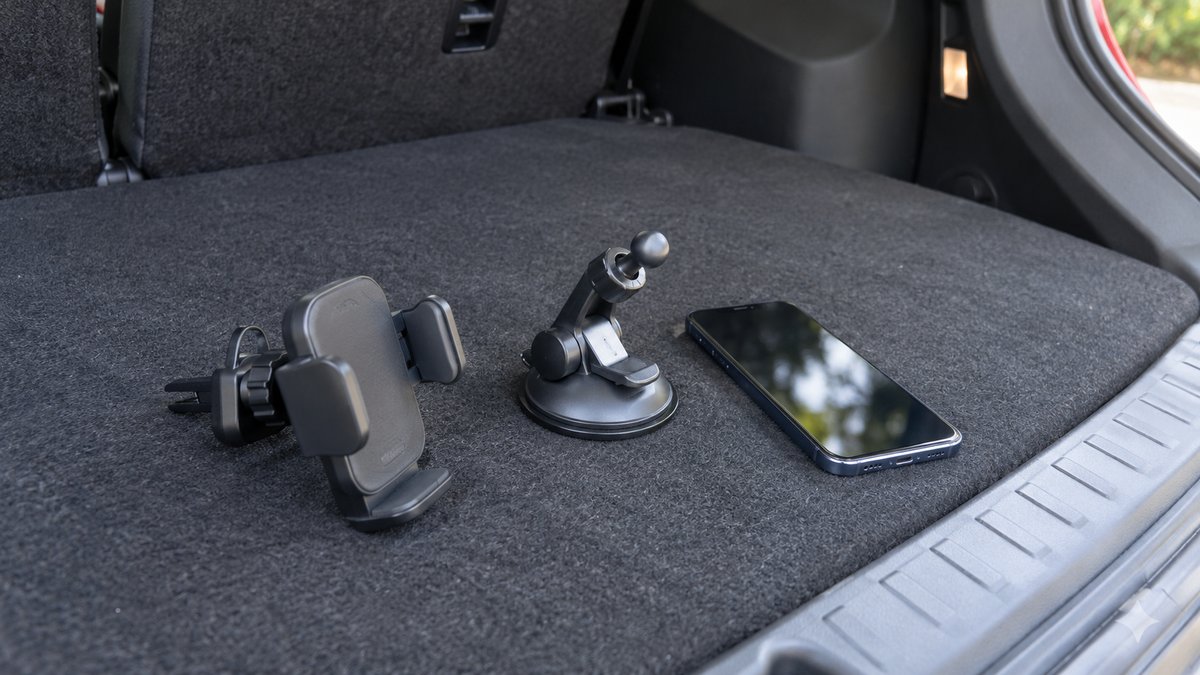
Car Phone Holder Types Compared: Mount and Fit
Choose the attachment and phone grip separately, then test the complete setup from the driving position while parked.
Buying guides
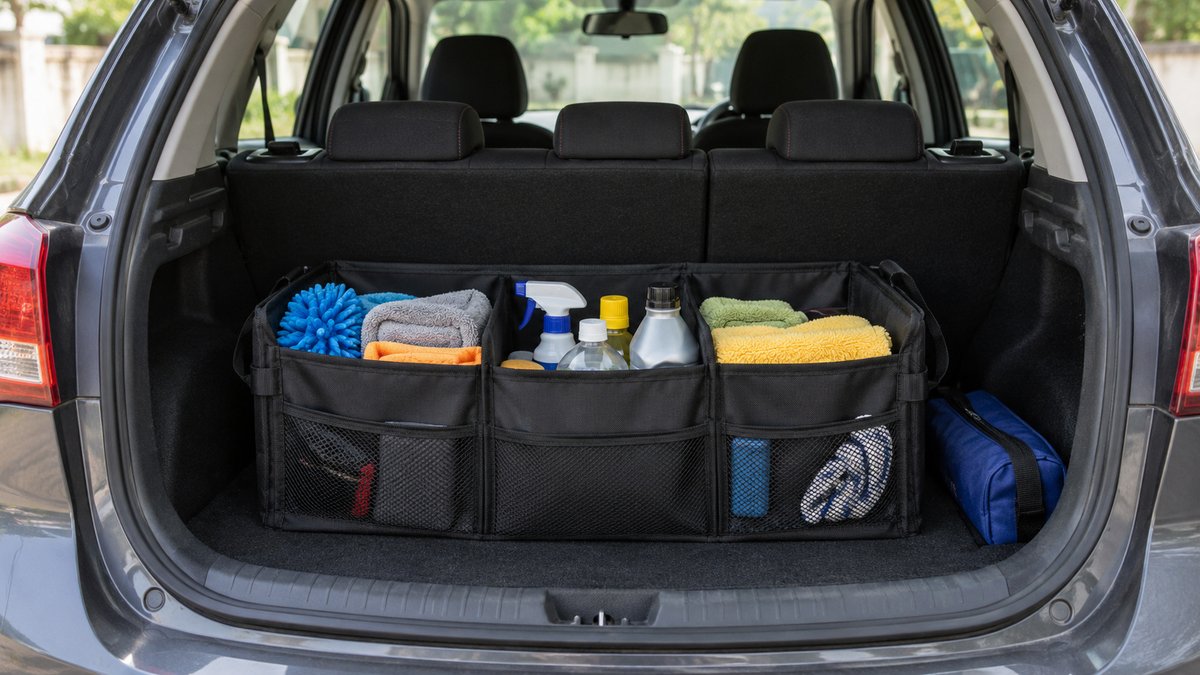
Car Seat and Boot Organisers: What Fits Where
Choose organisers by anchor points and usable space. Keep heavy items low, emergency gear accessible and seat controls clear.