Road trips
Road Trip with a Pet: Restraints, Water and Gear
By Samveg Jain · Updated 21 October 2026 · 6 min read
Some links on this site may be affiliate links. If you buy through them we may earn a commission, at no extra cost to you. It never changes what we recommend. How this works.
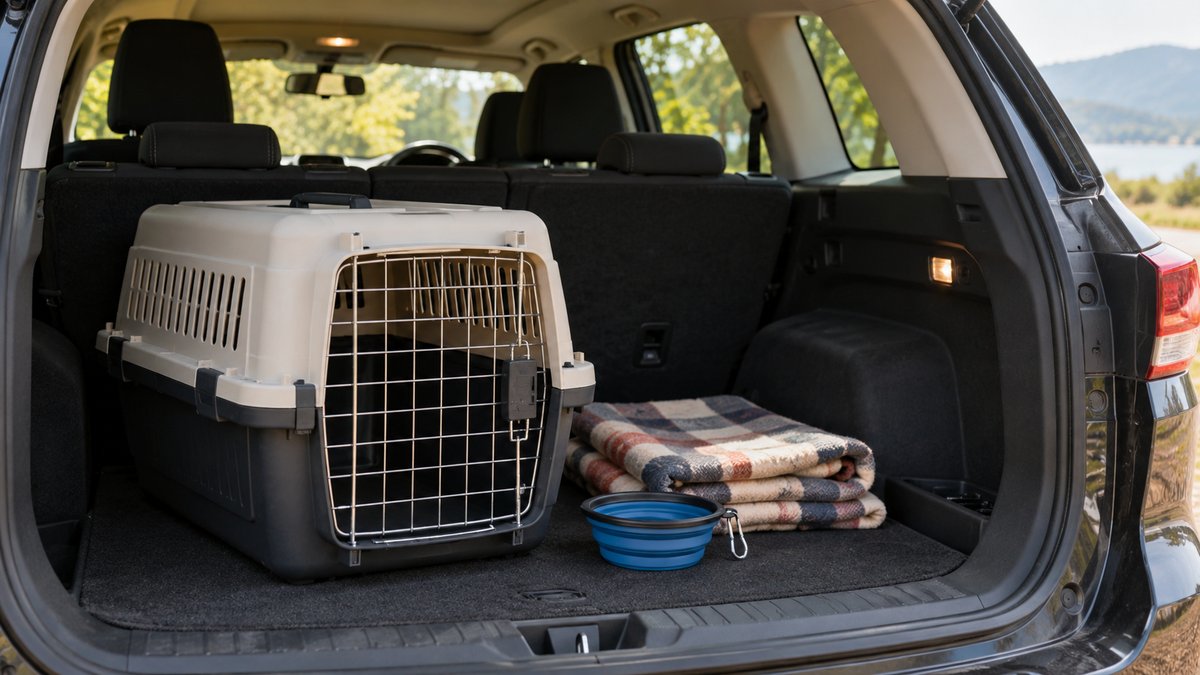
For a road trip with a pet, choose a secure carrier or suitable vehicle restraint before buying blankets and bowls. Check how it fits the animal and the car, then add water, washable bedding and cleaning supplies. Trial the full arrangement on short journeys. A hammock seat cover or boot liner can protect upholstery, but it cannot substitute for restraint.
Choose the travel method for the animal
A small animal may need an enclosed carrier, while a dog may suit an appropriate carrier, crate or purpose-designed travel harness. Species, size, temperament and health all matter. If you are unsure that the animal is fit to travel, speak to a vet before making the journey part of your holiday plan.
RSPCA travel advice calls for animals to be secure, comfortable and well ventilated during transport. It also recommends planning around their needs and trying short journeys before a holiday. Use that as a reason to test the setup at home rather than discovering a poor fit at the first highway stop.
Look for clear fitting instructions and a documented way to secure the carrier in your particular vehicle. A carrying handle alone is not evidence that a box can be restrained safely in a car. Check the manufacturer's instructions for both the carrier and the vehicle. If claims mention crash testing, read what was tested, under which conditions, and how that relates to the size you are buying.
Measure occupied space, not just the boot
Measure the carrier with doors, clips and ventilation features included. Confirm that luggage will not block airflow or press against a door. The animal needs appropriate space inside, while the carrier needs a stable, secured position outside. An oversized crate squeezed between bags is not a well-planned installation.
Check the loading route through the car door or tailgate. A carrier that fits once inside may be awkward to lift with an animal in it. Think about emergency access as well as ordinary loading. Do not choose a layout that requires removing heavy luggage before you can reach a latch or check on the pet.
Keep the pet away from the driver controls and airbag areas. Avoid a front-seat arrangement unless the vehicle and restraint instructions expressly support it. Never let the animal ride on the driver's lap. Use the car organiser guide to separate supplies from the space reserved for the restraint.
Seat protectors are a cleaning purchase
A washable seat cover or boot liner can contain hair, damp paws and minor mess. Choose one that fits without covering important restraint anchors, seat buckles or ventilation. Check how it is held in place and whether the straps interfere with a seat airbag or the head restraint adjustment.
Avoid treating a hammock as a barrier that makes a loose dog secure. Its fabric may stop ordinary climbing while parked without providing protection during a collision or sudden stop. Buy the restraint and cleaning layer as separate decisions. If the cleaning layer prevents the restraint being fitted as instructed, change or remove the layer.
Keep at least one spare dry bedding layer in a separate bag. A familiar washable blanket may be more useful than a thick novelty bed that takes over the available floor space. Choose materials that can be cleaned and dried after the trip, especially during monsoon travel when damp fabric may remain packed for hours.
Water and stops deserve their own plan
Carry enough drinking water for the planned journey and delays, using clean containers that close securely. Choose a bowl that is stable on the ground at a stop and easy to wash. A travel bowl's folding size matters less if it collapses during use or traps dirt in inaccessible folds.
Plan safe places to stop, offer water and attend to the animal. Ask your vet about any special feeding, medication or motion-sickness needs rather than following a generic schedule from a product listing. Keep a lead or other suitable control ready before opening doors so the animal cannot escape into unfamiliar traffic.
Do not leave a pet alone in a hot parked car. RSPCA's hot-car warning explains that shade and open windows do not make this safe. A fan, cooling mat or temperature display cannot turn an unsafe stop into a dependable care arrangement. Plan meals and visits so a responsible person can remain with the animal outside the parked vehicle where appropriate.
Pack a compact pet care pouch
- Water containers and a clean travel bowl.
- Normal food, with storage suitable for its requirements.
- Spare washable bedding and bags for wet items.
- Waste bags and cleaning supplies kept away from food.
- Lead, identification details and relevant veterinary contacts.
- Any prescribed medicine with its own storage and use instructions.
Store cleaning chemicals securely and follow their labels. Avoid heavily perfumed products around an animal's travel space, and do not spray a carrier while the animal is inside. Our car odour guide explains why removing contamination is more useful than masking a smell in a closed cabin.
Trial, review and reduce the load
Take a short drive using the intended carrier, bedding and luggage layout. Check whether the pet settles, whether straps loosen, and whether the person supervising can see the animal without reaching or twisting. Stop to make adjustments. Do not open a carrier while the car is moving to solve an issue that needs attention.
Build the animal's supplies into your road trip packing list rather than carrying an unrelated second pile of bags. Confirm that accommodation accepts the pet and that your planned activities are compatible with keeping it supervised. The useful gear package supports a realistic care plan throughout the journey, including the hours after arrival.
What to look for when you buy
Vehicle-compatible pet carrier
A secure fitting method, ventilation and room suited to the animal.
Purpose-designed travel harness
Documented vehicle use, suitable sizing and clear restraint instructions.
Travel water bowl
A stable base and easy cleaning without occupying the restraint space.
Washable liner and cleaning pouch
Absorbent layers, sealed waste storage and spare dry bedding.
Frequently asked questions
Can my dog ride loose on the rear seat?
Use a suitable secured carrier or vehicle restraint rather than letting an animal move freely around the cabin.
Is a seat cover a pet restraint?
No. It protects upholstery but does not replace a properly fitted travel restraint or carrier.
Can I leave a pet in a shaded parked car?
Do not leave a pet alone in a hot vehicle. Shade and partially open windows do not make that safe.
What if my pet dislikes travel?
Try short familiarisation journeys and ask a vet about fitness to travel, distress or motion sickness before a long trip.
More guides
Road trips
Diwali Traffic Driving Tips for Crowds, Smoke and Delays
How to prepare for a slow festive journey and give yourself room to react when crowds and smoke change the road ahead.
Road trips
Car Seat Cushions: Fit Checks for Long Drives
Check cushion thickness, belt routing, pedal reach and airbag clearance before adding seat padding or lumbar support for a long drive.
Road trips
Pre-Trip Car Inspection: Mechanical Checks Before Travel
Check fluids, tyres, lights and brake behaviour before Diwali or wedding-season travel, with time to repair faults before departure.