Car care gear
Post-Diwali Smog: How to Manage the Air Inside Your Car
By Samveg Jain · Updated 26 October 2026 · 6 min read
Some links on this site may be affiliate links. If you buy through them we may earn a commission, at no extra cost to you. It never changes what we recommend. How this works.
Quick answer
Keep the windows up in smoky traffic, check that the cabin filter is correctly fitted and use recirculation while passing through smoke. These steps can reduce incoming pollution but cannot make cabin air completely clean. Clear misted glass promptly and avoid unnecessary journeys when official local advice recommends doing so.
To manage car cabin air after Diwali smog, keep the windows closed in smoky traffic, check the cabin filter and use recirculation when passing through smoke. These measures can reduce incoming pollution, but they cannot make the cabin pollution-free. Clear visibility and a passenger's breathing needs take priority over keeping one ventilation setting switched on.
Diwali 2026 falls on Sunday 8 November. Plan your checks before travelling, then judge conditions using current local official air-quality and travel advice. A calendar date or a clear-looking street cannot tell you what is in the air.
Find out what your cabin filter is doing
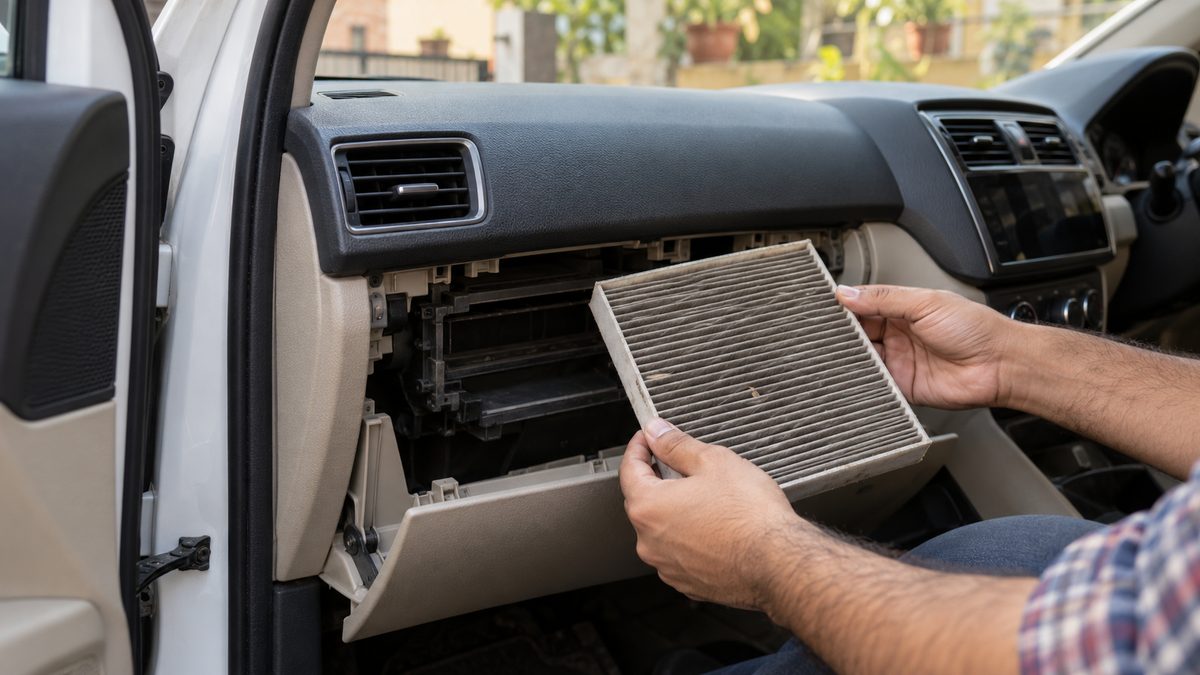
The cabin filter sits in the ventilation air path and traps particles according to its design. It is separate from the engine air filter. Check the handbook for its location, replacement schedule and specified type; access might involve the glovebox or trim that should not be forced.
With the car parked and the ventilation switched off, inspect an accessible filter as the handbook describes. Look for heavy dust, leaves, dampness, damage and gaps round the frame. Weak airflow can have several causes, so replacing a filter is not a guaranteed cure. Ask a workshop to investigate if airflow remains poor.
Use the correct dimensions and follow the marked airflow direction. Do not wash or blow out a disposable filter unless its maker specifically allows it. An ill-fitting replacement lets air bypass the material. Our cabin filter guide for pollution season explains what to check when choosing one.
Before refitting the cover, check that the filter frame sits evenly and that no packing material remains. Close the housing properly so it cannot draw air round the edges. If access requires removing parts you cannot confidently refit, leave the replacement to a workshop rather than running the system with its cover loose.
Use recirculation for smoky stretches, then reassess
Recirculation reuses cabin air instead of drawing the usual amount of outside air through the intake. Select it before entering a visibly smoky stretch or a queue behind exhausts, with the windows up. It reduces incoming air; it does not turn the vehicle into a sealed enclosure.
A loaded cabin can become stuffy, and moisture from occupants can mist the windows. There is no fixed interval that suits every vehicle and journey. Reassess comfort and glass clarity, and admit outside air when conditions allow. Some cars alter the intake setting automatically, particularly during demisting; check the handbook rather than fighting the controls.
If the windscreen starts misting, use the recommended demist setting promptly, including air conditioning where specified. Do not continue with an obscured view to avoid outside air. The inside windscreen fogging guide covers that trade-off in more detail.
Choose the next action from what you notice
| What you notice | Useful next action |
|---|---|
| Smoke outside while queuing | Close windows and select recirculation if visibility remains clear. |
| Inside glass beginning to mist | Use the vehicle's demist controls and restore a clear view. |
| Dust on vent edges and dashboard | Park, switch off the fan and collect dust gently. |
| Poor airflow after a filter change | Recheck fit and ask a workshop to inspect the system. |
| Burning smell apparently from the car | Stop safely and investigate through roadside or workshop help. |
Do not assume every smell comes from outdoor smog. Smoke from the vehicle, unusual heat or an electrical burning smell needs attention. Get occupants to safety if there may be a fire, and call the appropriate emergency service.
Collect settled dust without pushing it into the ducts
Clean with the vehicle parked and the fan off. Use a soft brush to loosen dust round the vent slats while a vacuum attachment collects it nearby. Avoid poking tools deep inside or bending the slats. A forceful air jet can scatter dust back into the cabin rather than remove it.
Wipe accessible hard surfaces with a lightly damp microfibre cloth, following the trim-care instructions. Spray any approved cleaner onto the cloth rather than into vents, switches or screens. Keep moisture away from electrical parts. Vacuum the mats and seats, and empty the cleaner without shaking collected dust through the interior.
A persistent musty smell, wet filter or water in a footwell calls for a workshop check for moisture and drainage problems. Repeated fragrance sprays do not fix the cause. Use the interior cleaning checklist to work through surfaces without mixing chemicals or soaking fabrics.
Plan stops and accessories around their limits
At a rest stop, choose a place away from active smoke and idling vehicles where possible. Open doors for boarding only as needed, then reassess ventilation once moving. Do not leave passengers in an uncomfortable closed cabin while treating recirculation as protection.
A portable purifier may supplement particle filtration if it is suitable for the cabin, but performance depends on airflow, placement and filter condition. It cannot guarantee protection from every pollutant. Secure it away from pedals, airbags and sightlines; compare practical constraints in the car air purifier buying guide before buying.
For the next drive, leave a clean glass cloth within reach, confirm that the demister works and check official local advice before departure. If conditions or symptoms make travel unsuitable, postponing a non-essential journey can be more useful than adding another accessory. This is general car-care information, not a health assessment.
What to look for when you buy
Correctly sized cabin filter
An exact vehicle fit, clear installation instructions and the filtration specification recommended for the ventilation system.
Soft detailing brush
Gentle bristles that reach vent edges without scratching trim or forcing dirt deep into the ducts.
Small car vacuum
A brush attachment, accessible dust container and suitable filtration for collecting settled cabin dust.
Frequently asked questions
Can an air freshener remove smoke pollution?
Fragrance can cover a smell without removing the pollutant causing it. Avoid adding scent to diagnose an odour problem; inspect the filter and ventilation system instead.
Should I run the engine in a garage to clean the cabin air?
No. Exhaust can accumulate in enclosed spaces. Never idle the car in a garage to run its fan or air conditioner, even with the garage door open.
Will a new cabin filter stop every firecracker smell?
No. Filter performance varies, and particle filters do not remove all gases. A remaining smell does not by itself establish how much pollution is present.
Do electric cars need cabin filters too?
They can have cabin filters just as combustion-engine cars do. Check the handbook for your model rather than assuming that the absence of exhaust means clean cabin air.
What if a passenger has asthma or another breathing condition?
Follow their clinician's advice and treatment plan. Seek medical help for breathing difficulty, chest pain or symptoms that persist. Ventilation settings are not a substitute for medical care.
More guides
Car care gear
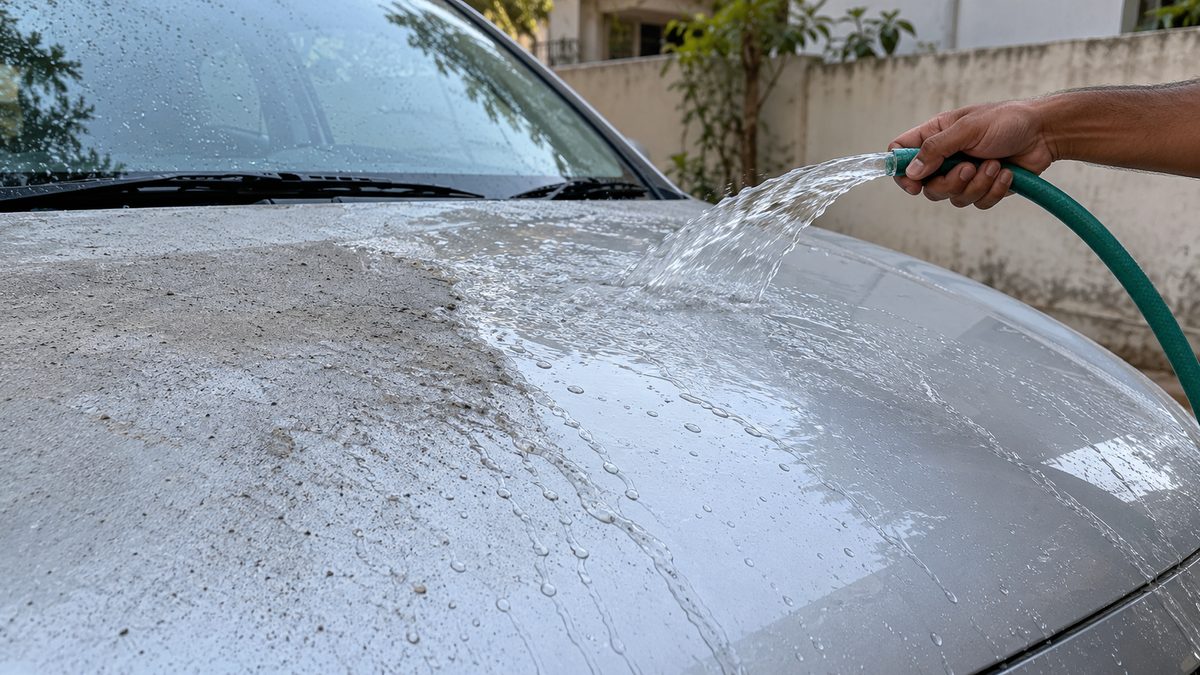
Car Cleaning After Diwali: Remove Ash Without Scratching
A rinse-first cleaning routine for the morning after Diwali, with separate steps for paint, glass and the cabin.
Car care gear
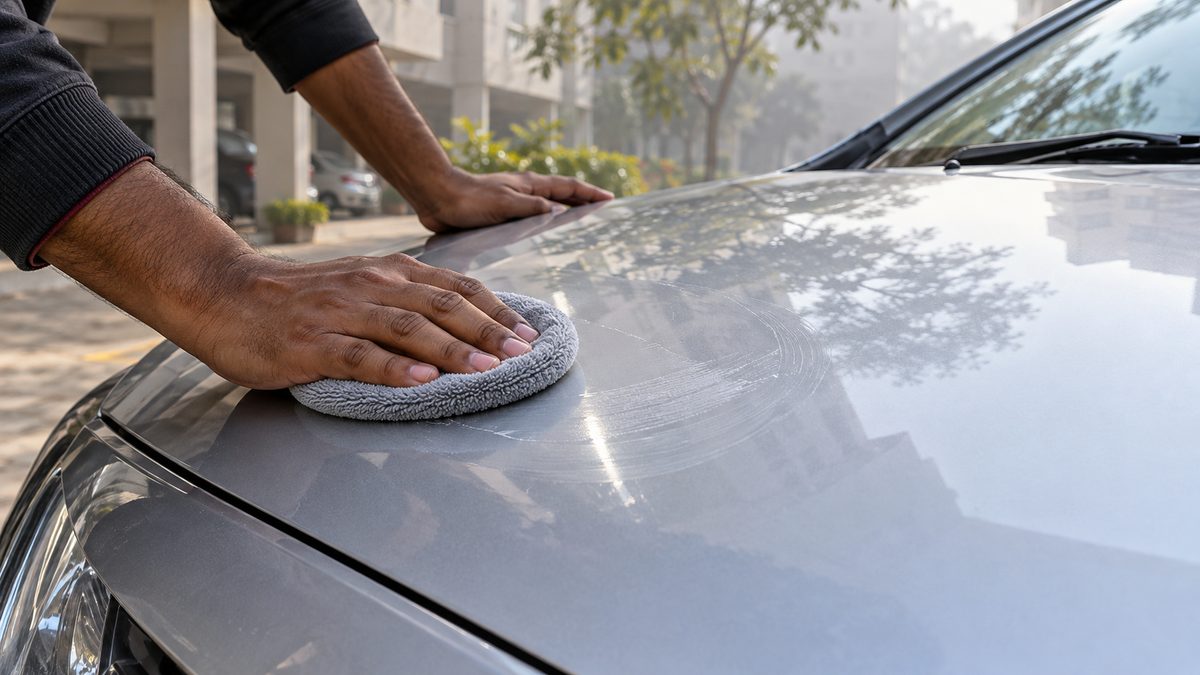
Car Wax for Winter: Dust, Fog and Paint Care
Choose wax or sealant for clean paint, then manage winter dust and damp with gentle washing, careful drying and sensible parking.
Car care gear
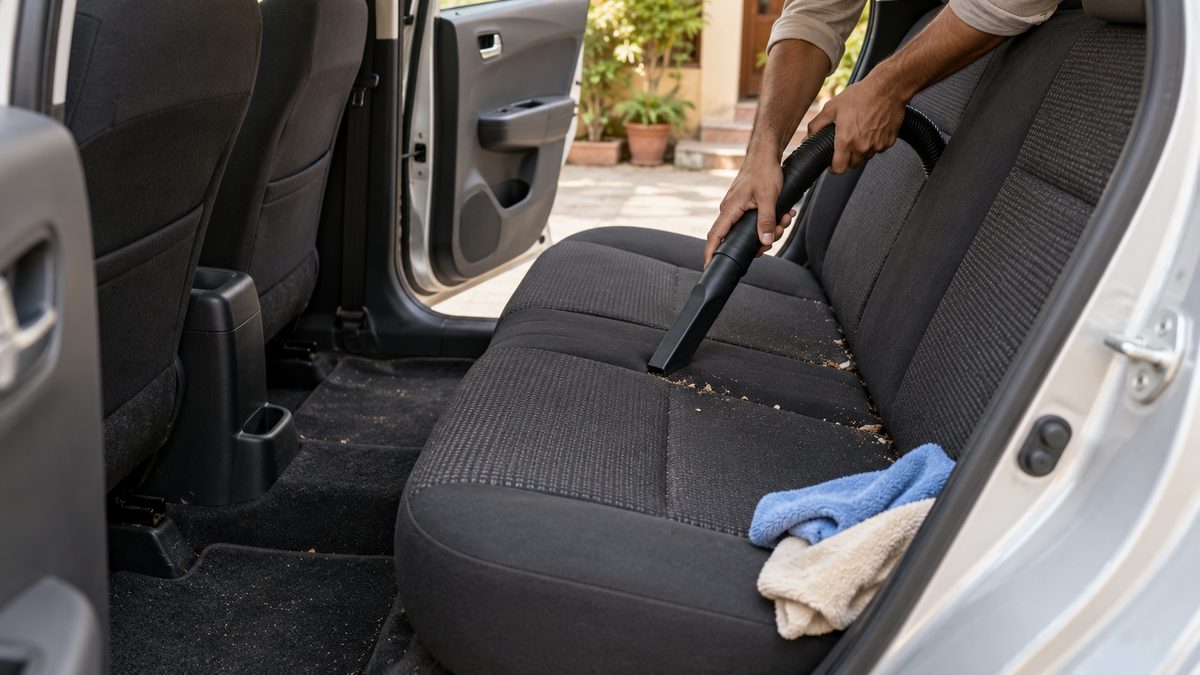
Clean the Car Interior Before Festive Travel, Zone by Zone
A practical order for cleaning the boot, seats, floor, dashboard, vents and glass, with drying and child-seat checks before travel.